01
Consultation
Technical needs assessment


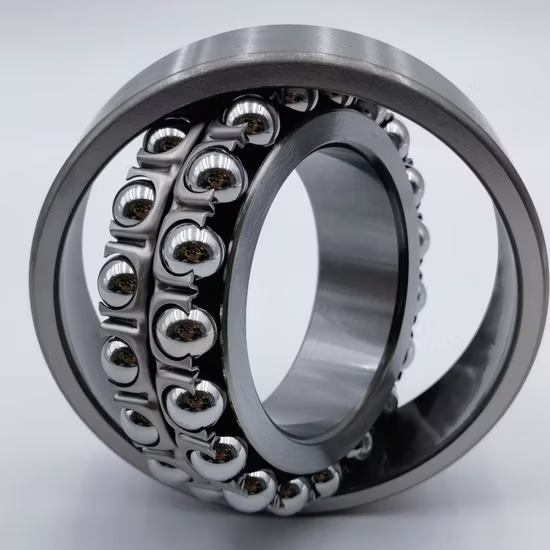
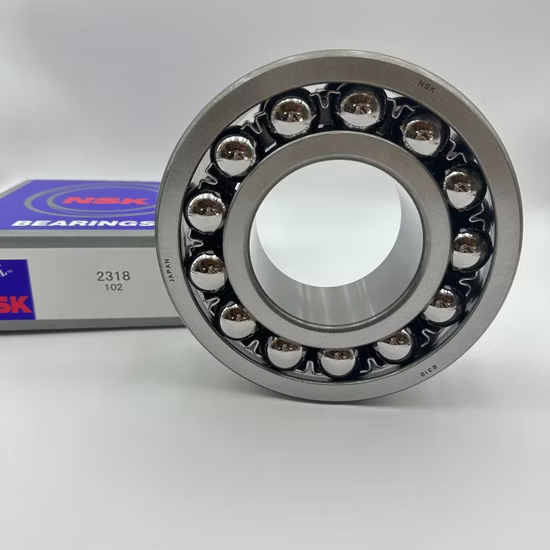


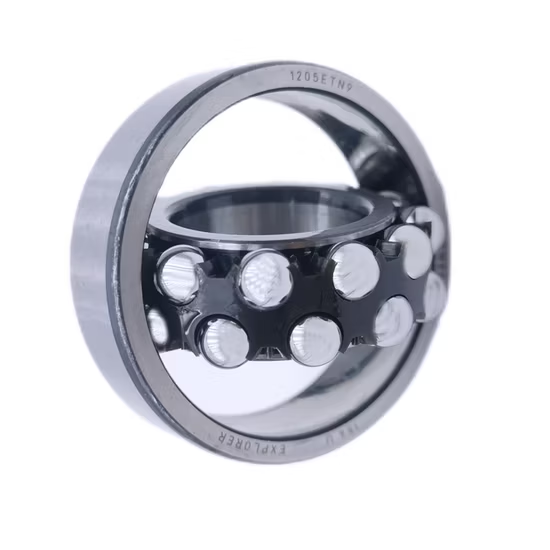
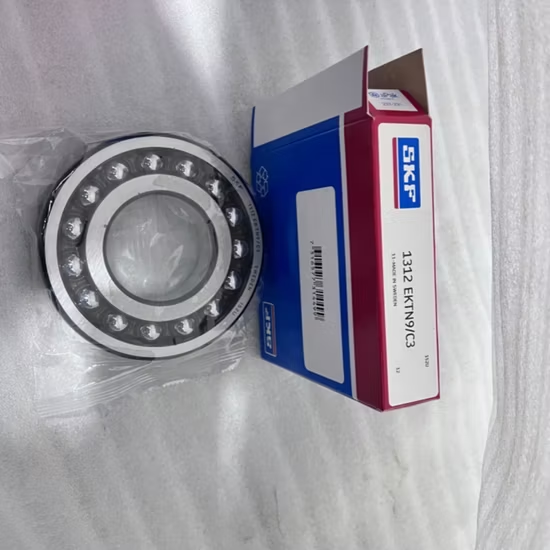
2314/K/C3 Self-Aligning Ball Bearing — 1:12 tapered bore (K) for secure adapter sleeve mounting with precise clearance control on crusher shafts. C3 radial clearance compensates for thermal expansion during continuous heavy-duty crushing operations. Self-aligning design accommodates shaft misalignment under heavy vibration. Each unit is individually traceable and verifiable through official brand QR authentication apps upon delivery.
Multi-Brand Authorized Coverage — Procure your 2314/K/C3 alongside other major international brand equivalents in a single consolidated shipment without juggling multiple vendors.
| Parameter | Value |
|---|---|
| Designation | 2314/K/C3 |
| Bearing Type | Self-Aligning Ball Bearing |
| Bore Type | Tapered 1:12 |
| Clearance Class | C3 |
| Seal or Shield Type | Open |
| Material | High-carbon chrome bearing steel or stainless steel variants |
| Origin | Germany, Japan, Sweden, Malaysia, or China |
| Industry | Typical Applications |
|---|---|
| Mining and Crushing | Jaw crusher main shaft, cone crusher eccentric bushing support |
| Material Handling | Heavy-duty vibrating screen exciter mechanism, conveyor pulley bearings |
Standard CN clearance inevitably leads to thermal binding under continuous heavy impact.
I have investigated too many catastrophic main shaft lockups in African mining sites where procurement teams sourced a basic 2314 self-aligning ball bearing but overlooked the critical C3 suffix. In crushing environments, immense friction and continuous shock loads generate substantial heat. Without the expanded internal clearance to compensate for thermal expansion, the rolling elements bind against the raceways, causing sudden and devastating equipment failure .
The 2314/K/C3 self-aligning ball bearing is engineered specifically to absorb the misalignment and shock loads inherent to mineral processing. By leveraging our cross-brand interchange expertise, we ensure the replacement unit matches not just the base dimensions, but the exact internal geometry required to keep your primary crushers running without unplanned downtime.
Crushing operations subject bearings to severe radial shock loads combined with high ambient and operational temperatures. An open design allows for aggressive external lubrication flushing to clear out abrasive rock dust, while the C3 clearance provides the necessary thermal expansion margin. When the shaft heats up and expands, the larger internal clearance prevents the rolling elements from being crushed between the inner and outer rings .
The K suffix indicates a 1:12 tapered bore, which is absolutely critical for mounting on adapter sleeves in heavy machinery. This configuration allows maintenance crews to precisely drive the inner ring up the taper, controlling the exact reduction in radial clearance during installation. Combined with the C3 clearance class, which provides a larger internal gap than standard CN, this specific designation ensures the bearing operates safely even when the crusher housing distorts under extreme dynamic loading.
Substituting a standard cylindrical bore or normal clearance bearing in a crusher application results in premature failure and catastrophic damage to the main shaft. A mismatched clearance class will cause thermal seizure within hours of startup, voiding equipment warranties and forcing expensive emergency overhauls. Relying on inaccurate cross-references that ignore the K and C3 suffixes turns a routine maintenance task into a prolonged production stoppage .
We catch the cross-reference errors that automated catalogs miss, specifically verifying that the K taper and C3 clearance are present in the proposed alternative. Our authorized distribution network guarantees batch traceability for every 2314/K/C3 shipped, eliminating the risk of counterfeit bearings with soft inner rings. Furthermore, our application-based selection review confirms the adapter sleeve fitment and operating temperatures before we finalize the quotation, ensuring the exact right component reaches your site.
To ensure the 2314/K/C3 is the optimal fit for your specific machinery, please provide the radial and axial load profiles, operational speeds, and expected thermal gradients. Sharing the original OEM equipment number allows our engineering team to perform a precise cross-reference check and validate the L10 life calculation for your unique crushing environment.
Q: Why must the C3 clearance suffix be strictly maintained in crusher applications?
A: Crushers generate immense friction and heat during operation. The C3 designation provides greater internal radial clearance than standard CN, allowing the bearing components to expand thermally without binding. Installing a normal clearance bearing in this high-temperature environment will rapidly lead to thermal seizure and catastrophic shaft failure.
Q: What does the K suffix mean for the installation of this bearing?
A: The K suffix denotes a 1:12 tapered bore. This design requires mounting on an adapter sleeve, allowing maintenance teams to precisely control the radial internal clearance reduction by measuring the drive-up distance. It ensures a tight, secure fit on the crusher shaft while accommodating slight dimensional variations.
Q: How do you prevent cross-reference errors when sourcing this specific designation?
A: Automated systems often match only the base 2314 number, ignoring critical suffixes. Our technical team manually verifies that any proposed cross-brand equivalent explicitly includes both the 1:12 tapered bore and the C3 expanded clearance, ensuring the replacement handles the exact same thermal and mechanical loads as the original.
Q: What material options are available for highly corrosive mining environments?
A: While standard high-carbon chrome bearing steel is typical for heavy shock loads, we can source stainless steel variants for applications with severe moisture or chemical exposure. Providing your specific environmental conditions allows us to recommend the most appropriate material to prevent premature corrosion and raceway spalling.
Our 5-step process ensures every order is engineered, validated, and supported for optimal performance.
Technical needs assessment
Custom specifications
Free samples for $50k+
Pre-shipment inspection
On-site & predictive
Our certified engineers respond within 24 hours with detailed technical specifications, pricing, and lead time information.