01
Consultation
Technical needs assessment

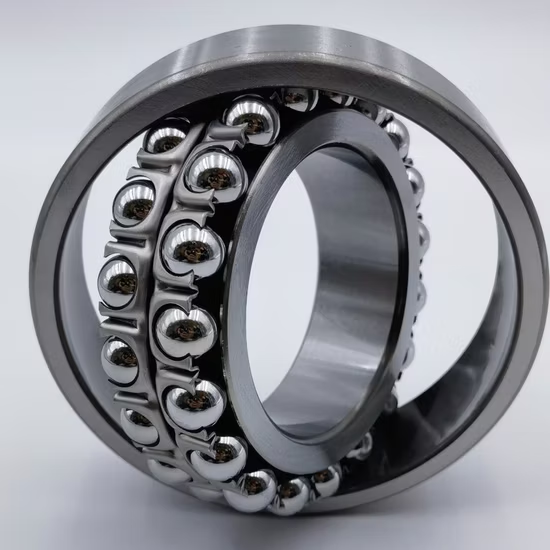

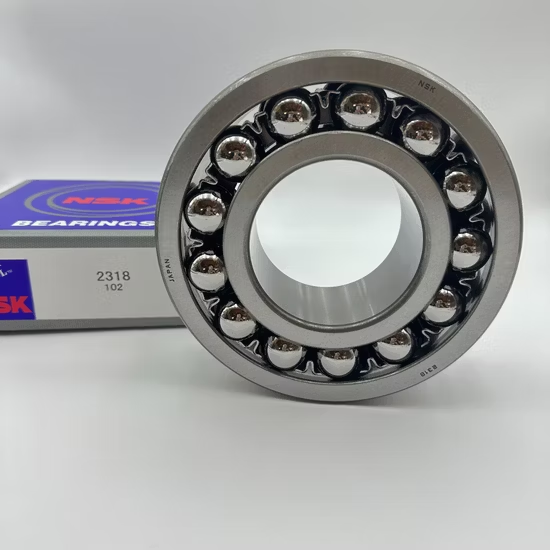


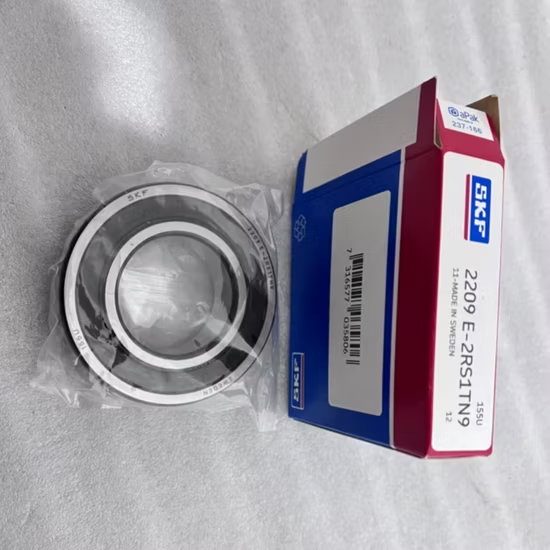
2309 ETN9/C3 Self-Aligning Ball Bearing — features enhanced capacity design with C3 radial internal clearance to accommodate thermal expansion in vibration equipment. The TN9 glass fiber reinforced polyamide cage reduces friction for high-speed operation while compensating for shaft misalignment.
Traceable Batch Origins — Every 2309 ETN9/C3 self aligning ball bearing ships with manufacturer lot codes for official app verification.
| Parameter | Value |
|---|---|
| Designation | 2309 ETN9/C3 |
| Bearing Type | Self-Aligning Ball Bearing |
| Capacity Design | Enhanced (E) |
| Cage Material | Glass fiber reinforced polyamide (TN9) |
| Clearance Class | C3 radial internal clearance |
| Seal or Shield Type | Open, Rubber Seals, Iron Seals (available variants) |
| Origin | Germany, Japan, Sweden, Malaysia, China |
| Industry | Typical Applications |
|---|---|
| Vibration Industrial Equipment | Vibrating screen exciter mechanisms, shaker deck supports |
| Agricultural Machinery | Harvester threshing cylinders, conveyor drive shafts |
| Material Handling | Belt conveyor idler pulleys, bucket elevator tail shafts |
Thermal expansion and high-frequency shock loads tear standard stamped steel cages apart long before the raceways show fatigue.
During a troubleshooting visit to a mining site in Dubai, I inspected a vibrating screen that suffered repeated, catastrophic bearing seizures. The maintenance team kept replacing the units with standard clearance and stamped steel cages, assuming the base designation match was sufficient. What they overlooked was that the intense friction and ambient heat demanded a polyamide cage and expanded internal clearance. When cross-reference errors ignore these critical suffixes, the result is rapid thermal binding and premature cage fracture . Sourcing the exact 2309 ETN9/C3 self aligning ball bearing prevents these hidden mismatches from shutting down your entire processing line.
Vibrating equipment subjects rotating components to relentless radial shocks and continuous shaft deflection. The 2309 ETN9/C3 self aligning ball bearing manages these dynamic forces through its sphered outer ring raceway, which naturally compensates for static and dynamic misalignment without transferring destructive edge loads to the rolling elements. By securing authorized distribution channels, we ensure the exact internal geometry and material specifications required for these punishing environments are consistently met.
High-frequency vibration generates substantial internal friction, rapidly elevating operating temperatures and degrading standard lubricants. A restricted internal clearance will quickly vanish as the rings expand, leading to severe preload and eventual seizure. Furthermore, open bearing configurations in dusty environments require strict external sealing solutions, while sealed variants demand careful consideration of contact lip friction . Proper grease selection and relubrication intervals are critical to flush out particulate contamination and maintain a stable hydrodynamic film.
The specific suffix combination on this designation is not merely a cataloging detail; it dictates the operational boundaries of the component. The TN9 glass fiber reinforced polyamide cage offers a crucial advantage in vibrating applications by being noticeably lighter than brass alternatives, which drastically reduces centrifugal forces and cage inertia during rapid accelerations. Simultaneously, the C3 radial internal clearance provides the necessary thermal expansion room, preventing the rolling elements from skidding when the inner ring heats up faster than the housing. The E designation indicates an enhanced capacity internal geometry, optimizing the load distribution across the ball complement.
Installing a base-number match with a standard CN clearance or a heavy brass cage in a high-temperature vibrating screen alters the entire load distribution. This subtle mismatch accelerates fatigue, resulting in unplanned downtime and catastrophic damage to adjacent shafts and housings. According to failure analysis frameworks, a significant share of premature failures stems directly from applying incorrect internal clearances for the specific thermal environment . These cascading failures void equipment warranties and inflate long-term maintenance budgets far beyond the initial procurement savings.
Our technical review process specifically targets the high-risk suffixes like TN9 and C3, which are frequently dropped by unauthorized traders to fulfill orders with "equivalent" base numbers. We provide complete batch and lot traceability for every 2309 ETN9/C3 self aligning ball bearing, ensuring you receive the exact polyamide cage formulation and expanded clearance required. Our application-based selection review verifies that the chosen configuration aligns with your specific vibration frequency and thermal profile, eliminating the guesswork that leads to field failures.
To ensure precise cross-referencing and L10 life validation, please provide your specific radial and axial load profiles alongside operating speeds and ambient temperatures. If you are replacing an existing component, sharing the exact OEM equipment number allows our engineering team to verify the clearance and cage requirements against the original design intent. This data enables us to confirm whether the 2309 ETN9/C3 self aligning ball bearing is the optimal configuration for your specific vibration equipment.
Q: How does C3 clearance prevent thermal binding in vibration equipment?
A: Vibration and friction generate intense heat, causing the inner ring to expand faster than the housing. The C3 radial internal clearance provides the necessary thermal expansion room, preventing the rolling elements from being crushed between the raceways. This avoids severe preload, skidding, and the rapid thermal binding that destroys standard clearance bearings in high-temperature environments.
Q: Why must clearance and cage material suffixes align during cross-referencing?
A: Matching only the base designation while ignoring suffixes like TN9 or C3 leads to catastrophic field failures. A standard stamped steel cage will fracture under high-frequency vibration, while a standard clearance will seize as temperatures rise. Precise cross-referencing ensures the internal geometry and materials perfectly match the dynamic and thermal demands of your specific application.
Q: What are the operational boundaries for polyamide (TN9) cages compared to brass?
A: Glass fiber reinforced polyamide cages are noticeably lighter, reducing centrifugal forces and inertia during rapid accelerations in vibrating screens. However, they have strict upper temperature limits and can degrade when exposed to certain aggressive chemical solvents. We review your specific thermal and environmental parameters to confirm if the TN9 material is suitable for your operating conditions.
Q: How to verify bearing authenticity using official brand QR codes?
A: Upon delivery, scan the QR code on the packaging using the specific manufacturer's official mobile application. This digital verification confirms the batch and lot traceability, ensuring the internal components, such as the polyamide cage and C3 clearance, are genuine and not counterfeit clones that pass casual visual inspection but fail under industrial loads.
Our 5-step process ensures every order is engineered, validated, and supported for optimal performance.
Technical needs assessment
Custom specifications
Free samples for $50k+
Pre-shipment inspection
On-site & predictive
Our certified engineers respond within 24 hours with detailed technical specifications, pricing, and lead time information.