01
Consultation
Technical needs assessment

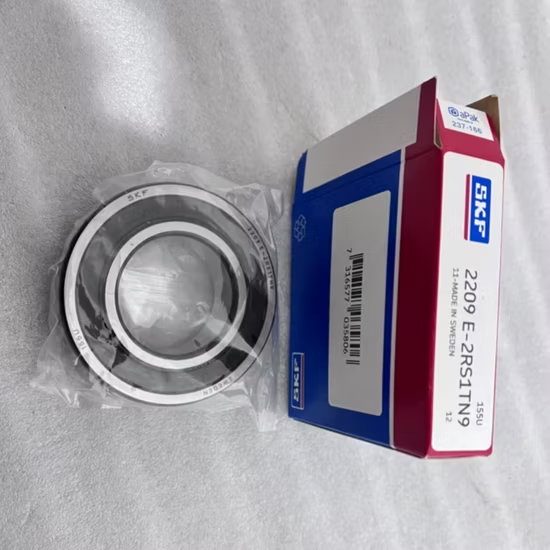
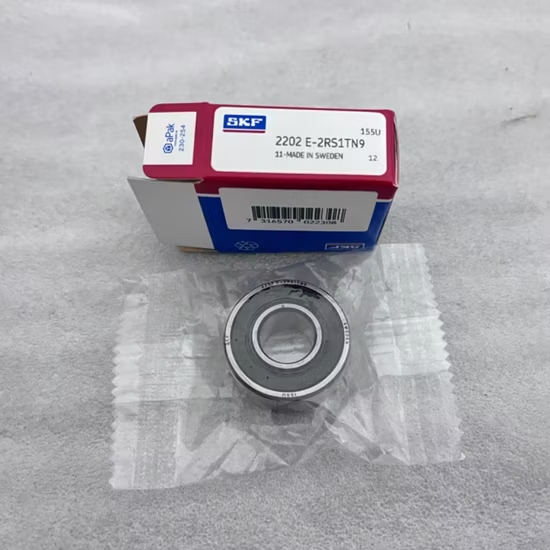
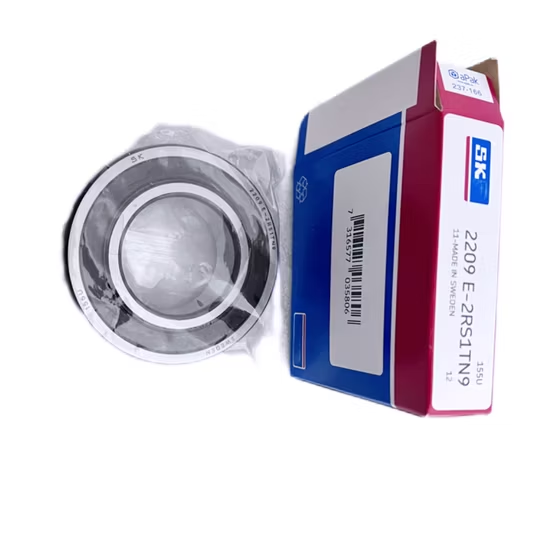

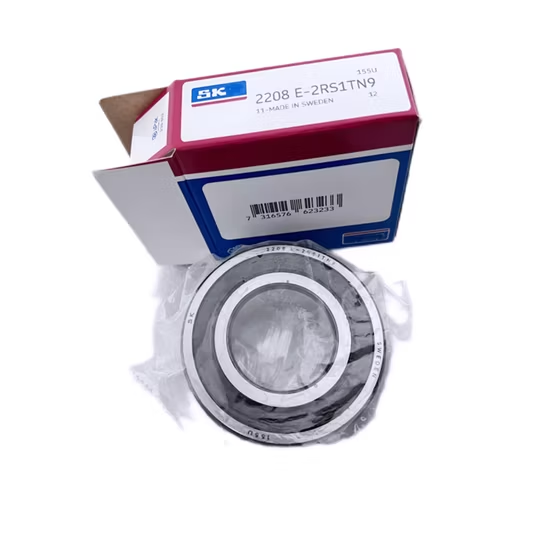
2201/E/2RS1TN9 Self-Aligning Ball Bearing — featuring double contact seals for maintenance-free contamination protection and a glass fiber reinforced polyamide cage enabling high-speed, low-noise operation. The reinforced internal design enhances load capacity for mini automation equipment.
Exact Cross-Reference Alignment — We verify base numbers, TN9 cage materials, and 2RS1 seal types to prevent mismatched replacements in mini automation systems.
| Parameter | Value |
|---|---|
| Designation | 2201/E/2RS1TN9 |
| Bearing Type | Self-Aligning Ball Bearing |
| Cage Material | Glass fiber reinforced polyamide (TN9) |
| Seal or Shield Type | Double contact seals on both sides (2RS1) |
| Internal Design | Reinforced / optimized (E) |
| Industry | Typical Applications |
|---|---|
| Mini Automation | Precision linear actuators and small robotic arm joints |
| Material Handling | Lightweight conveyor belt guide rollers and sorting gates |
| Textile Machinery | High-speed yarn tensioning pulleys and bobbin carriers |
Matching the base number is never enough when internal designs and cage materials dictate operational survival.
Procurement engineers often source replacements based solely on the base dimension series, overlooking critical suffixes. In our automation retrofitting projects, we have seen standard steel cages fail rapidly under the specific vibration profiles of mini actuators, while incorrect seal types allow fine textile dust to cause thermal binding . Sourcing a genuine 2201/E/2RS1TN9 self-aligning ball bearing ensures the exact internal geometry and polymer cage required for these delicate applications.
Compact automation equipment demands components that handle minor shaft misalignments without generating excess friction. The 2201/E/2RS1TN9 self-aligning ball bearing addresses this by accommodating angular errors inherent in lightweight structural frames. Our technical review process ensures that the specified polyamide cage and contact seals align perfectly with the speed and environmental constraints of your specific mini automation device.
Miniature drive systems frequently operate at elevated rotational speeds where friction heat and contamination are primary failure drivers. The operating environment often contains fine particulates or requires periodic chemical cleaning, which degrades standard lubricants and corrodes unprotected steel . Maintaining low friction torque while preventing moisture ingress requires a precise balance between seal contact pressure and cage stability, making the selection of specific sealing and cage variants critical for long-term reliability.
The "E" suffix signifies an optimized internal design, providing enhanced load distribution across the rolling elements for improved operational reliability. To manage friction at higher rotational speeds, the TN9 glass fiber reinforced polyamide cage offers a noticeably lighter alternative to brass, maintaining stability under vibration while resisting chemical degradation. Furthermore, the 2RS1 double contact seals create an effective barrier against dust and moisture ingress, retaining factory grease and eliminating the need for external relubrication in compact, hard-to-reach automation assemblies.
Installing a bearing with a standard clearance instead of the required thermal expansion allowance leads to rapid preload buildup and catastrophic raceway damage. Substituting a metal cage for the specified polyamide variant increases rotational inertia, causing premature motor burnout in sensitive mini automation setups . These cross-reference errors result in unplanned downtime and voided equipment warranties, costing far more than the initial component savings.
We maintain authorized distribution channels that guarantee the authenticity of every bearing, eliminating the risk of counterfeit units with cloned markings. Our cross-brand interchange protocols verify not just the base number, but also the TN9 cage material and 2RS1 seal configuration to ensure exact functional equivalence. Every shipment includes batch traceability, allowing your maintenance team to verify the origin and production lot through official manufacturer applications. This rigorous alignment prevents the field failures commonly caused by overlooked suffix discrepancies in mixed-brand supply chains.
To ensure optimal selection, please share your specific radial and axial load profiles, operating speeds, and ambient temperature ranges. Providing the exact OEM equipment number or the dimensions of your installation space allows our engineering team to perform a thorough cross-reference and L10 life calculation. If your environment involves aggressive cleaning chemicals, specify these details so we can verify the compatibility of the TN9 cage and 2RS1 seal materials.
Q: How can I verify the authenticity of the TN9 cage and 2RS1 seals?
A: We provide complete batch and lot traceability for every shipment. You can verify the authenticity of the 2201/E/2RS1TN9 self-aligning ball bearing by scanning the provided QR codes using the official brand applications. This confirms the exact material composition and seal type directly against the manufacturer's production records, eliminating the risk of counterfeit components.
Q: Why is it critical to match the TN9 suffix during cross-referencing?
A: The TN9 suffix specifies a glass fiber reinforced polyamide cage, which is noticeably lighter than metal alternatives and essential for high-speed stability in mini automation. Substituting a brass or steel cage alters the rotational inertia and friction profile, potentially causing motor overload or thermal binding. Exact suffix matching ensures the dynamic performance aligns with your equipment's original design parameters.
Q: What are the operational boundaries of the 2RS1 double contact seals?
A: The 2RS1 seals provide excellent protection against dust and moisture ingress, making them ideal for textile and conveyor environments. However, the contact friction generates heat at very high speeds. We evaluate your specific rotational speed and thermal conditions to confirm that the 2RS1 sealed variant operates within its safe thermal limits, or we recommend alternative non-contact shielding if necessary.
Q: How does the E suffix affect the internal design and load capacity?
A: The E suffix indicates an optimized internal geometry with reinforced rolling element contact zones. This design enhancement improves load distribution and operational reliability under the dynamic vibration profiles typical in automation devices. Our technical team verifies this internal design during cross-referencing to ensure the bearing handles your specific combined loads without premature fatigue.
Our 5-step process ensures every order is engineered, validated, and supported for optimal performance.
Technical needs assessment
Custom specifications
Free samples for $50k+
Pre-shipment inspection
On-site & predictive
Our certified engineers respond within 24 hours with detailed technical specifications, pricing, and lead time information.


