01
Consultation
Technical needs assessment


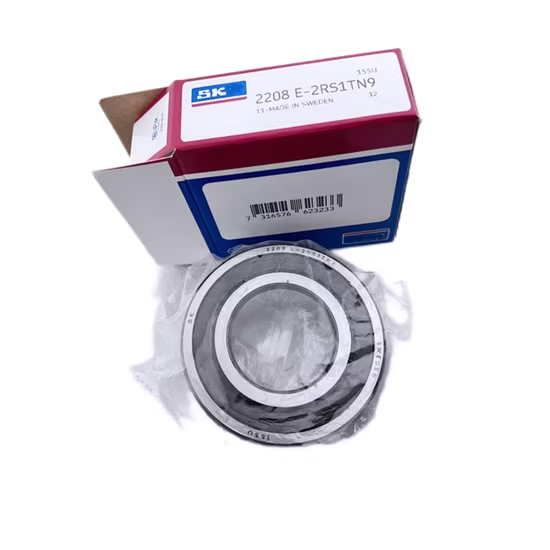


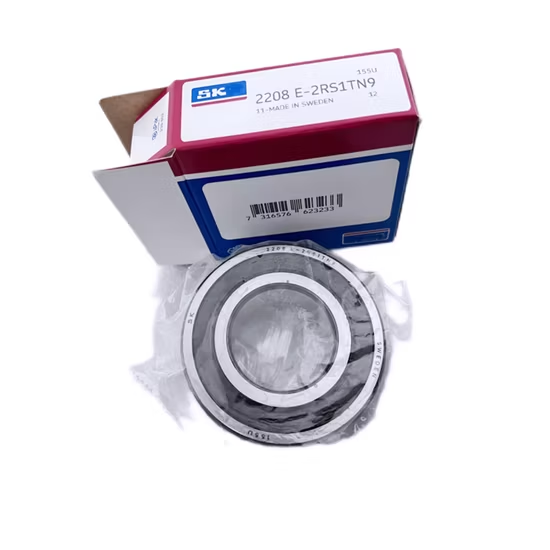
2301-2RS Self-Aligning Ball Bearing 12×37×17 mm — featuring double contact rubber seals on both sides to ensure maintenance-free operation and reliable contamination protection. The self-aligning inner ring design successfully accommodates static misalignment between the shaft and housing during continuous operation.
Multi-Brand Authorized Sourcing — consolidate genuine 2301-2RS units from SKF, FAG, or NSK into a single traceable shipment without coordinating multiple regional vendors.
| Parameter | Value |
|---|---|
| Designation | 2301-2RS |
| Bearing Type | Self-Aligning Ball Bearing |
| Bore Diameter (d) | 12 mm |
| Outside Diameter (D) | 37 mm |
| Width (B) | 17 mm |
| Seal or Shield Type | Double contact rubber seals (-2RS) |
| Origin | Germany / Japan / Sweden / Malaysia / China |
| HS Code | 848210 |
| Industry | Typical Applications |
|---|---|
| Electric Motors | Small motor shafts requiring misalignment tolerance |
| Agricultural Machinery | Conveyor drive rollers exposed to dust and crop debris |
| Gearboxes | Input shafts where housing bore alignment fluctuates |
Seal friction and thermal expansion dictate survival in dusty environments.
In Middle Eastern cement plants, I have seen standard open bearings fail rapidly when fine particulate infiltrates the cage. When procurement teams match only the base number and overlook the -2RS double contact seal requirement, the 2301-2RS self-aligning ball bearing loses its contamination barrier. This leads to premature cage fracture and unplanned downtime . Sourcing the exact sealed variant prevents abrasive dust from compromising the internal geometry.
Selecting the correct 2301-2RS self-aligning ball bearing requires verifying that the double contact seals align with your specific operating environment. We review your application parameters to ensure the rubber sealing lips provide adequate protection without generating excessive friction heat at your target speeds.
Agricultural conveyors and outdoor gearboxes subject small bearings to severe particulate ingress and temperature swings. The -2RS configuration utilizes contacting rubber lips to block dust, but this creates friction that elevates internal operating temperatures. If the internal clearance is not upgraded to C3 to accommodate this thermal expansion, the bearing will experience radial preload and eventual thermal binding . Proper grease selection inside the sealed cavity is equally critical to maintain lubrication film strength under these combined thermal and contamination stresses.
The base designation 2301 indicates a self-aligning ball bearing in dimension series 03 with a 12 mm bore, featuring a spherical outer ring raceway that tolerates static angular misalignment between the shaft and housing. The -2RS suffix confirms the presence of double contact rubber seals pressed into the outer ring, providing superior exclusion of fine dust compared to non-contact metal shields. While the sealed design protects against agricultural debris, the contacting lips impose a strict speed limit due to friction heat generation. Ensuring the internal clearance matches the thermal profile of your electric motor or gearbox prevents the rolling elements from skidding or binding during continuous operation.
Installing a standard CN clearance bearing in a high-temperature gearbox often results in catastrophic seizure once the equipment reaches operating temperature. Ignoring the specific seal suffix during cross-referencing forces maintenance teams to replace the entire shaft assembly due to abrasive wear . These misconfigurations void equipment warranties and trigger severe production losses that far exceed the initial component cost.
Our technical review catches the frequent error of substituting open or shielded variants when the OEM specifically requires the -2RS contacting seal for dust exclusion. We verify cross-brand equivalents by matching the exact sealing geometry and internal clearance, not just the basic 12x37x17mm dimensions. Every 2301-2RS self-aligning ball bearing we dispatch includes batch traceability directly linked to the manufacturer's production facilities. This rigorous suffix validation prevents the thermal binding and cage failures I have repeatedly witnessed on site when generic part numbers are blindly substituted.
Share your exact radial and axial loads, operating speeds, and ambient temperatures so we can verify if the standard clearance and -2RS seal friction limits are appropriate. Provide the OEM equipment number or the exact dimensions of the mounting space for a precise cross-reference review. Our engineering team will evaluate these parameters to confirm the optimal internal clearance class and confirm lead times for your required batch quantity.
Q: Why must cross-referencing include the -2RS suffix and clearance class?
A: Matching only the 12x37x17mm base dimensions ignores critical internal differences. Substituting an open bearing or a standard CN clearance where a -2RS seal and C3 clearance are required leads to dust ingress or thermal binding. We verify all suffixes to ensure the replacement perfectly matches the original equipment's thermal and contamination profile.
Q: How do I verify the authenticity of the received bearings?
A: Every genuine unit we supply features batch traceability and a unique QR code. You can scan this code using the manufacturer's official mobile application to instantly verify the origin and production date. This step effectively exposes counterfeit products that utilize soft inner rings and cloned visual markings.
Q: What is the selection boundary between rubber and iron seals for this size?
A: The -2RS rubber seals provide excellent protection against fine agricultural dust and moisture but generate higher friction, limiting maximum rotational speed. Iron shields offer lower friction for high-speed electric motors but cannot exclude fine particulate or liquid contaminants. We review your specific speed and contamination levels to recommend the correct seal type.
Q: How does the self-aligning feature handle housing misalignment?
A: The spherical outer ring raceway allows the inner ring and ball assembly to pivot slightly, accommodating static angular misalignment caused by shaft deflection or housing machining errors. This prevents edge loading on the rolling elements, though it does not compensate for dynamic misalignment or severe shaft bending during operation.
Our 5-step process ensures every order is engineered, validated, and supported for optimal performance.
Technical needs assessment
Custom specifications
Free samples for $50k+
Pre-shipment inspection
On-site & predictive
Our certified engineers respond within 24 hours with detailed technical specifications, pricing, and lead time information.