01
Consultation
Technical needs assessment

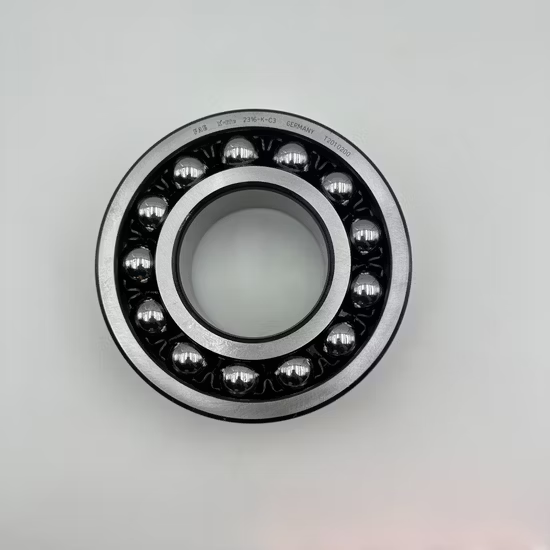
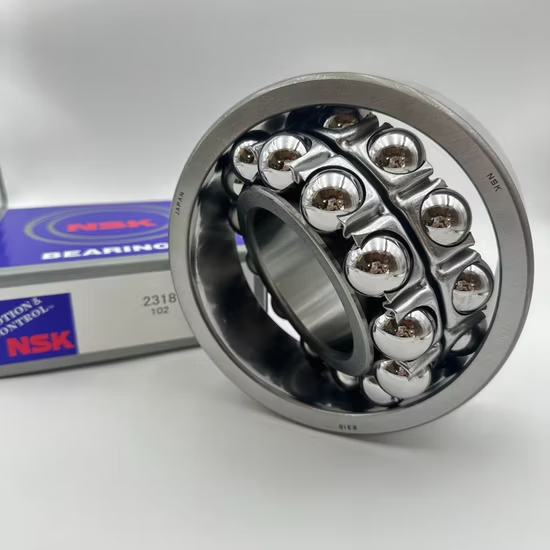
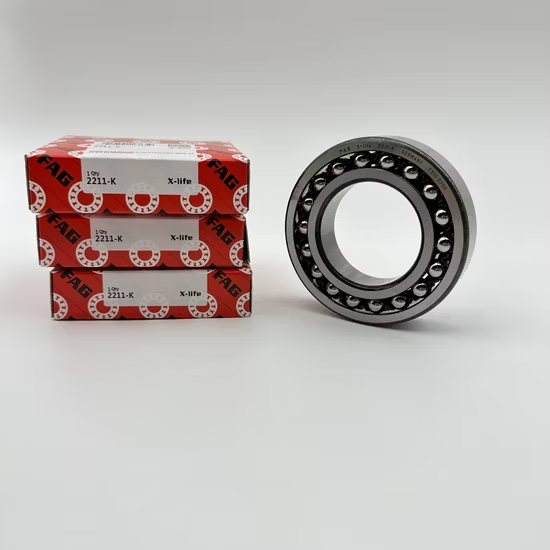
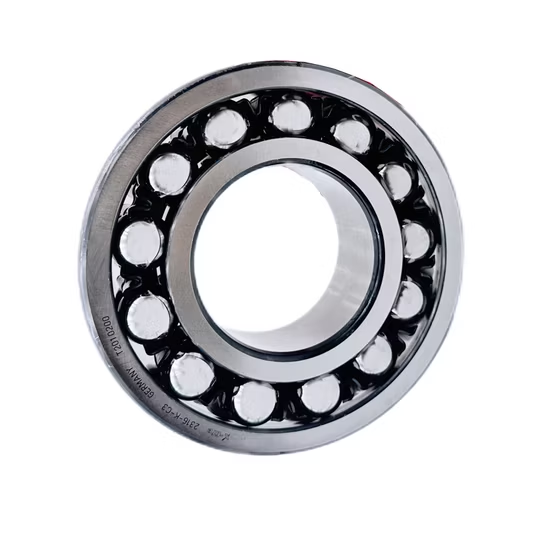
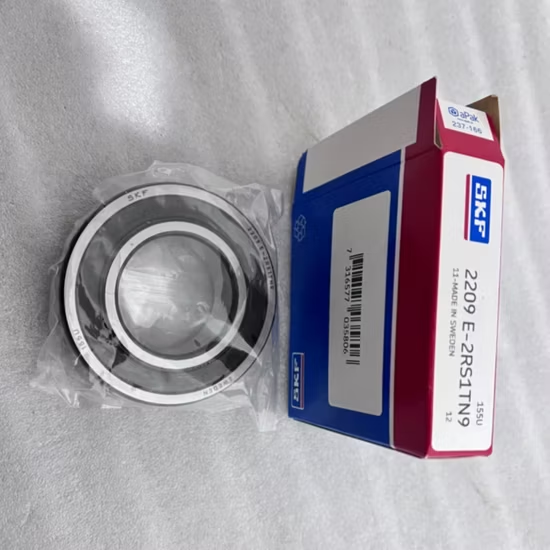
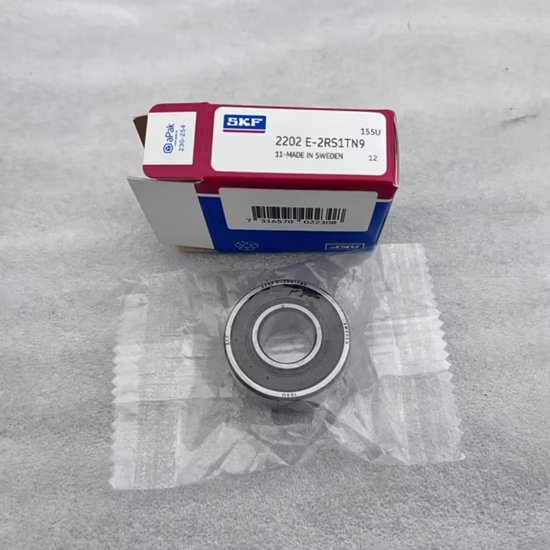
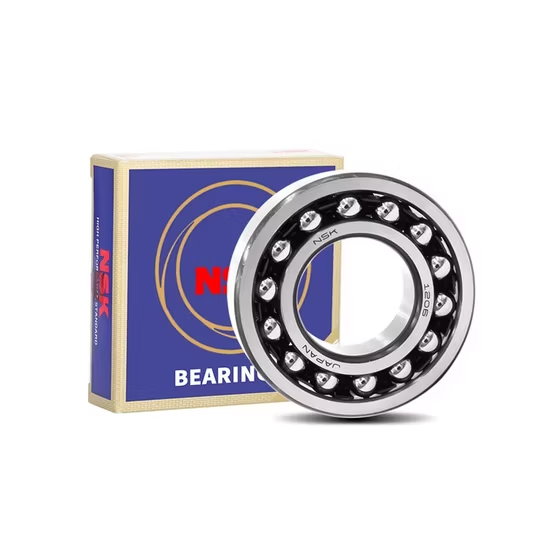
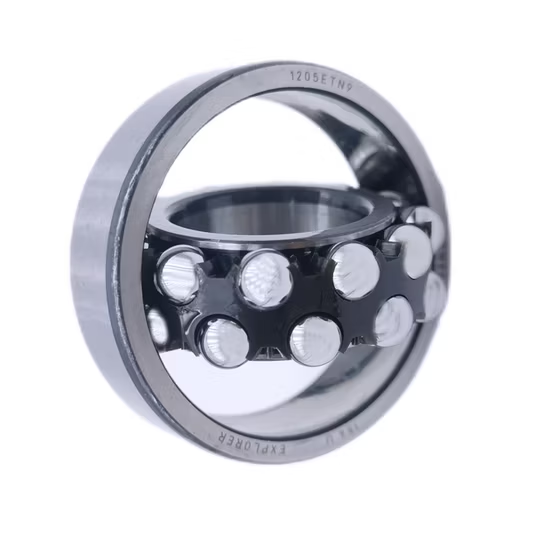
2311K Self-Aligning Ball Bearing 55×120 mm — featuring a 1:12 tapered bore for secure adapter sleeve mounting and precise radial clearance adjustment.
Factory Batch Traceability — Every 2311K self-aligning ball bearing ships with lot-specific documentation linking directly to the manufacturer's production records.
| Parameter | Value |
|---|---|
| Designation | 2311K |
| Bearing Type | Self-Aligning Ball Bearing |
| Bore Diameter (d) | 55 mm |
| Outside Diameter (D) | 120 mm |
| Bore Type | 1:12 Tapered |
| Cage Material | Available in machined brass or stamped steel variants |
| Seal or Shield Type | Open, Rubber Seals, Iron Seals |
Note: The lowercase 'm' suffix occasionally seen in market listings remains unverified against standard manufacturer catalogs and requires direct confirmation before ordering.
| Industry | Typical Applications |
|---|---|
| Cement & Building Materials | Clinker conveyor pulley shafts, bucket elevator tail wheels |
| Material Handling | Belt tracker idler rolls, transfer chute vibratory feeders |
| General MRO | Misaligned drive shafts, industrial fan rotor supports |
A mismatched cage material turns a standard replacement into a catastrophic failure.
Sourcing the correct base number is only the first step. In heavy dust environments like cement plants, ignoring the cage designator or clearance class leads to rapid thermal binding. I have seen firsthand how installing a standard stamped steel cage instead of a machined brass variant in high-vibration conveyor drives results in cage fragmentation within weeks . When the 2311K self-aligning ball bearing is deployed in harsh conditions, verifying the exact internal construction is non-negotiable to prevent unplanned downtime.
Selecting the right variant requires looking beyond the basic designation. Our technical review process ensures the chosen 2311K self-aligning ball bearing aligns with the specific misalignment angles and radial loads of your equipment. By evaluating the actual operating environment, we prevent the common procurement error of supplying open bearings to heavily contaminated zones.
Conveyor systems and material handling equipment operate under severe particulate contamination and heavy radial loads. Fine cement dust easily penetrates inadequate seals, mixing with lubricants to form an abrasive paste that accelerates raceway wear . Furthermore, the friction generated by misaligned shafts elevates operating temperatures, demanding a clearance class that accommodates thermal expansion without inducing preload. Choosing between contact rubber seals for maximum dust exclusion or non-contact iron shields for higher speed limits dictates the service interval and overall reliability of the assembly.
The K suffix designates a 1:12 tapered bore, engineered specifically for mounting on adapter sleeves. This configuration allows for precise adjustment of the radial internal clearance during installation, which is critical when accommodating thermal expansion in continuous-duty gearboxes. While the base model handles moderate radial loads and minor axial loads, the cage selection defines its operational boundaries. A machined brass cage provides superior stability under high vibration and shock loads, whereas a stamped steel cage suits lighter, high-speed applications. Matching the cage material to the specific vibration profile prevents premature fatigue and structural collapse of the rolling element retainer.
Supplying a cylindrical bore bearing when a tapered bore is required forces maintenance teams into destructive modification or incorrect mounting practices. Similarly, failing to specify the correct internal clearance class leads to thermal binding once the equipment reaches operating temperature, resulting in catastrophic seizure. These cross-reference errors void warranties and trigger cascading damage to adjacent shafts and housings, turning a simple component swap into a major rebuild project .
Our authorized distribution network covers all major international brands, allowing you to consolidate mixed-brand requirements into a single, verified shipment. We execute cross-reference matching that validates the bore taper, cage material, and clearance class, rather than just the base number. This prevents the frequent field failures caused by substituting a standard bore unit for a K-suffix variant. Every shipment includes batch traceability, ensuring you receive genuine components with verified metallurgical properties, eliminating the risk of soft inner rings found in counterfeit batches.
To ensure precise application matching, please provide the radial and axial load profiles, operating speeds, and expected temperature ranges for your equipment. If replacing an existing unit, sharing the OEM equipment number or the exact suffix combination currently in use allows our engineering team to perform a comprehensive cross-reference review. This data enables us to recommend the optimal cage material and seal configuration for your specific operating environment.
Q: How do I verify the authenticity of the 2311K bearing upon delivery?
A: Each bearing features a unique traceability code that can be scanned using the manufacturer's official mobile application. This digital verification confirms the production batch, origin, and genuine status, protecting your facility from counterfeit products with substandard metallurgy that frequently infiltrate the industrial supply chain.
Q: What is the critical difference when replacing a standard bore with this K suffix variant?
A: The K suffix indicates a 1:12 tapered bore designed for adapter sleeve mounting, unlike standard cylindrical bore bearings. Installing a cylindrical bearing on a tapered shaft or vice versa leads to improper seating, loss of interference fit, and eventual inner ring creep, causing severe shaft scoring and premature assembly failure.
Q: How should I choose between open, rubber sealed, and iron shielded options?
A: Open variants require external housing seals and regular relubrication, ideal for accessible, clean environments. Rubber seals offer maximum protection against fine dust and moisture but generate higher friction, while iron shields provide basic contamination resistance with lower friction, making them suitable for higher-speed, moderately clean applications.
Q: Why is internal clearance verification important for this self-aligning ball bearing?
A: Equipment operating at elevated temperatures requires C3 or C4 clearance to accommodate thermal expansion of the shaft and housing. Installing a standard CN clearance in high-heat environments causes the internal clearance to close entirely during operation, leading to excessive friction, thermal runaway, and rapid bearing seizure.
Our 5-step process ensures every order is engineered, validated, and supported for optimal performance.
Technical needs assessment
Custom specifications
Free samples for $50k+
Pre-shipment inspection
On-site & predictive
Our certified engineers respond within 24 hours with detailed technical specifications, pricing, and lead time information.