01
Consultation
Technical needs assessment


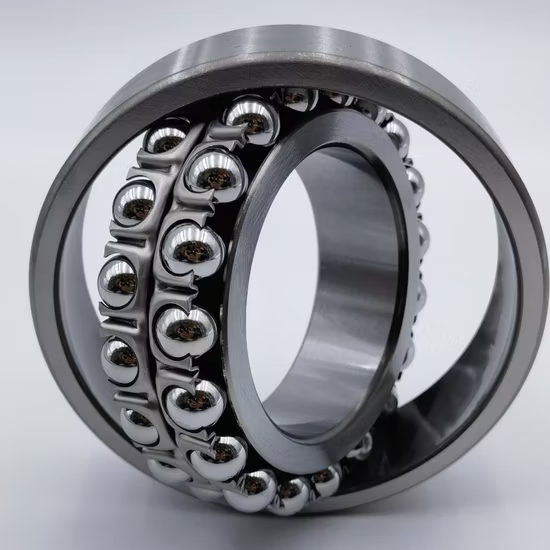


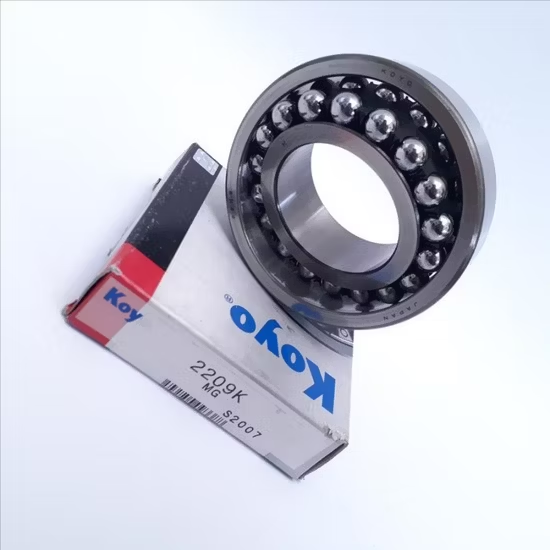
1315 Self-Aligning Ball Bearing 75×160×37 mm — accommodates shaft misalignment and housing deflection for electric motors and material handling equipment.
Multi-brand authorized sourcing — Procure 1315 units alongside other drive components in a single consolidated shipment without juggling multiple vendors.
| Parameter | Value |
|---|---|
| Designation | 1315 |
| Bearing Type | Self-Aligning Ball Bearing |
| Bore Diameter (d) | 75 mm |
| Outside Diameter (D) | 160 mm |
| Width (B) | 37 mm |
| Seal or Shield Type | Open, Rubber Seals, Iron Seals variants available |
| Cage Material | Polyamide or Machined Brass options depending on suffix |
| Clearance Class | CN, C3, C4 options based on application thermal expansion |
| Precision Class | Standard P0 to higher precision grades |
| Origin | Germany / Japan / Sweden / Malaysia / China |
Note: Specific suffix designations such as ATN and ETN9 require manufacturer catalog confirmation to verify exact cage material and thermal limits prior to ordering.
| Industry | Typical Applications |
|---|---|
| Electric Motors | Rotor shaft support accommodating slight housing deflection |
| Industrial Gearboxes | Input and output shaft mounting under radial loads |
| Material Handling | Conveyor pulley bearings and idler roller assemblies |
| Textile Machines | Spindle drives and yarn guide mechanisms requiring low friction |
Matching the base number ignores the critical cage material and internal clearance required for thermal stability.
In my years trading out of Dongguan, I have seen too many 1315 units fail because buyers only checked the basic 75x160x37mm dimensions. A client once installed an ATN variant in a high-temperature exhaust fan, resulting in the polyamide cage deforming and seizing the shaft completely . Suffix details dictate whether the component survives the actual operating environment, yet cross-reference errors frequently overlook these vital internal distinctions.
A correctly specified 1315 self-aligning ball bearing accommodates shaft deflection, but only if the internal geometry matches the load profile. We review your specific speed and temperature parameters to ensure the selected cage material and clearance class prevent thermal binding. This application-based selection review guarantees the component performs reliably under your exact operational conditions.
Equipment operating in dusty or high-heat environments demands careful attention to sealing and lubrication strategies. Open variants allow for custom high-temperature grease purging, while sealed options protect against abrasive particle ingress at the cost of higher friction. Selecting the wrong seal type or ignoring the thermal expansion of the shaft can quickly degrade the lubricant . Proper alignment between the operating temperature and the chosen internal clearance is essential to maintain the optimal rolling contact geometry.
The choice between polyamide and machined brass cages drastically alters the speed limits and vibration resistance of the assembly. Polyamide cages offer excellent sliding properties and lower noise for standard electric motor applications, but they fail rapidly if ambient temperatures exceed their thermal threshold. Conversely, brass cages handle higher speeds and heavier vibrations but require robust lubrication. Furthermore, installing a standard CN clearance in an application with significant shaft heating leads to internal preload and premature fatigue, making C3 or C4 clearances mandatory for thermal compensation.
Replacing a failed unit with a base-number match that ignores suffix requirements often leads to unplanned downtime and catastrophic secondary damage. A mismatched cage material will disintegrate under high-speed vibration, while incorrect clearance causes the rolling elements to skid and smear the raceways . These premature failures void equipment warranties and force maintenance teams into repeated, costly interventions.
We supply authorized inventory across all major international brands, meaning your mixed-brand requirements are fulfilled in one order. Every batch includes full traceability to the manufacturer, preventing the installation of counterfeits with soft inner rings that pass casual visual checks. Our cross-reference matching strictly aligns the base designation, cage material, and precision class simultaneously. We also provide application-based selection reviews to catch clearance errors before the components reach your facility.
To ensure precise selection, please share your operational parameters including radial and axial loads, rotational speed, and expected operating temperatures. Providing the OEM equipment number allows our engineering team to execute a rigorous cross-reference check against the original specifications. This technical review guarantees the supplied 1315 variant perfectly matches your mechanical and environmental requirements.
Q: How can I verify the authenticity of the 1315 bearings upon delivery?
A: Every shipment includes batch traceability documentation and packaging marked with official brand QR codes. You can scan these codes using the manufacturer's official mobile application to instantly verify the origin and production details. This process effectively filters out counterfeits that rely on cloned visual markers but lack genuine metallurgical integrity.
Q: Why is it critical to match the cage material during cross-referencing?
A: The cage material dictates the speed limit, vibration resistance, and thermal capacity of the assembly. Substituting a polyamide cage for a brass one in a high-temperature or high-vibration application will cause rapid cage degradation and catastrophic seizure. Exact suffix matching ensures the internal components survive the specific operational stresses of your machinery.
Q: What are the differences between CN, C3, and C4 internal clearances?
A: CN represents standard internal clearance suitable for normal operating temperatures. C3 and C4 provide greater internal space to accommodate thermal expansion of the shaft and housing during operation. Installing a standard clearance bearing in a high-heat environment causes internal preload, leading to excessive friction, overheating, and premature fatigue failure.
Q: How do I choose between open, rubber sealed, and iron sealed variants?
A: Open variants are ideal when the housing provides external sealing and allows for custom high-temperature grease purging. Rubber seals offer excellent protection against moisture and fine dust but generate higher friction heat. Iron shields provide basic contamination resistance with minimal friction, making them suitable for high-speed electric motor applications where external contamination is low.
Our 5-step process ensures every order is engineered, validated, and supported for optimal performance.
Technical needs assessment
Custom specifications
Free samples for $50k+
Pre-shipment inspection
On-site & predictive
Our certified engineers respond within 24 hours with detailed technical specifications, pricing, and lead time information.