01
Consultation
Technical needs assessment

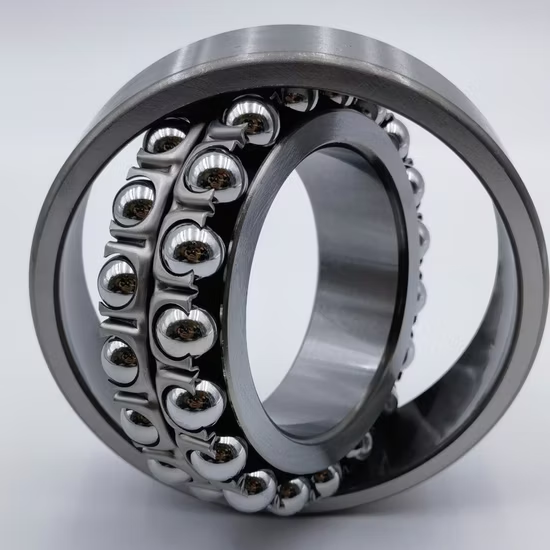
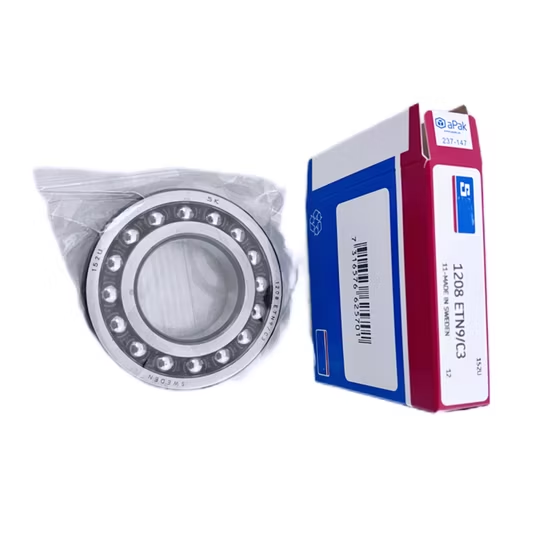


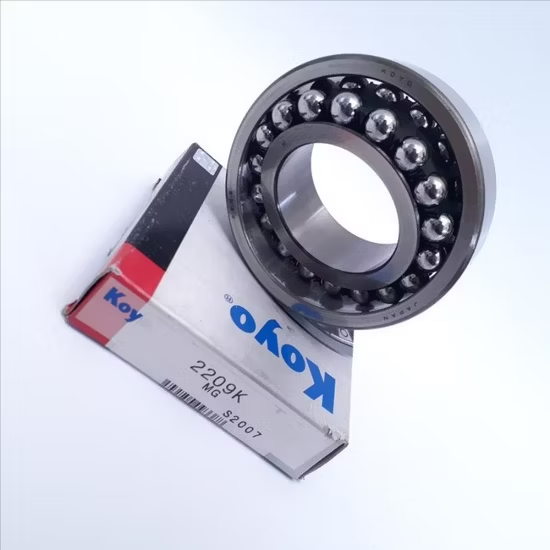
2210 E-2RS1tn9/W64 Self-Aligning Ball Bearing features an optimized internal design for enhanced load capacity.
Multi-Brand Authorized Sourcing — Fulfill mixed-brand procurement requirements in a single shipment without coordinating multiple vendors for your 2210 E-2RS1tn9/W64 self-aligning ball bearing needs.
| Parameter | Value |
|---|---|
| Designation | 2210 E-2RS1tn9/W64 |
| Bearing Type | Self-Aligning Ball Bearing |
| Internal Design | Optimized internal design (E) |
| Seal Type | Double-sided contact rubber seal (2RS1) |
| Cage Material | Glass fiber reinforced polyamide (tn9) |
| Special Feature | W64 suffix* |
| Origin | Germany / Japan / Sweden / Malaysia / China |
| HS Code | 848210 |
*The W64 suffix is unverified and requires manufacturer catalog confirmation for exact specification.
| Industry | Typical Applications |
|---|---|
| Electric Motors | Rotor shaft support subject to minor misalignment and thermal expansion |
| Conveyors | Pulley shaft bearings in bulk material handling systems exposed to dust |
| Agricultural Machinery | Drive shafts in harvesting equipment operating in humid, debris-heavy fields |
| Pumps | Impeller shafts requiring compensation for housing deflection under load |
Matching the base 2210 designation while ignoring the 2RS1 seal and tn9 cage suffixes is a frequent cause of thermal binding in hot environments. I have inspected numerous failed units in Dubai where standard clearance paired with basic seals expanded until the bearing seized completely. The 2210 E-2RS1tn9/W64 self-aligning ball bearing prevents this by integrating a wide-temperature polyamide cage and specialized lubrication to handle extreme thermal cycling. Procurement errors here rarely show up on paper, but they manifest as unplanned downtime on the factory floor .
Supplying the correct 2210 E-2RS1tn9/W64 self-aligning ball bearing goes beyond reading a part number; it requires verifying that the internal geometry and sealing arrangement match the physical environment. Our technical team reviews your specific load profiles and ambient temperatures to ensure the polyamide cage and contact seals will perform as intended. We intercept cross-reference errors before they reach your site, ensuring every suffix aligns perfectly with your machinery's operational reality.
Shaft deflection and housing misalignment generate uneven load distribution, while high ambient temperatures cause inner ring expansion that eliminates internal clearance. When standard grease breaks down under these thermal stresses, friction spikes and cage degradation follow rapidly. The double-sided contact rubber seals must retain specialized lubrication while blocking fine agricultural dust or conveyor debris . Managing the friction heat generated by the 2RS1 contact lips against the high-speed rotation of the electric motor shaft requires exact material compatibility.
The 'E' suffix denotes an optimized internal design that maximizes the load-carrying capacity and improves the rolling kinematics within the raceway. The '2RS1' configuration provides a tight contact seal, offering superior protection against moisture and particulate ingress compared to non-contact shields, though it introduces slight frictional torque. The 'tn9' glass fiber reinforced polyamide cage delivers excellent wear resistance and maintains structural integrity under vibration, operating smoothly across a broad temperature spectrum. Finally, the 'W64' designation indicates a specialized lubrication or material variant that demands strict verification against OEM manuals to ensure compatibility with food-grade or high-temperature requirements.
Installing a standard CN clearance bearing in an application demanding thermal expansion tolerance inevitably leads to catastrophic seizure and secondary damage to the shaft and housing. Relying on steel cages in environments requiring non-sparking or specific chemical resistance voids equipment warranties and accelerates fatigue. These failures trigger extensive unplanned downtime and expensive emergency freight charges. Adhering to ISO 281 life calculation standards requires exact alignment of the internal clearance and cage material with the actual operating temperature .
We maintain authorized distribution across all major international brands, allowing you to consolidate mixed-brand orders without compromising on documentation. Our cross-referencing process strictly validates the 2RS1 seal type and tn9 cage material, preventing the common error of substituting base numbers while ignoring critical suffixes. Every 2210 E-2RS1tn9/W64 self-aligning ball bearing we dispatch includes full batch traceability to the original manufacturer. We provide application-based selection reviews to confirm that the internal clearance and sealing arrangement will withstand your specific thermal and load conditions.
To ensure precise application matching, please provide your radial and axial load estimates, operating speeds, and expected ambient temperature ranges. Sharing the specific OEM equipment number allows our engineering team to perform a comprehensive cross-reference check, verifying that the clearance and cage suffixes align with the original design. Detailing the environmental exposure, such as heavy dust or moisture, helps us confirm the suitability of the contact seals and specialized lubrication. This data enables us to conduct a thorough L10 life calculation and validate the selection before quotation.
Q: Why must cross-referencing include the seal and cage suffixes rather than just the base 2210 number?
A: Matching only the base number often results in receiving open or shielded variants that fail rapidly in dusty or humid conditions. The 2RS1 seal and tn9 cage are critical for retaining lubrication and withstanding thermal expansion. Substituting these suffixes alters the friction profile and temperature limits, leading to premature thermal binding and catastrophic field failure under load.
Q: How does the polyamide tn9 cage compare to brass alternatives in high-temperature applications?
A: The glass fiber reinforced polyamide cage offers excellent wear resistance, low friction, and quiet operation, making it ideal for electric motors and conveyors. However, its continuous operating temperature limit is lower than that of machined brass cages. In applications exceeding standard thermal thresholds, a brass alternative might be required to prevent cage deformation and subsequent rolling element skidding.
Q: What impact do the 2RS1 contact rubber seals have on the bearing's limiting speed?
A: Contact rubber seals provide superior exclusion of dust and moisture compared to non-contact metal shields, but they generate higher frictional torque against the inner ring. This friction produces additional heat, effectively reducing the maximum permissible limiting speed. Proper thermal management and adequate heat dissipation in the housing are essential when operating near the upper speed boundaries.
Q: How should we address shaft misalignment during the installation of this self-aligning bearing?
A: While the spherical outer raceway accommodates static misalignment and minor shaft deflection, it cannot compensate for severe housing distortion or dynamic shaft bending. Ensure the housing bore is machined to the correct tolerance and that the shaft is straight. Forcing the bearing into a misaligned housing induces preload, eliminating the internal clearance and generating excessive heat during operation.
Q: What is the most reliable method to verify the authenticity and batch origin of the received bearings?
A: Every genuine unit features specific traceability markings and QR codes applied by the manufacturer. By scanning these codes using the official mobile application provided by the respective bearing brand, you can instantly verify the production batch, manufacturing facility, and authenticity. We also supply matching physical certificates of conformity and material test reports with every shipment.
Our 5-step process ensures every order is engineered, validated, and supported for optimal performance.
Technical needs assessment
Custom specifications
Free samples for $50k+
Pre-shipment inspection
On-site & predictive
Our certified engineers respond within 24 hours with detailed technical specifications, pricing, and lead time information.