01
Consultation
Technical needs assessment

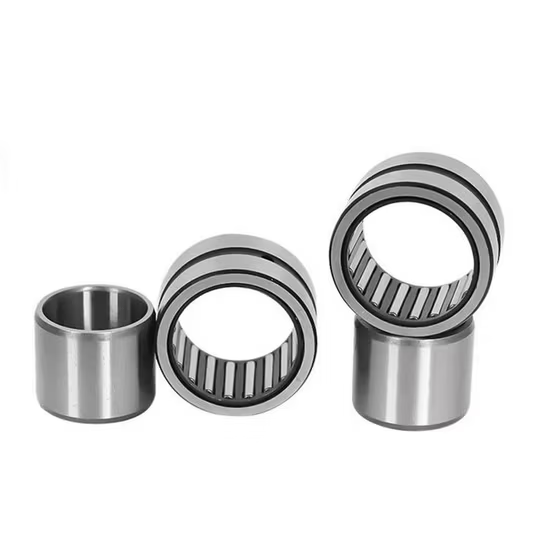
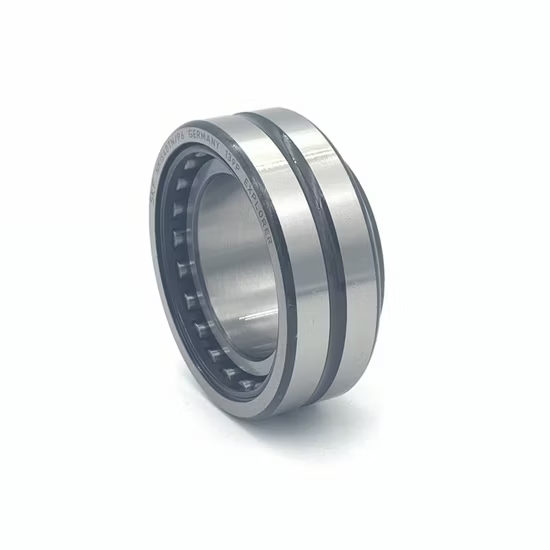
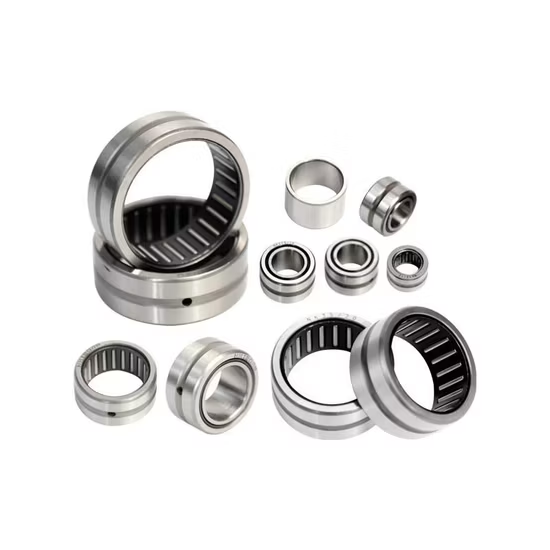
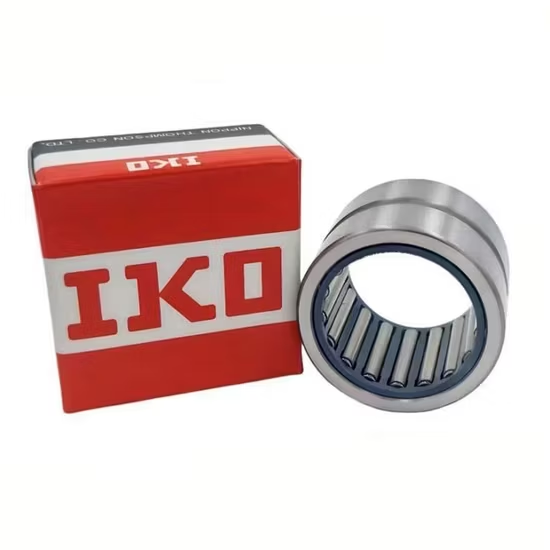
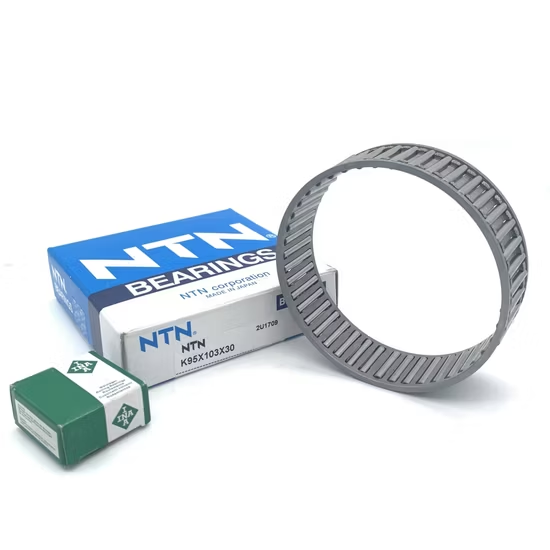
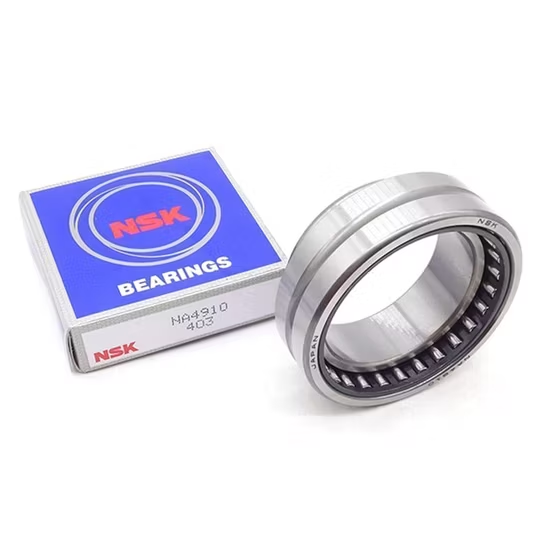
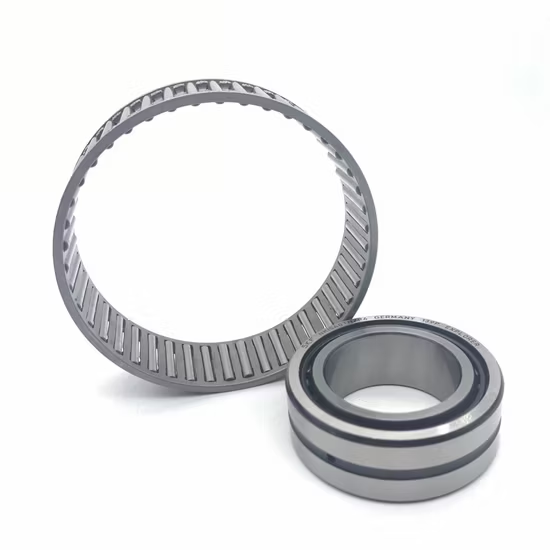
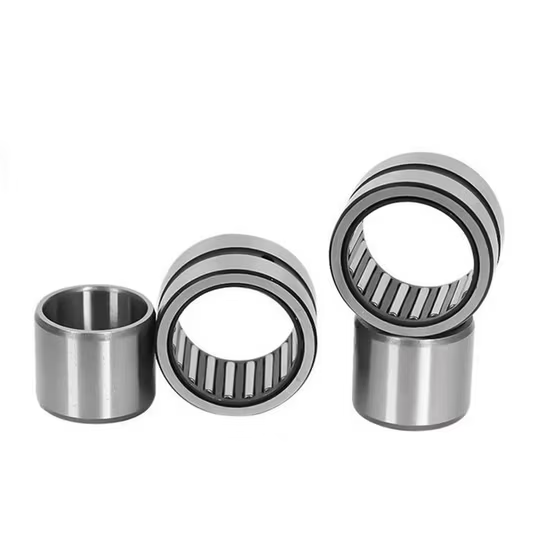
Nkia 5904 Combined Needle Roller Angular Contact Ball Bearing — open type design requires external lubrication and sealing for precision equipment.
Traceable Batch Origins — Every Nkia 5904 combined needle roller bearing ships with manufacturer lot documentation for full supply chain visibility.
| Parameter | Value |
|---|---|
| Designation | Nkia 5904 |
| Bearing Type | Combined Needle Roller Bearing (Needle Roller and Angular Contact Ball Bearing) |
| Load Direction | Radial Bearing |
| Style Options | Without Outer Ring, With Outer Ring, Without Inner Ring, With Inner Ring |
| Material | Bearing Steel |
| Type | Open |
| Origin | Germany, Japan, Sweden, Malaysia, China |
| HS Code | 8482500090 |
| Industry | Typical Applications |
|---|---|
| Machine Tool Manufacturing | Spindle support mechanisms requiring combined radial and axial load handling |
| Robotics and Automation | Joint articulation points with compact cross-sections and high precision demands |
| Precision Equipment | Optical measuring devices and indexing tables needing rigid shaft support |
| Industrial Gearboxes | Planetary gear sets and high-speed input shafts with complex force vectors |
Matching the 5904 dimension series is never enough for combined arrangements.
Procurement teams often source replacements based solely on the base designation, overlooking critical internal design differences in the angular contact and needle roller sections. This oversight leads to rapid cage failure or thermal binding in precision spindles when the exact internal arrangement is not verified against the original equipment requirements . A seemingly correct Nkia 5904 combined needle roller bearing can still fail prematurely if the internal geometry or cage design does not match the specific dynamic loads of the application.
Machine tool spindles and robotics joints demand simultaneous handling of heavy radial forces and unidirectional axial thrust. The Nkia 5904 combined needle roller bearing addresses this by integrating a needle roller section for high radial rigidity with an angular contact ball section for axial locating. We verify the exact internal arrangement during cross-referencing to ensure the axial load capacity aligns perfectly with your spindle's operational profile, preventing unexpected shaft displacement.
High-speed spindle operations generate substantial friction heat, which directly impacts internal clearance and lubrication film thickness. An open type design requires precise external lubrication management to flush out wear debris while maintaining an adequate oil film across both the needle and ball raceways . Thermal expansion of the shaft and housing must be calculated to prevent the angular contact section from binding under elevated operating temperatures, making initial clearance selection a critical engineering decision.
The NKIA prefix designates a specific combination of needle rollers and angular contact balls, while 5904 defines the outer dimension series. Because this is an open type bearing manufactured from bearing steel, it relies entirely on the housing and shaft seals to retain lubricant and exclude contaminants. The absence of additional suffixes means the internal clearance, cage material, and precision class must be explicitly confirmed against the OEM blueprint. Selecting the correct style—whether with or without inner and outer rings—depends strictly on whether the adjacent shaft and housing surfaces are hardened and ground to serve as raceways.
Installing a mismatched combined bearing in a precision spindle rarely results in a graceful degradation; it typically causes catastrophic damage to the shaft journal and housing bore. Unplanned downtime escalates quickly when a soft inner ring or incorrect cage material leads to sudden seizure under high-speed rotation. Such failures often void equipment warranties and necessitate complete spindle rebuilds, turning a minor component replacement into a massive financial burden .
Mixed-brand orders are consolidated under our authorized distribution network, ensuring every component meets the same traceability standards. We match cross-references based on the exact combined internal arrangement, not just the 5904 base dimension, eliminating the risk of receiving a radial-only substitute. Our application-based selection review evaluates your specific load, speed, and temperature parameters to confirm the open design suits your lubrication system. Furthermore, batch traceability is guaranteed for every unit, protecting your facility from counterfeits with unverified metallurgy.
To ensure precise application matching, please provide the exact radial and axial load profiles, maximum operational speeds, and steady-state temperature ranges. Sharing the OEM equipment number or the original manufacturer's part number allows our engineering team to perform a comprehensive cross-reference check. This data enables us to verify the required internal clearance and confirm the optimal ring configuration for your specific housing design.
Q: How do we verify the authenticity of the Nkia 5904 via official channels?
A: Every unit includes a unique batch code that can be scanned using the original manufacturer's official mobile application. This digital verification confirms the bearing steel origin and production facility, effectively filtering out counterfeits with cloned QR codes or soft inner rings that pass casual visual inspections.
Q: What cross-reference rules apply to combined needle roller bearings?
A: Cross-referencing must align the base dimension series, the specific combined internal arrangement, and the exact ring configuration. Matching only the 5904 number often results in receiving a bearing with a different axial load capacity or cage design, leading to rapid thermal binding in precision spindle applications.
Q: How does the open design affect maintenance cycles?
A: The open type lacks integrated seals, meaning lubrication intervals and contamination exclusion rely entirely on the spindle housing design. This requires strict adherence to external oil filtration and scheduled flushing to prevent abrasive particles from damaging the exposed needle rollers and angular contact balls.
Q: Why do base number matches fail in machine tool replacements?
A: Base numbers only define outer dimensions, ignoring critical internal geometry like cage material and precision class. Installing a standard replacement without verifying these hidden specifications often causes premature cage fracture under the high-vibration and high-speed conditions typical of machine tool spindles.
Our 5-step process ensures every order is engineered, validated, and supported for optimal performance.
Technical needs assessment
Custom specifications
Free samples for $50k+
Pre-shipment inspection
On-site & predictive
Our certified engineers respond within 24 hours with detailed technical specifications, pricing, and lead time information.