01
Consultation
Technical needs assessment
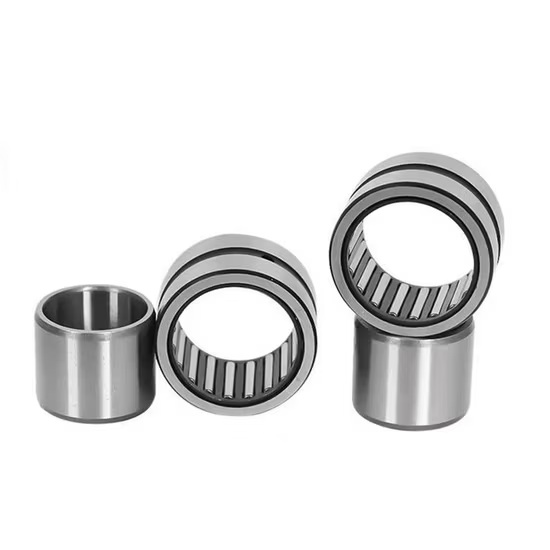
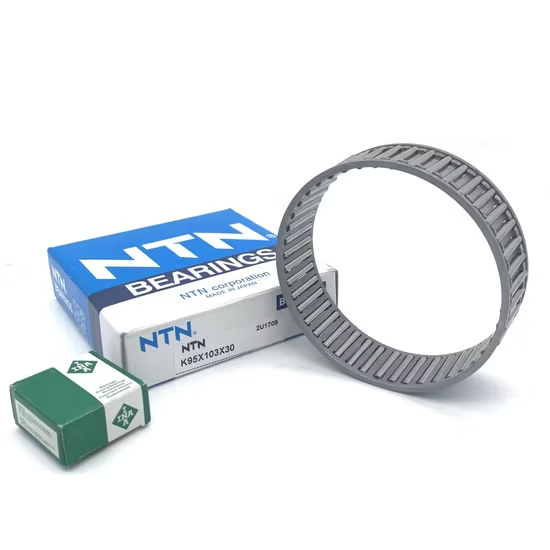
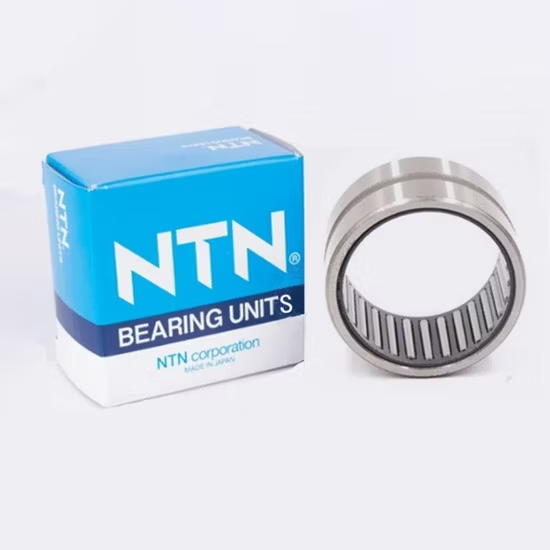
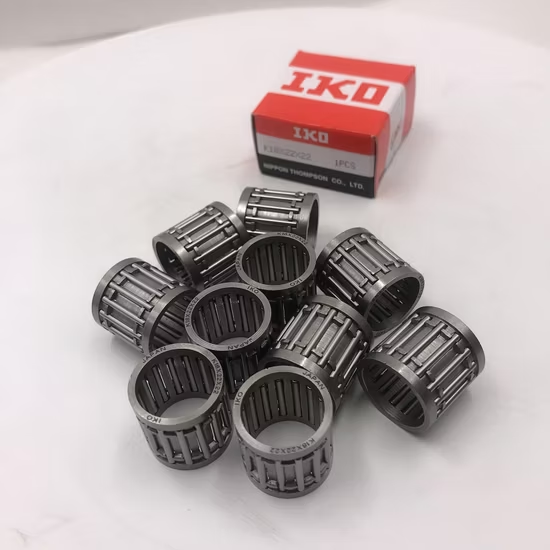
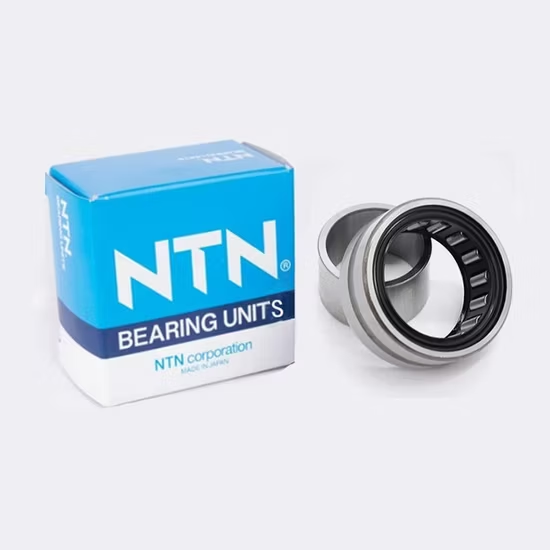
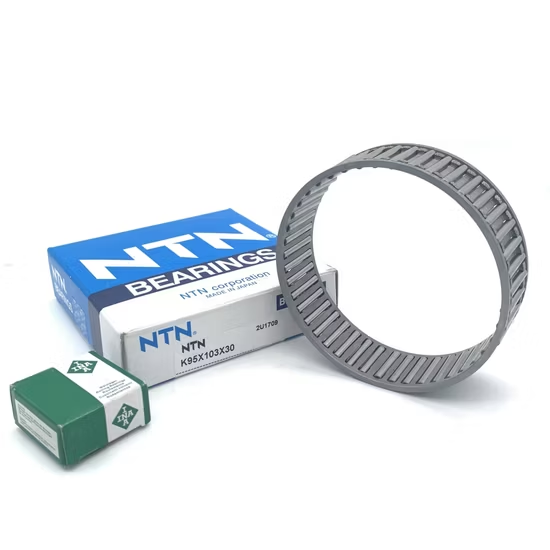
HK0610 Needle Roller Bearing — drawn cup design in bearing steel with open-type configuration and integrated cage for uniform needle spacing under radial loads.
Full Brand Authorization — Source mixed-brand needle roller requirements in a single consolidated order without juggling multiple vendors.
| Parameter | Value |
|---|---|
| Designation | HK0610 |
| Bearing Type | Needle Roller Bearing |
| Cage Material | With Cage |
| Load Direction | Radial |
| Material | Bearing Steel |
| Type | Open |
| Origin | Germany / Japan / Sweden / Malaysia / China |
Note: The specific dimensional breakdown for the 06 and 10 suffix codes requires manufacturer catalog confirmation to ensure exact fitment.
| Industry | Typical Applications |
|---|---|
| Electric Motors | Compact rotor shaft supports and auxiliary drive mechanisms |
| Industrial Gearboxes | Planetary gear sets and high-ratio reduction shafts |
| Automotive Repair | Transmission internals, steering columns, and pedal assemblies |
| Agricultural Machinery | Pivot joints in linkages and compact PTO drive shafts |
Matching the basic designation is never enough when internal cage geometry dictates survival.
Procurement teams frequently source drawn cup bearings based solely on the primary number, overlooking critical internal design variations. When a standard cage is installed in a high-vibration environment, the rolling elements skew, leading to rapid cage fracture and subsequent shaft scoring . Sourcing the correct HK0610 needle roller bearing requires verifying the exact cage material and clearance class to prevent these catastrophic field failures.
Selecting the right HK0610 needle roller bearing for compact radial spaces demands more than just checking the envelope dimensions. Our engineering review ensures the drawn cup wall thickness and cage guidance system align with your specific housing rigidity. We cross-reference the internal geometry to guarantee the bearing handles the exact radial loads your equipment generates without compromising the shaft interface.
Open drawn cup designs rely heavily on the housing bore for structural support and external lubrication pathways. In environments with heavy radial shock loads, the thin outer ring requires a precisely machined and hardened housing seat to prevent creeping. Adequate oil flow or grease replenishment is critical, as the open design offers no built-in contamination barriers, making the host equipment’s sealing efficiency the primary defense against abrasive particle ingress .
The HK prefix designates a metric drawn cup needle roller bearing, optimized for high load capacity within a minimal radial cross-section. The subsequent numerical suffixes define the specific bore and width parameters, which must be cross-referenced against the OEM manual rather than assumed from generic charts. The inclusion of a cage ensures the needle rollers are evenly spaced, preventing edge-loading and reducing friction at higher rotational speeds compared to full-complement alternatives.
Installing a drawn cup bearing with an incorrect internal clearance or mismatched cage material inevitably leads to unplanned downtime. Thermal expansion in tight housings can eliminate internal clearance, causing the rollers to bind and generate excessive heat. This premature failure not only destroys the bearing but often scores the expensive ground shaft, turning a simple component replacement into a major assembly rebuild .
We do not just ship the requested part number; we verify the internal design against your application parameters. Our cross-referencing process checks the cage material and clearance to ensure the HK0610 needle roller bearing matches the OEM intent, avoiding the common trap of receiving a visually similar but internally incompatible part. Every batch is traced back to the manufacturer, and we provide application-based selection reviews to catch suffix errors before the parts reach your assembly line.
To ensure the selected drawn cup bearing meets your exact operational demands, provide your radial load profiles, operating speeds, and housing bore specifications. Sharing the OEM equipment number or the original manufacturer's part number allows our team to execute a precise cross-reference check. Detailing the ambient temperature and lubrication method helps us confirm the internal geometry is perfectly suited for your application.
Q: How do I verify the authenticity of the HK series bearings upon delivery?
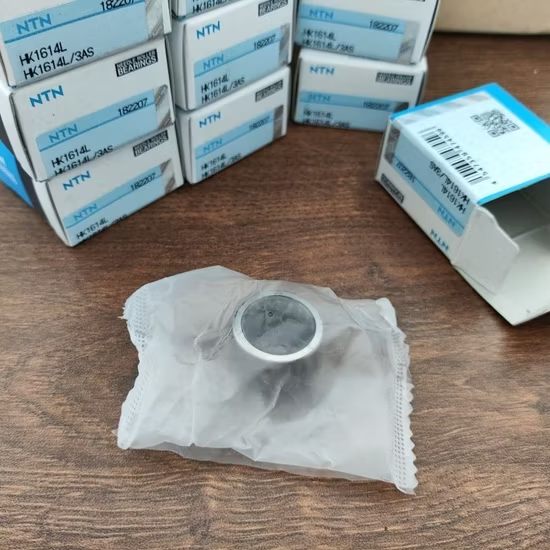
A: Upon receiving the shipment, you can use the official brand application on your smartphone to scan the QR codes printed on the packaging. This instantly verifies the batch origin and confirms the parts are genuine, protecting your machinery from the severe risks associated with counterfeit bearings featuring soft inner rings or cloned labels.
Q: What internal parameters must align during a cross-reference for needle roller bearings?
A: Beyond matching the basic envelope dimensions, it is critical to verify the cage material, the specific internal clearance class, and the roller guidance method. A mismatch in these internal design elements can lead to thermal binding or cage fracture under load, even if the outer dimensions fit the housing perfectly.
Q: Where is the boundary between drawn cup and solid ring needle bearings?
A: Drawn cup bearings are ideal for compact, high-volume applications where the housing bore is hardened and precision-ground to act as the outer raceway. Solid ring bearings are selected when the housing lacks sufficient rigidity or hardness, requiring the bearing to provide its own thick, machined outer structural support.
Q: How should open drawn cup bearings be lubricated in dusty environments?
A: Since the open design lacks integral seals, the host equipment must feature effective external sealing to block contaminants. Lubrication should rely on a continuous flow of filtered oil or frequent replenishment of high-quality grease to flush out any microscopic particles that bypass the housing seals, preventing abrasive wear on the rolling elements.
Our 5-step process ensures every order is engineered, validated, and supported for optimal performance.
Technical needs assessment
Custom specifications
Free samples for $50k+
Pre-shipment inspection
On-site & predictive
Our certified engineers respond within 24 hours with detailed technical specifications, pricing, and lead time information.