01
Consultation
Technical needs assessment
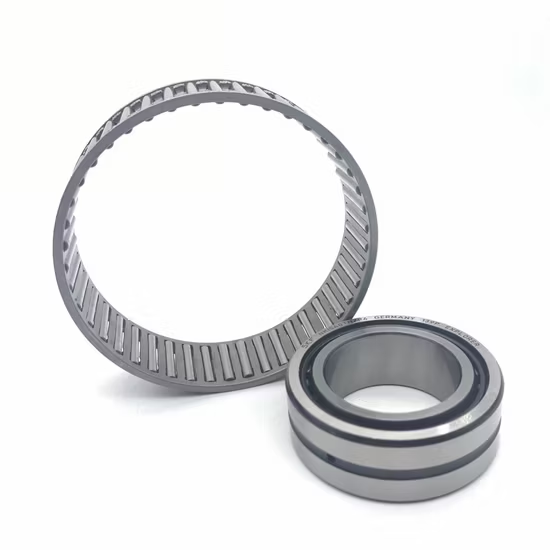
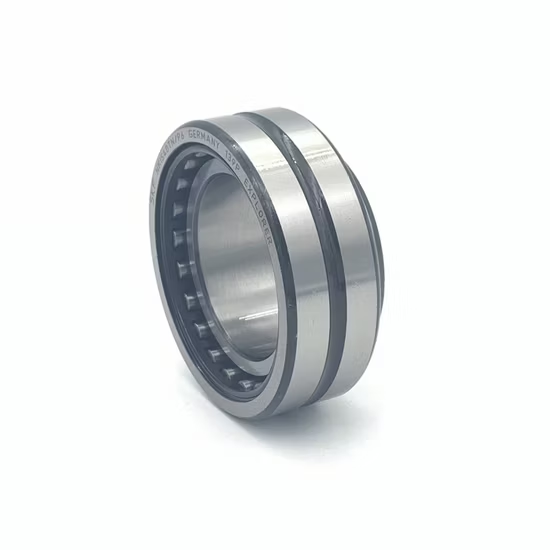
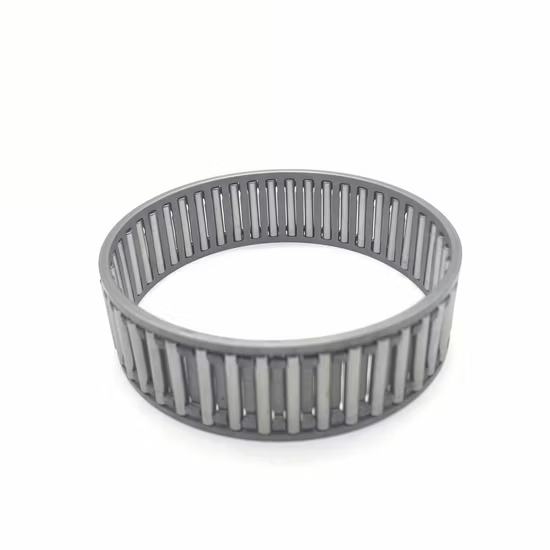
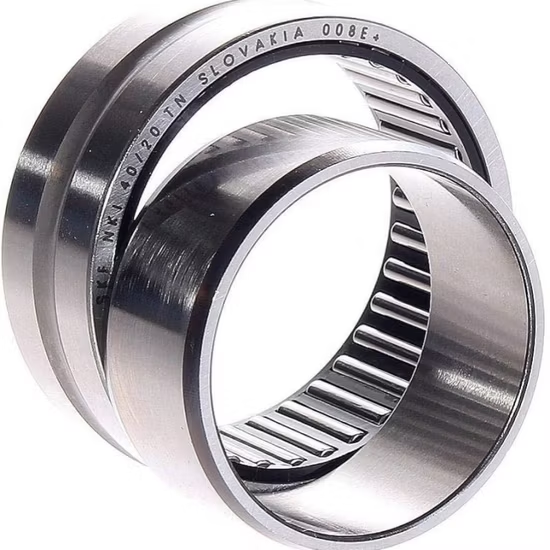
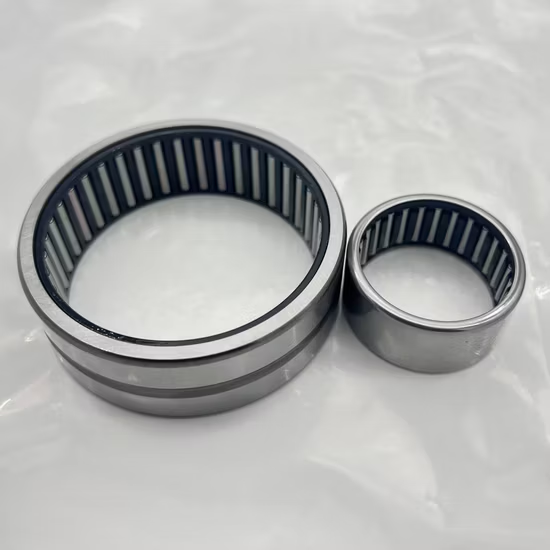

B-2120 Full Complement Needle Roller Bearing — engineered for high radial loads.
Official App QR Verification — Every B-2120 unit ships with traceable batch codes scannable via the manufacturer's official application to eliminate cloned counterfeits.
| Parameter | Value |
|---|---|
| Designation | B-2120 |
| Bearing Type | Needle Roller Bearing (Full Complement) |
| Load Direction | Radial |
| Material | Bearing Steel |
| Type | Open |
| Bearing Style | Available in variants with or without inner and outer rings |
| Origin | Available from multiple global manufacturing origins |
Note: The B-2120 suffix remains unverified and requires manufacturer catalog confirmation for exact internal design details.
| Industry | Typical Applications |
|---|---|
| Automotive & Heavy Vehicles | Transmission shafts and planetary gear sets |
| Industrial Manufacturing | Heavy-duty gearboxes and material handling conveyors |
| Agricultural Machinery | PTO shafts and harvesting equipment drive trains |
Skewed roller alignment and inadequate lubrication cause rapid thermal binding in cageless setups.
In the Pearl River Delta trading circuit, I have seen countless B-2120 needle roller bearing units scrapped due to lubrication starvation. When cross-referencing base numbers, buyers often overlook the absence of a cage, which demands extremely precise roller arrangement. If the internal geometry is slightly off, the rolling elements skew under heavy radial loads, generating immense friction heat . Counterfeit units with soft inner rings simply crush under these extreme conditions, leading to catastrophic equipment downtime.
Selecting the correct B-2120 needle roller bearing for space-constrained, high-load environments requires strict attention to internal clearances and shaft hardness. Because this full complement design lacks a cage to separate the rolling elements, the maximum number of rollers is utilized to achieve exceptional radial load capacity. Our technical team reviews your specific application parameters to ensure the cross-reference aligns perfectly with the required internal geometry, preventing the premature wear commonly seen when generic substitutes are installed.
Operating an open-type full complement bearing inside an industrial gearbox presents unique thermal and lubrication challenges. Without a cage to retain grease, the rolling elements rely entirely on the host system's oil splash or circulation for cooling and friction reduction. If the oil viscosity is insufficient or the flow rate drops, metal-to-metal contact between adjacent rollers escalates rapidly . Furthermore, thermal expansion from localized hotspots can inadvertently close the internal radial clearance, causing the bearing to seize.
The absence of a cage in this design maximizes the load-bearing cross-section, making it ideal for slow-speed, high-load oscillating movements. Since the bearing is open, it integrates seamlessly into gearboxes where the transmission fluid acts as both a lubricant and a coolant. While standard bearing steel is utilized for the rings and rollers to achieve the necessary surface hardness , alternative material options like specialized stainless variants are available for applications requiring enhanced corrosion resistance. The open configuration also mandates that the mating shaft and housing bore meet strict surface finish and hardness criteria to serve as the bearing raceways.
Purchasing based solely on the base designation while ignoring internal design suffixes leads to severe operational penalties. Installing a standard clearance unit where a C3 equivalent is required for thermal expansion will result in preload-induced binding once the gearbox reaches operating temperature. This unplanned downtime not only halts production but often causes catastrophic damage to adjacent gears and shafts. According to ISO 281 standards, such misalignment of operational clearances drastically reduces the calculated fatigue life, turning a simple component replacement into a major mechanical overhaul.
Sourcing a full complement needle bearing requires more than just matching the outer dimensions; it demands rigorous verification of the internal roller profiling and end-play tolerances. We provide authorized multi-brand coverage, meaning your mixed-brand gearbox overhaul can be fulfilled in a single, fully documented shipment. Our cross-reference process specifically checks for the presence or absence of inner rings and exact clearance classes, eliminating the field failures caused by superficial part number matching. Every shipment includes batch traceability, ensuring you receive genuine components rather than visually identical clones with substandard metallurgy.
To ensure the selected unit meets your operational demands, please provide the exact radial loads, operating speeds, and thermal profiles of your gearbox or transmission. If you are replacing an existing component, sharing the OEM equipment number allows our engineering team to perform a precise cross-reference check. Supplying these application parameters enables us to verify the internal clearance and confirm the optimal lubrication strategy for your specific machinery.
Q: Why does the base number match but the bearing still fails in my gearbox?
A: Base numbers often ignore critical internal suffixes like clearance class or specific roller profiling. A standard clearance bearing installed in a high-temperature gearbox will thermally bind and seize. We verify all suffixes during cross-referencing to ensure the internal geometry matches your exact thermal and load requirements, preventing premature field failures.
Q: How can I verify the authenticity of the B-2120 units upon delivery?
A: Every unit we supply features batch traceability and a unique QR code. You can scan this code using the brand's official mobile application to verify the production lot and origin. This digital verification instantly exposes counterfeit products that rely on cloned visual markings and soft, substandard inner rings.
Q: What are the lubrication requirements for this open full complement design?
A: Without a cage to retain grease, this open design relies entirely on the host system's oil circulation or splash lubrication. You must ensure the gearbox oil provides adequate film thickness to prevent metal-to-metal contact between adjacent rollers. We can review your oil viscosity and flow rates to confirm compatibility with the bearing's operational speed.
Q: How do you handle cross-references for variants with or without inner rings?
A: We do not just match the outer dimensions; we verify whether your application requires a drawn cup, a solid outer ring, or a separ*ace constraints, we supply the exact structural variant needed. This prevents the rapid wear that occurs when a shaft is improperly used as a raceway.
Our 5-step process ensures every order is engineered, validated, and supported for optimal performance.
Technical needs assessment
Custom specifications
Free samples for $50k+
Pre-shipment inspection
On-site & predictive
Our certified engineers respond within 24 hours with detailed technical specifications, pricing, and lead time information.

![Zarn 55115 Ltn Combined Needle Roller Bearing 55x115x82mm [WARN] draft identifier mismatch](https://skfiso.com/wp-content/uploads/2026/09/zarn-55115-ltn-combined-needle-roller-bearing-55x115x82mm-warn-draft-identifier-mismatch-e60599.avif)
![HK2210 HK2212 HK2216 HK2220 HK2230 Needle Roller Bearing [WARN] draft identifier mismatch](https://skfiso.com/wp-content/uploads/2026/09/hk2210-hk2212-hk2216-hk2220-hk2230-needle-roller-bearing-warn-draft-identifier-mismatch-cbe937.avif)
