01
Consultation
Technical needs assessment


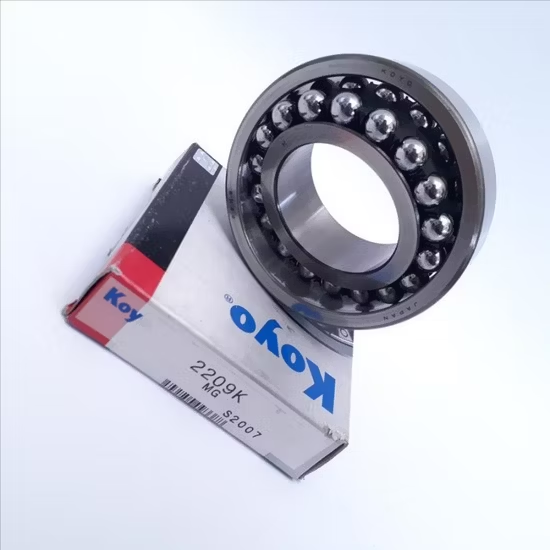


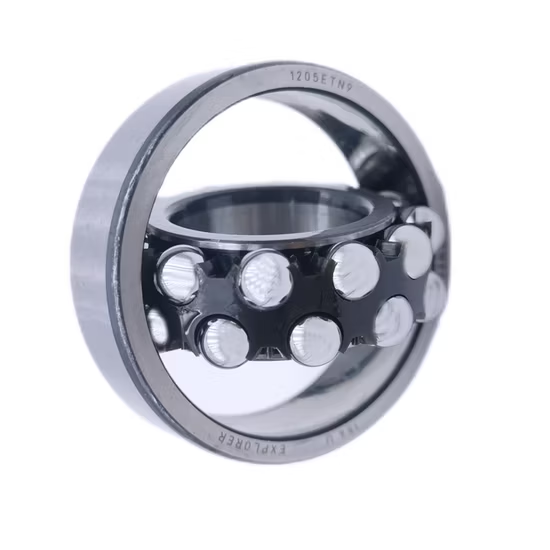
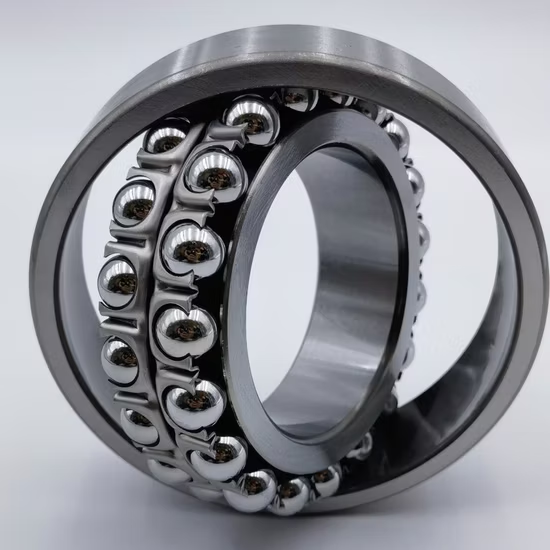
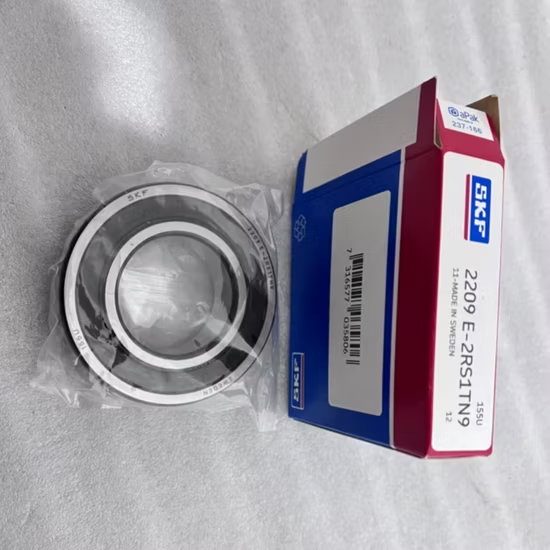
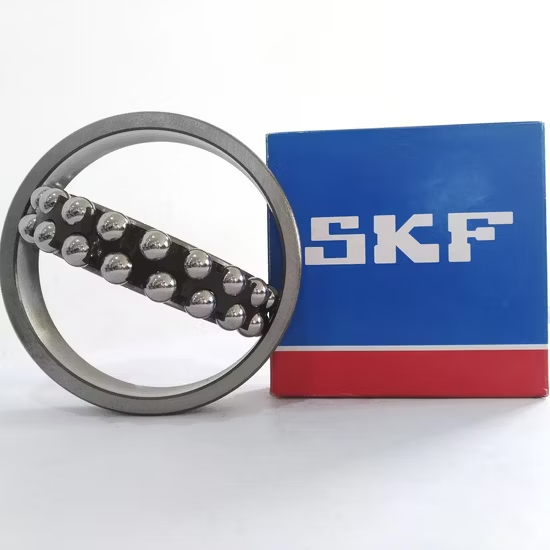
High-Speed Self-Aligning Ball Bearing for Electric Motors and Industrial Gearboxes — engineered for demanding high-speed operations, offering open, rubber seal, and iron seal configurations to precisely match diverse contamination levels and lubrication requirements.
Multi-brand authorized coverage — source SKF, FAG, and NSK self-aligning options in a single consolidated shipment without juggling multiple vendors.
| Parameter | Value |
|---|---|
| Product Type | Self-Aligning Ball Bearing |
| Bearing Style | Open, Rubber Seals, Iron Seals |
| Material Options | Available in standard bearing steel, stainless steel, or ceramic variants |
| Origin | Germany, Japan, Sweden, Malaysia, China |
| HS Code | 848210 |
| Certification | Certificate of Conformity, Batch Traceability |
| Industry | Typical Applications |
|---|---|
| Electric Motors | High-speed rotor support requiring compensation for minor housing misalignment |
| Industrial Gearboxes | Intermediate shaft support subjected to continuous housing deflection under load |
| Agricultural Machinery | Drive shafts in harvesting equipment exposed to heavy dust and shock loads |
| Pumps & Conveyors | Impeller and roller shafts experiencing thermal expansion and belt tension |
Matching the base designation is never enough when internal clearances and seal types dictate thermal survival.
I once inspected a failed motor where a standard clearance bearing was installed in a high-temperature zone, causing the cage to shatter from thermal binding. Procurement teams often rely on basic cross-references, overlooking that a rubber-sealed variant generates excessive friction heat at high RPMs. This oversight leads to catastrophic downtime . Finding a competent high-speed self-aligning ball bearing supplier ensures these critical suffix parameters are verified before the order is placed.
Selecting the correct sealing arrangement is critical for maintaining operational stability. An open design allows for external lubrication and lower friction, making it ideal for ultra-high-speed electric motor applications. Conversely, rubber seals provide excellent contamination exclusion for agricultural machinery but introduce friction heat that limits maximum RPM. Iron seals offer a middle ground, protecting against coarse dust without the severe speed restrictions of contact seals. Our technical team reviews your specific rotational velocity to recommend the optimal configuration.
High-speed applications generate substantial internal heat, which directly impacts the required internal clearance. If a standard clearance class is used where thermal expansion demands a C3 or C4 equivalent, the rolling elements will bind against the raceways. Furthermore, shaft deflection in gearboxes introduces combined loads that test the bearing's self-aligning capability. Proper lubrication selection must also account for the operating temperature to prevent grease degradation .
The internal geometry of a self-aligning ball bearing allows the inner ring to pivot relative to the outer ring, accommodating static misalignment. When evaluating material options, standard bearing steel serves most general industrial needs, while stainless steel variants are available for environments with moisture exposure. Ceramic rolling element options can be considered for applications requiring electrical insulation or reduced centrifugal load at extreme speeds. The selected internal clearance must always align with the anticipated thermal gradient between the shaft and the housing to prevent preload-induced fatigue.
Installing a bearing with incorrect internal clearance or inappropriate seals rarely results in a graceful degradation. Instead, it triggers rapid thermal runaway, leading to cage fracture and severe shaft scoring. Such unplanned downtime voids equipment warranties and forces emergency procurement at premium costs. According to failure analysis frameworks, a significant share of premature failures stems directly from application mismatch rather than manufacturing defects .
We do not merely process part numbers; we validate the application context. While other vendors might ship an iron-sealed unit for a high-RPM spindle, we flag the friction risk and propose an open or non-contact alternative. Our cross-brand interchange database matches internal geometry and clearance classes, not just the base numeric designation. Every shipment is backed by authorized channel documentation, ensuring you receive genuine components with full batch traceability. We eliminate the guesswork that leads to field failures.
To ensure optimal performance, please provide the specific equipment model, available mounting space, and anticipated radial and axial loads. Detailing the operating environment, including ambient temperature and contamination levels, allows our engineering team to determine the precise internal clearance and seal configuration required. We will then supply a comprehensive technical proposal outlining the recommended specifications and cross-reference options for your approval.
Q: How do I determine the correct internal clearance for my high-speed application?
A: Internal clearance depends on the thermal gradient between the rotating shaft and the stationary housing. High-speed operations generate friction heat, causing the inner ring to expand. Provide your operating temperature and speed parameters, and our engineering team will calculate the necessary clearance class to prevent thermal binding and ensure stable operation.
Q: What is the speed limit difference between rubber seals and iron seals?
A: Rubber seals provide superior contamination protection but create contact friction, which generates heat and limits the maximum permissible RPM. Iron seals offer a non-contact or light-contact labyrinth effect, allowing for significantly higher rotational speeds while still excluding coarse dust. We evaluate your specific RPM and environment to recommend the appropriate boundary.
Q: How do you ensure cross-reference accuracy across different brands?
A: We do not rely solely on base designation matching. Our technical review process verifies that the internal clearance, cage material, and seal types of the alternative brand perfectly align with your original equipment requirements. This prevents the subtle mismatches that often lead to premature field failures.
Q: Can I get ceramic rolling elements for these self-aligning bearings?
A: Yes, ceramic hybrid variants are available for specialized applications. These options reduce centrifugal forces at high speeds and provide electrical insulation to prevent current pitting in electric motors. Share your specific electrical and speed requirements so we can confirm the optimal material configuration.
Q: How is the origin and authenticity of the bearings verified?
A: Every bearing we supply includes a Certificate of Conformity and batch traceability documents. You can verify the authenticity directly by scanning the QR codes on the packaging using the respective brand's official mobile application, ensuring complete transparency from the factory to your facility.
Our 5-step process ensures every order is engineered, validated, and supported for optimal performance.
Technical needs assessment
Custom specifications
Free samples for $50k+
Pre-shipment inspection
On-site & predictive
Our certified engineers respond within 24 hours with detailed technical specifications, pricing, and lead time information.