01
Consultation
Technical needs assessment



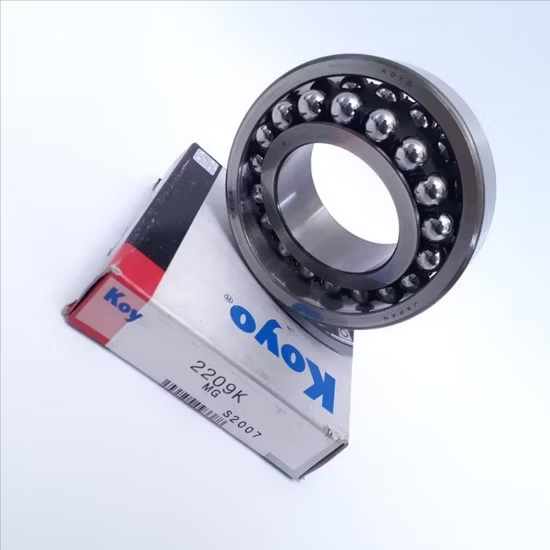
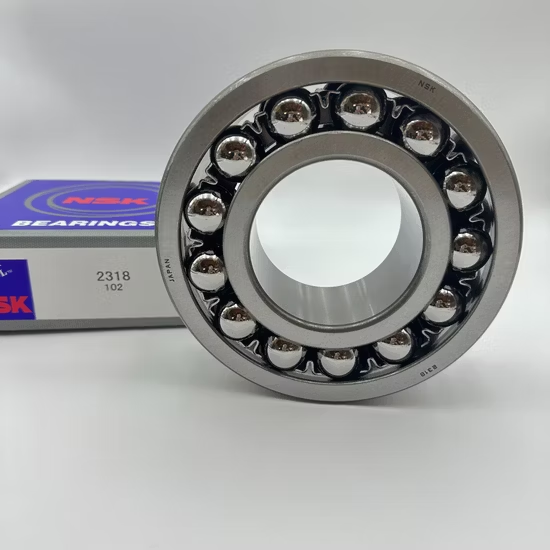

1200 1201 1202 1203 1204 1205 K Atn Self-Aligning Ball Bearing — featuring a 1:12 tapered bore for secure adapter sleeve mounting in excavators.
Cross-reference triple alignment — verifying the base designation, C3 internal clearance, and K tapered bore simultaneously prevents thermal binding in excavator pivot joints.
| Parameter | Value |
|---|---|
| Designation | 1200 1201 1202 1203 1204 1205 K Atn |
| Bearing Type | Self-Aligning Ball Bearing |
| Bore Type | 1:12 tapered bore (K suffix) |
| Seal or Shield Type | Open, Rubber Seals, Iron Seals |
| Feature | Low Noise, High Speed, Long Service Life |
| Origin | Germany, Japan, Sweden, Malaysia, China |
Note: The 'Atn' suffix is an unverified designation requiring manufacturer catalog confirmation prior to procurement.
| Industry | Typical Applications |
|---|---|
| Construction & Earthmoving | Excavator boom pivot joints, track tensioner idlers |
| Mining & Quarrying | Vibrating screen eccentric shafts, crusher drive pulleys |
| Material Handling | Conveyor belt return idlers, stacker slew mechanisms |
| Agriculture | Harrow disc gang mounts, tractor PTO shaft supports |
Matching the basic model number while ignoring the K taper and clearance class guarantees premature seizure under heavy shock loads.
I have seen excavators shut down completely in the middle of a Dubai summer because a maintenance crew installed a standard CN clearance bearing instead of the required C3. When the shaft expanded under intense heat, the internal clearance vanished, leading to catastrophic cage failure . Procurement teams often focus solely on the base digits, forgetting that a 1205 K requires a completely different mounting approach and locknut torque compared to a cylindrical bore equivalent. Ignoring these suffix variations turns a simple replacement into a costly downtime event.
Selecting the correct 1200 1201 1202 1203 1204 1205 K Atn self-aligning ball bearing requires looking beyond the catalog page. We evaluate the specific misalignment angles and shock loads present in your excavator's undercarriage or boom geometry. By cross-referencing the exact sealing requirement against the site's dust and moisture levels, we ensure the selected variant survives the actual operating environment rather than just the theoretical one.
Earthmoving equipment operates in highly abrasive environments where fine silica dust easily penetrates inadequate seals. While rubber seals offer excellent moisture protection, iron shields might be preferred in high-speed, high-temperature zones to avoid lip friction degradation. Furthermore, the intense ambient heat combined with frictional heat from heavy radial loads demands adequate internal clearance. If the thermal expansion of the shaft exceeds the bearing's internal play, the rolling elements will skid, rapidly destroying the raceway .
The 'K' suffix indicates a 1:12 tapered bore, meaning this bearing must be mounted using an adapter sleeve and locknut rather than pressed directly onto a cylindrical shaft. This design allows for precise adjustment of the residual internal clearance during installation, which is critical for accommodating the heavy shock loads typical in mining and crushing applications. Depending on the contamination level, buyers can choose between open designs for oil-bath lubrication, rubber seals for heavy mud exposure, or iron seals for high-speed dry dust environments.
Installing a cylindrical bore bearing when the shaft is machined for a K taper, or forcing a standard clearance into a high-heat application, leads to unplanned downtime that far exceeds the component cost. The resulting shaft scoring often requires complete assembly replacement rather than a simple bearing swap. According to ISO 15243, improper mounting and incorrect clearance selection are primary drivers of early fatigue and smearing failures . These mistakes void warranties and severely disrupt project timelines.
We prevent the common error of supplying a standard cylindrical bore when your equipment specifically demands the 1:12 K taper. Every shipment includes batch traceability to the manufacturer, ensuring you receive genuine steel rather than counterfeit rings with compromised hardness. Our cross-reference process aligns the base number, clearance class, and cage material simultaneously, eliminating the guesswork. We also provide dimensional and running accuracy inspection reports before dispatch, confirming the bearing meets the exact tolerances required for your heavy machinery.
To ensure precise fitment, please provide the exact radial and axial loads, operating speeds, and ambient temperature ranges for your specific application. Sharing the OEM equipment number or the existing shaft dimensions allows our engineering team to verify the required adapter sleeve and locknut specifications. This technical review guarantees the selected clearance and sealing configuration will withstand your actual operating conditions.
Q: Why is the 'K' suffix critical when replacing these self-aligning ball bearings?
A: The 'K' suffix designates a 1:12 tapered bore, meaning the bearing cannot be pressed directly onto a standard cylindrical shaft. It requires an adapter sleeve and locknut for mounting. Ignoring this suffix and ordering a cylindrical bore variant will result in an impossible installation or severe shaft damage, leading to immediate equipment downtime.
Q: How do I prevent the thermal binding issues common in excavator pivot joints?
A: Thermal binding occurs when the internal clearance is too tight for the operating temperature. For heavy machinery exposed to high ambient heat and friction, specifying a C3 or C4 clearance class is often necessary. We verify the required clearance against your specific load and speed parameters to ensure the bearing maintains adequate internal play during peak operation.
Q: Which seal type is best for highly abrasive mining environments?
A: In heavily contaminated mining environments with fine dust, iron seals (metal shields) are often preferred over rubber seals. Iron seals provide a non-contact barrier that prevents large debris ingress without generating the excessive friction and heat that can cause rubber lips to degrade rapidly under high-speed or high-temperature conditions.
Q: How can I verify the authenticity of the bearings upon delivery?
A: Every bearing we supply features batch and lot traceability. You can scan the QR codes on the packaging using the manufacturer's official mobile app to instantly verify the product's origin and authenticity. We also provide a Certificate of Conformity and material test reports to document the exact specifications of your shipment.
Our 5-step process ensures every order is engineered, validated, and supported for optimal performance.
Technical needs assessment
Custom specifications
Free samples for $50k+
Pre-shipment inspection
On-site & predictive
Our certified engineers respond within 24 hours with detailed technical specifications, pricing, and lead time information.


