01
Consultation
Technical needs assessment



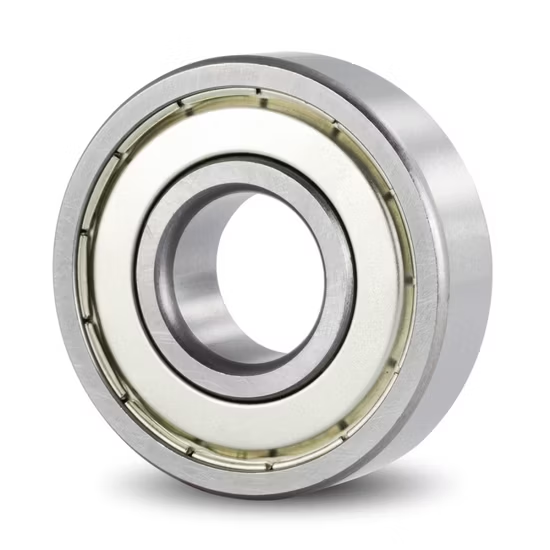
6209 P4 P5 2RS1 Deep Groove Ball Bearing — engineered with ISO Class 4 and Class 5 precision for tight running accuracy, while double-sided contact seals prevent contamination and ensure maintenance-free operation.
Multi-brand authorized coverage — sourcing mixed P4 and P5 precision grades across global manufacturers in a single consolidated shipment.
| Parameter | Value |
|---|---|
| Designation | 6209 |
| Product Type | Deep Groove Ball Bearing |
| Precision Class | P5, P4 |
| Seal or Shield Type | 2RS1, 2rsh, Open, Iron Seals |
| Quality Level | Z1V1, Z2V2, Z3V3, Z4V4* |
| Bearing Style | Open, Rubber Seals, Iron Seals |
| Origin | Germany, Japan, Sweden, Malaysia, China |
| Certification | ISO, Batch Traceability |
*Quality levels Z1V1 through Z4V4 denote specific vibration and acoustic limits; exact thresholds require manufacturer catalog confirmation.
| Industry | Typical Applications |
|---|---|
| Electric Motors | High-speed rotor shafts, stator cooling fan drives |
| Industrial Gearboxes | High-speed input shafts, precision helical gear supports |
| Fluid Handling | Centrifugal pump impeller shafts, vacuum pump rotors |
A 6209 P5 P4 2RS1 deep groove ball bearing requires exact suffix alignment, not just a matching base number.
Procurement teams frequently approve shipments where the base 6209 designation matches the bill of materials, only to discover the installed units lack the specified P4 or P5 precision class. In high-speed motor testing, substituting a standard P0 grade with a standard CN clearance for a required P5 C3 configuration causes thermal binding and catastrophic cage failure . I have personally dismantled motors vibrating severely on the test bench because a supplier shipped unverified stock instead of the exact precision grade requested.
Selecting the correct 6209 P5 P4 2RS1 deep groove ball bearing involves matching the ISO tolerance class to the operational speed and vibration sensitivity of the equipment. While standard grades suffice for slow-turning conveyors, electric motors and precision gearboxes demand the tighter dimensional and running accuracy of P5 or P4 classes. Our technical review process cross-references your specific RPM and load parameters to ensure the supplied precision grade prevents harmonic resonance and premature raceway fatigue.
High-speed rotation generates internal friction heat, making the interplay between internal clearance and sealing friction critical. A 2RS1 or 2rsh double-sided contact seal provides excellent protection against moisture and particulate contamination, but the resulting friction elevates operating temperatures. If the internal clearance is not upgraded to C3 to accommodate this thermal expansion, the rolling elements will bind. Proper selection balances the sealing effectiveness required for the environment with the thermal limits of the lubricant and clearance class .
The core value of this series lies in its specific suffix combinations. The P5 and P4 designations guarantee tighter bore, outside diameter, and runout tolerances compared to standard P0 bearings, directly reducing vibration in sensitive spindle applications. The 2RS1 and 2rsh suffixes indicate contact seals that physically touch the inner ring, sealing out fine dust that would otherwise degrade the lubricant. Together, these suffixes define a component engineered for clean, high-speed operation where acoustic performance and rotational stability are non-negotiable.
Accepting a bearing where the base number matches but the suffixes differ introduces severe operational risks. Installing an open bearing instead of a 2RS1 sealed variant in a dusty pump environment leads to rapid lubricant contamination and unplanned downtime. Conversely, forcing a tight-clearance precision bearing into a high-heat application causes thermal seizure, resulting in catastrophic damage to the shaft and housing. These failures routinely void equipment warranties and incur replacement costs far exceeding the initial component price .
We prevent these failures by treating every 6209 P5 P4 2RS1 deep groove ball bearing order as a technical validation exercise. Our authorized multi-brand access means we source the exact P4 or P5 grade from the most suitable manufacturer without compromising on authenticity. We verify that the 2RS1 seal specification matches the factory documentation, ensuring you do not receive non-contact shields disguised as contact seals. Every cross-reference we perform strictly aligns the base designation, precision class, and seal type to your exact application parameters.
To ensure optimal performance, share your specific radial and axial loads, operating speeds, and ambient temperatures so we can verify the L10 life and clearance requirements. If you are replacing an existing unit, provide the exact OEM equipment number and the full designation printed on the current bearing for a precise cross-reference check. Supplying these operational parameters allows our engineering team to confirm the seal type and precision class perfectly match your application.
Q: How can I verify the authenticity of the P4 or P5 precision grade?
A: We provide original manufacturer batch traceability documentation and a Certificate of Conformity that explicitly states the precision class. You can also scan the official brand app QR codes on the packaging for instant authenticity confirmation, ensuring the tight tolerances are genuine and not falsely marked standard grades.
Q: Why is it critical to match the 2RS1 seal type exactly during cross-referencing?
A: The 2RS1 suffix indicates a specific contact seal design that prevents contamination ingress while managing friction. Substituting it with a non-contact shield or an open bearing alters the internal thermal profile and exposes the lubricant to debris, leading to premature failure in sensitive electric motor or pump applications.
Q: What is the practical difference between P4 and P5 in high-speed motors?
A: P4 offers tighter dimensional and running accuracy than P5, resulting in lower vibration and noise levels. While P5 is suitable for many industrial motors, P4 is often specified for high-speed spindles or precision equipment where minimizing harmonic resonance and maximizing rotational stability are critical for operational success.
Q: How do I choose between rubber seals and iron shields for my application?
A: Rubber contact seals like 2RS1 provide superior protection against moisture and fine dust but generate slightly more friction. Iron shields offer lower friction for higher speed limits but provide less effective sealing against liquid ingress. The choice depends on balancing your environmental contamination risks with your maximum rotational speed requirements.
Our 5-step process ensures every order is engineered, validated, and supported for optimal performance.
Technical needs assessment
Custom specifications
Free samples for $50k+
Pre-shipment inspection
On-site & predictive
Our certified engineers respond within 24 hours with detailed technical specifications, pricing, and lead time information.