01
Consultation
Technical needs assessment



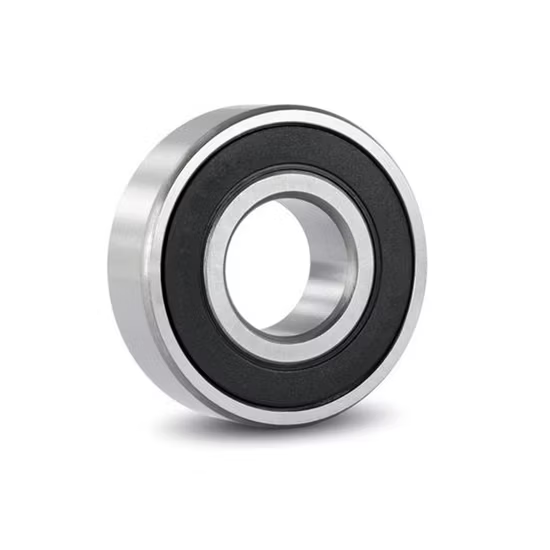
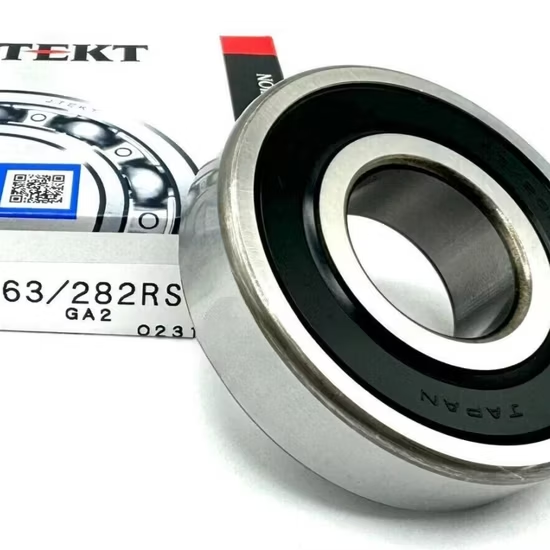
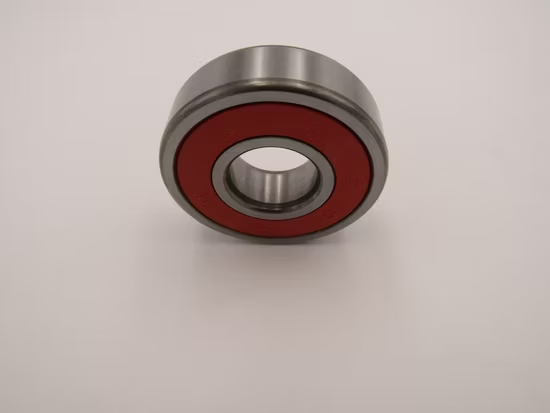
6015 Zz RS P4p5p6 Deep Groove Ball Bearing — chrome steel construction with RS single contact seal, retaining lubricant while excluding paper dust and debris during continuous printing press operation. The rubber seal suits multi-shift environments where particulate contamination degrades open bearings prematurely. Quality grades Z1V1 through Z4V4 address varying vibration sensitivity across press sections.
Three-Way Cross-Reference Alignment — Verifying base number, seal configuration, and precision class prevents thermal binding in high-speed printing press spindles.
| Parameter | Value |
|---|---|
| Designation | 6015 Zz RS P4p5p6 |
| Product Type | Deep Groove Ball Bearing |
| Material | Chrome Steel |
| Bearing Style | Open, Rubber Seals, Iron Seals |
| Quality Level | Z1V1, Z2V2, Z3V3, Z4V4 |
| Feature | Low Noise, High Speed, Long Service Life |
| Origin | Germany, Japan, Sweden, Malaysia, China |
| HS Code | 848210 |
Note: Suffixes Zz and P4p5p6 are unverified standard designations; exact shield configuration and selectable precision classes (P4, P5, P6) require manufacturer catalog confirmation prior to order.
| Industry | Typical Applications |
|---|---|
| Printing & Packaging | Printing press main spindles, impression cylinder bearings, paper feed rollers |
| Machine Tools | High-speed spindle supports, precision indexing tables, ball screw support bearings |
| Industrial Automation | Precision conveyors, robotic arm joints, automated material handling guides |
Matching the inner and outer dimensions is only the first step; ignoring the seal and precision suffixes is where catastrophic failures begin.
In printing press environments, replacing an original bearing with one that shares the exact same base designation but lacks the correct clearance or precision grade leads to rapid thermal expansion. I have seen press spindles lock up completely during high-speed runs because a standard clearance component was installed where a precision-matched unit was required. The resulting unplanned downtime and damaged cylinder surfaces cost far more than the component itself . Sourcing a genuine 6015 Zz RS P4p5p6 deep groove ball bearing ensures the internal geometry and thermal tolerances align with the equipment builder's original specifications.
Printing presses demand continuous, vibration-free rotation to maintain print registration and prevent paper web breaks. Supplying a 6015 Zz RS P4p5p6 deep groove ball bearing involves reviewing the specific press section to confirm whether iron shields or rubber contact seals are necessary for that exact housing. This application-based selection review ensures the component handles the specific radial loads and rotational speeds without generating excess friction or allowing paper dust ingress.
Pressrooms generate immense amounts of microscopic paper dust and ink mist, which easily infiltrate open bearing arrangements and degrade lubrication. While rubber contact seals provide superior contamination exclusion, they also generate frictional heat at high rotational speeds. Conversely, non-contact iron shields minimize friction but require a cleaner housing environment. Furthermore, the thermal growth of the steel shaft during continuous operation dictates the internal clearance; installing a standard clearance component in a tight press fit will eliminate the internal operating gap once the spindle reaches operating temperature .
The designation points toward high-precision requirements, where the difference between P6 and P4 tolerances dictates the allowable radial and axial runout. In precision spindles, even microscopic deviations cause chatter marks on the printed substrate. The Z1V1 through Z4V4 quality levels further define the acoustic and vibration signatures of the component. Selecting the appropriate quality grade ensures the component operates quietly and smoothly, preventing the high-frequency vibrations that prematurely fatigue the raceways and degrade the final print quality.
Failing to verify the exact precision class and sealing arrangement during cross-referencing inevitably leads to premature failure. A component that physically fits the housing but operates with incorrect internal clearance will experience accelerated fatigue and cage degradation. According to ISO 281 standards, operating a precision component under unintended thermal preload drastically reduces its calculated fatigue life . This results in catastrophic spindle damage, voided equipment warranties, and emergency maintenance shifts that halt the entire production line.
Sourcing this specific designation requires strict adherence to verification protocols to avoid counterfeit products with soft inner rings. We provide authorized coverage across all major international brands, allowing mixed-brand requirements to be fulfilled in a single shipment. Every batch includes traceability documentation and QR codes that link directly to the manufacturer's official verification apps. Our cross-referencing process strictly aligns the base number, seal type, and precision suffix, ensuring the replacement matches the original equipment manufacturer's exact engineering intent.
To ensure optimal performance and longevity in your printing press or machine tool application, please provide the specific radial and axial loads, operating speeds, and continuous temperature profiles. Sharing the original equipment manufacturer part numbers allows our engineering team to perform a comprehensive cross-reference check, verifying that the seal type and precision class perfectly match your spindle requirements.
Q: Why does a matching base number still cause printing press failures?
A: A matching base number only confirms physical dimensions. If the replacement lacks the correct precision suffix or internal clearance, thermal expansion at high speeds will eliminate the operating gap. This causes excessive friction, rapid temperature spikes, and eventual spindle seizure, leading to severe unplanned downtime and damaged press cylinders.
Q: How do P4, P5, and P6 precision classes differ in this application?
A: These classes define the allowable dimensional and running accuracy tolerances. P4 offers the tightest tolerances for minimal runout and vibration, which is critical for high-speed printing press spindles to maintain print registration. P5 and P6 provide slightly wider tolerances suitable for general industrial gearboxes or less demanding conveyor applications.
Q: Should I choose rubber seals (RS) or iron shields (Zz) for a pressroom?
A: Rubber contact seals provide excellent protection against paper dust and ink mist but generate more frictional heat at high speeds. Iron shields offer low-friction operation suitable for high-speed spindles but require a relatively clean housing environment. The choice depends on the specific press section's contamination level and rotational speed.
Q: How can I verify the authenticity of the received bearings?
A: Every shipment includes a Certificate of Conformity and batch traceability documents. You can scan the QR code on the packaging using the manufacturer's official mobile application to verify the origin, production date, and authenticity of the specific precision class and sealing configuration.
Q: What installation precautions are needed for high-precision deep groove variants?
A: Avoid hammering or applying force through the rolling elements. Use an induction heater to expand the inner ring evenly for a proper press fit. Ensure the shaft and housing tolerances are strictly machined to the required precision class to prevent distorting the rings and destroying the internal clearance and running accuracy.
Our 5-step process ensures every order is engineered, validated, and supported for optimal performance.
Technical needs assessment
Custom specifications
Free samples for $50k+
Pre-shipment inspection
On-site & predictive
Our certified engineers respond within 24 hours with detailed technical specifications, pricing, and lead time information.


