01
Consultation
Technical needs assessment



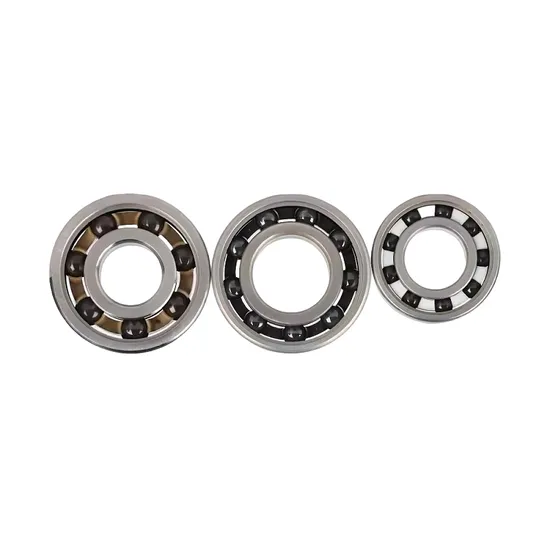
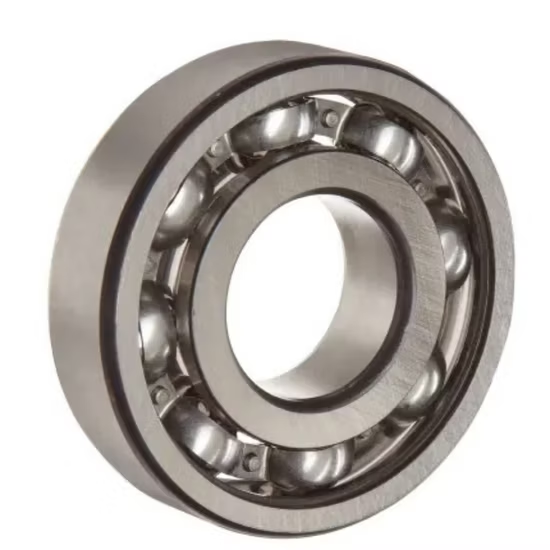
High-Speed Hybrid Ceramic Deep Groove Ball Bearing — ceramic rolling elements paired with GCr15 steel rings reduce friction heat and centrifugal force during continuous high-speed operation.
Verified Authenticity via QR — Every hybrid ceramic batch we supply includes scannable QR codes linking directly to the manufacturer's official verification app, ensuring complete traceability for critical construction equipment.
| Parameter | Value |
|---|---|
| Product Type | Deep Groove Ball Bearing |
| Structure | Deep Groove |
| Seal or Shield Type | ZZ, 2RS, Open |
| Material | Available in GCr15 bearing steel or hybrid ceramic variants |
| Customization | Non-standard dimensions and special specifications supported |
| Origin | Shanghai |
| Industry | Typical Applications |
|---|---|
| Construction Industries | Crane slewing mechanisms, concrete mixer drum drives, hoist winches |
| Building Material Shops | Heavy-duty stone crusher vibratory screens, cement kiln drive gearboxes |
| Manufacturing Plant | High-speed spindle motors, automated conveyor drive rollers |
| Machinery | Industrial pump shafts, heavy-duty agitator gearboxes |
Thermal binding destroys standard bearings long before the steel reaches its fatigue limit.
I have seen the aftermath on Dubai construction sites: high-speed motors seized solid, with the inner rings turned blue from extreme friction heat. When procurement teams rely on basic cross-references and install standard clearance bearings in high-temperature environments, the thermal expansion eliminates the internal clearance entirely. Finding a reliable high-speed hybrid ceramic deep groove ball bearing supplier is critical because matching the base designation while ignoring the cage material and clearance suffixes leads to catastrophic cage failure under continuous heavy loads .
Selecting the right material variant dictates the survival of the component in harsh environments. While standard bearing steel handles typical radial loads, the hybrid ceramic option utilizes noticeably lighter rolling elements to drastically reduce centrifugal forces at elevated rotational speeds. As an experienced high-speed hybrid ceramic deep groove ball bearing supplier, we evaluate the specific vibration profiles and ambient heat of your construction machinery to recommend the optimal rolling element and cage combination, ensuring the internal geometry survives the job site.
Construction sites expose rotating shafts to severe temperature fluctuations and abrasive silica dust. At high rotational speeds, friction heat expands the inner ring, which can eliminate internal clearance and cause seizure if the wrong thermal class is installed. Furthermore, abrasive dust ingress rapidly degrades lubrication, turning the grease into a grinding paste. Selecting between non-contact steel shields and contact rubber seals requires balancing the need for contamination exclusion against the friction heat generated by the seal lip itself .
The internal geometry and sealing arrangement must align perfectly with the operational envelope. A standard clearance class will bind when the shaft expands under high-speed thermal loads, making a larger internal clearance mandatory to accommodate the differential expansion between the shaft and housing. For sealing, steel shields offer low-friction protection for high-RPM applications where heat generation must be minimized, while rubber contact seals provide superior exclusion of fine construction dust at moderate speeds. Understanding these configuration options prevents the premature degradation of the raceway.
Installing a bearing with the correct outer dimensions but the wrong internal clearance or seal type triggers a cascade of mechanical failures. The resulting unplanned downtime on a critical construction crane or concrete pump far exceeds the initial component cost. According to failure analysis frameworks, a significant share of premature failures stems from improper specification matching rather than material defects . This leads to catastrophic damage to adjacent shafts and housings, ultimately resulting in warranty voidance from the original equipment manufacturer.
We prevent field failures by reviewing the exact operational parameters rather than just shipping the requested part number. Our cross-brand interchange process aligns the internal clearance, cage material, and precision class—not just the basic dimension—ensuring the replacement performs identically to the original. We provide full batch traceability to the manufacturer, eliminating the risk of counterfeit components with soft inner rings that plague the construction aftermarket. Our application-based selection review covers the specific load, speed, and temperature conditions of your machinery to guarantee operational reliability.
To ensure the selected component survives your specific operational envelope, please provide the exact equipment model, available installation space, and the dominant load types. Detailing the environmental conditions, such as extreme ambient heat or heavy dust exposure, allows our engineering team to determine the precise material and sealing configuration. This technical review guarantees the final specification aligns perfectly with your machinery's demands.
Q: How do we determine the exact designation for our construction equipment?
A: Provide the OEM equipment number, operational speeds, and ambient temperature ranges. Our engineering team uses these parameters to calculate the required internal clearance and select the appropriate seal type, ensuring the final specification prevents thermal binding and dust ingress in your specific application.
Q: What are the common failure modes when using standard steel instead of hybrid ceramics?
A: Standard steel rolling elements generate higher centrifugal forces and friction heat at high speeds, leading to rapid lubricant degradation and thermal seizure. Hybrid variants utilize noticeably lighter ceramic balls to reduce these forces, maintaining lower operating temperatures and significantly extending the service interval in high-RPM construction drives.
Q: When should we specify hybrid ceramic over standard bearing steel?
A: Specify the hybrid option when the application involves sustained high rotational speeds, elevated operating temperatures, or where electrical pitting is a concern. The ceramic elements provide superior performance under these extreme conditions, while standard steel remains highly effective for general-purpose, moderate-speed applications with standard thermal profiles.
Q: How do ZZ shields and 2RS seals compare in dusty construction environments?
A: ZZ steel shields provide non-contact protection ideal for high-speed applications where minimizing friction heat is critical, though they allow fine dust ingress over time. 2RS rubber contact seals offer superior exclusion of abrasive construction dust but generate higher friction, making them better suited for moderate-speed machinery where contamination is the primary threat.
Our 5-step process ensures every order is engineered, validated, and supported for optimal performance.
Technical needs assessment
Custom specifications
Free samples for $50k+
Pre-shipment inspection
On-site & predictive
Our certified engineers respond within 24 hours with detailed technical specifications, pricing, and lead time information.