01
Consultation
Technical needs assessment

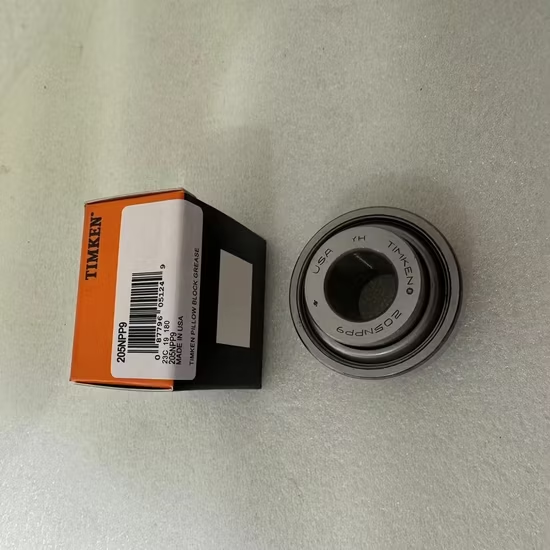
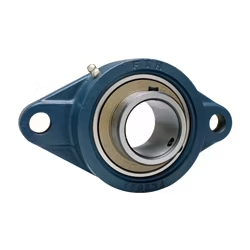
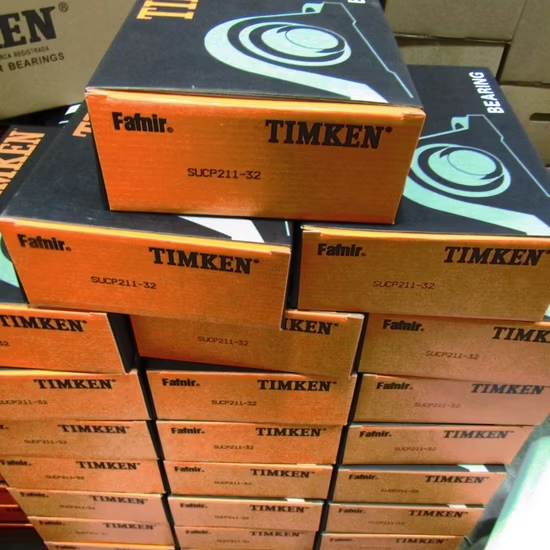
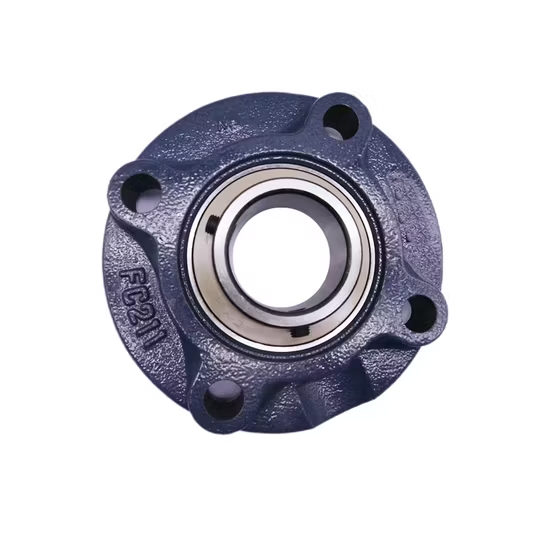
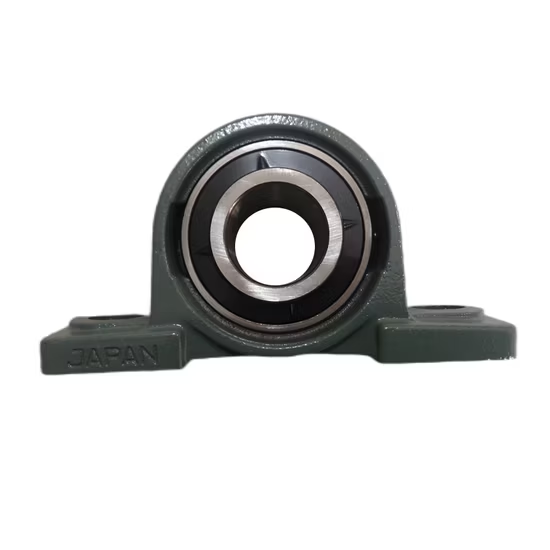
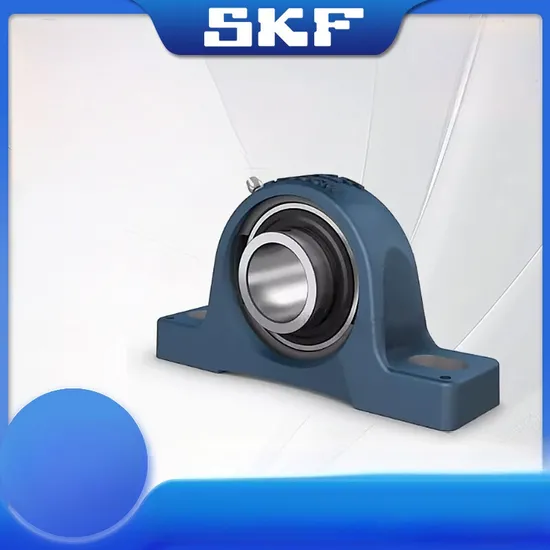
Ucf201 Ucf202 Ucf203 Ucf204 Ucf205 Ucf206 Ucf207 Ucf208 Ucf209 Pillow Block Bearing Units feature cast iron housings with deep groove raceways for reliable radial load support in conveyor and agricultural applications.
Three-parameter cross-reference alignment — verifying base number, seal variants, and internal clearance to prevent field binding in conveyor drives.
| Parameter | Value |
|---|---|
| Designation | Ucf201 Ucf202 Ucf203 Ucf204 Ucf205 Ucf206 Ucf207 Ucf208 Ucf209 |
| Product Type | Insert Bearing / Pillow Block Unit |
| Raceway Type | Deep Groove Raceway |
| Housing Material | Cast Iron |
| Row Configuration | Single Row |
| Feature Options | Corrosion Resistant, High Temperature, High Speed |
| Separable Design | Separated |
| Aligning Capability | Non-Aligning Bearing |
| Origin | Germany / Japan / Sweden / Malaysia / China |
Note: Specific suffix definitions for the Ucf prefix and 201-209 series indicators require manufacturer catalog confirmation for exact internal design mapping.
| Industry | Typical Applications |
|---|---|
| Material Handling | Conveyor belt drive pulleys and return idler shaft supports |
| Agricultural Machinery | Combine harvester threshing cylinders and rotary tiller gearboxes |
| Textile Manufacturing | Spinning frame drafting rollers and industrial loom take-up mechanisms |
Matching the base number is only the first step in avoiding catastrophic field failures.
Sourcing a Ucf201 Ucf202 Ucf203 Ucf204 Ucf205 Ucf206 Ucf207 Ucf208 Ucf209 pillow block bearing based solely on the housing dimension often leads to severe operational issues. I have seen countless conveyor systems in Dongguan halt because the replacement unit had a standard clearance where a C3 was mandatory for thermal expansion, or a basic seal instead of a triple-lip variant for dusty environments. When cross-reference errors overlook these critical suffixes, the equipment suffers from thermal binding or rapid cage failure . Procurement engineers need exact alignment, not just a visual match on the cast iron housing.
Selecting the correct Ucf201 Ucf202 Ucf203 Ucf204 Ucf205 Ucf206 Ucf207 Ucf208 Ucf209 pillow block bearing requires looking past the catalog cover. Our technical review process ensures that the internal bearing insert and the external cast iron housing are perfectly matched to your specific radial loads and mounting arrangements. We verify that the deep groove raceway geometry and the selected seal variants will withstand the exact contamination levels present in your facility, preventing the premature wear that plagues poorly specified replacements.
Agricultural and textile environments introduce severe contamination and fluctuating temperatures. Fine organic dust easily penetrates standard seals, while high humidity accelerates corrosion on unprotected surfaces. The deep groove raceway handles steady radial loads effectively, but thermal expansion from high-speed operation demands the correct internal clearance class to prevent the rolling elements from skidding. Proper lubrication intervals and the right seal friction profile are essential to keep moisture out without generating excess heat .
The cast iron housing provides the necessary structural rigidity for heavy-duty mounting, but the internal insert dictates the actual service life. Units specified for high-temperature applications require specialized grease and appropriate clearance classes to accommodate shaft expansion during startup. Conversely, high-speed textile machinery demands precision-matched inserts where the deep groove raceway minimizes vibration and noise. Selecting the right corrosion-resistant features ensures the housing withstands washdown procedures without degrading the mounting surface integrity.
Installing a unit with the wrong internal clearance or inadequate sealing leads directly to unplanned downtime and catastrophic damage to adjacent shaft components. When a bearing seizes due to thermal binding, it often destroys the housing and the drive shaft, voiding equipment warranties and halting entire production lines. Following the failure analysis frameworks outlined in ISO 281 and ISO 15243 reveals that a significant share of premature failures stems directly from these initial specification errors rather than manufacturing defects .
We eliminate the guesswork by cross-referencing not just the base designation, but the exact seal types and internal clearances required for your specific application. Every Ucf201 Ucf202 Ucf203 Ucf204 Ucf205 Ucf206 Ucf207 Ucf208 Ucf209 pillow block bearing we supply comes with full batch traceability, ensuring you receive genuine products from authorized channels. Our application-based selection review covers load, speed, and temperature parameters, while our mixed-brand authorization means you can consolidate your entire maintenance inventory into a single, fully documented shipment without coordinating multiple suppliers.
To ensure optimal performance, provide your exact radial and axial load profiles, operating speeds, and ambient temperature ranges. Sharing the OEM equipment number allows our engineering team to perform a precise cross-reference check, verifying that the seal variants and internal clearances match your original specifications. This technical review guarantees that the replacement unit will integrate flawlessly into your existing conveyor or textile machinery without requiring field modifications.
Q: How do we verify the authenticity of these pillow block units upon delivery?
A: Every unit is supplied with batch traceability documentation and a unique QR code. Procurement teams can scan this code using the manufacturer's official mobile application to instantly verify the product's origin, production date, and authenticity, eliminating the risk of installing counterfeit components with soft inner rings that cause rapid field failures.
Q: What cross-reference errors commonly occur with these specific designations?
A: The most frequent error involves matching the base housing number while ignoring the internal insert's clearance class and seal suffix. Installing a standard clearance unit in a high-temperature conveyor application leads to thermal binding, while using a basic seal in agricultural dust causes rapid contamination ingress and premature cage failure.
Q: How should we select the right seal variant for corrosive environments?
A: Selection depends on the specific contaminant and washdown frequency. We review your environmental exposure to recommend either heavy-duty triple-lip seals for maximum dust exclusion in agriculture, or specialized corrosion-resistant features and stainless steel inserts for food processing and textile washdown areas where standard cast iron housings would degrade.
Q: What documentation accompanies bulk shipments for customs and quality assurance?
A: Bulk orders include a comprehensive documentation package featuring the Certificate of Conformity, material test reports, dimensional and running accuracy inspection reports, and country-of-origin certificates. This ensures full supply chain transparency, smooth customs clearance, and verifiable proof of quality for your facility's maintenance records.
Q: How do we properly align the housing during installation to prevent binding?
A: Proper alignment requires securing the cast iron housing base before fully tightening the shaft locking mechanism. This prevents introducing external bending moments that distort the separated insert, ensuring the deep groove raceway operates smoothly without generating excess friction heat or causing premature wear on the rolling elements.
Our 5-step process ensures every order is engineered, validated, and supported for optimal performance.
Technical needs assessment
Custom specifications
Free samples for $50k+
Pre-shipment inspection
On-site & predictive
Our certified engineers respond within 24 hours with detailed technical specifications, pricing, and lead time information.
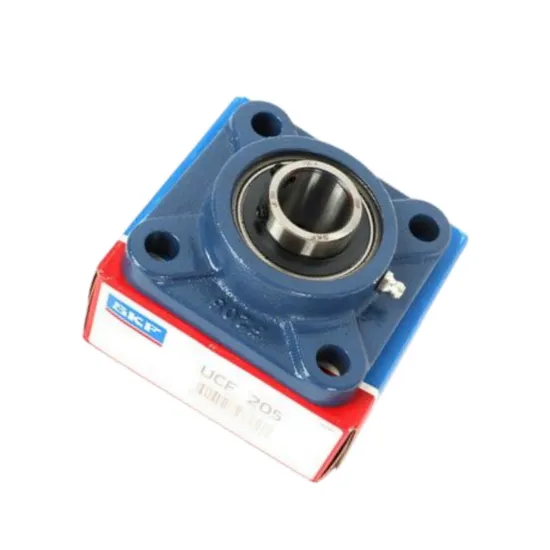

![UC205-13 UC206-20 Insert Bearing Pillow Block Unit Authorized Supplier [WARN] draft identifier mismatch](https://skfiso.com/wp-content/uploads/2026/09/uc205-13-uc206-20-insert-bearing-pillow-block-unit-authorized-supplier-warn-draft-identifier-mismatch-0773eb.avif)