01
Consultation
Technical needs assessment

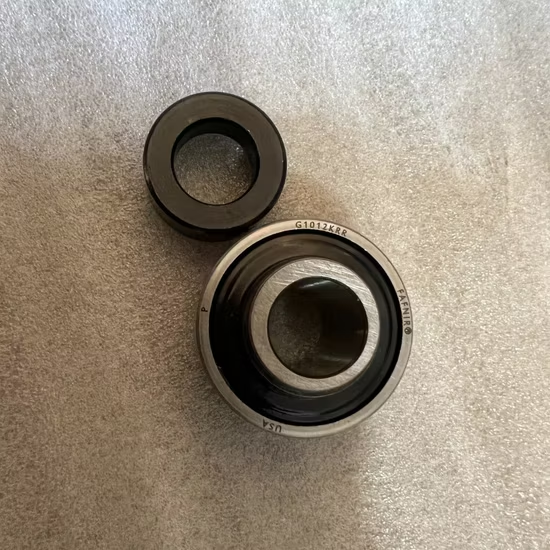
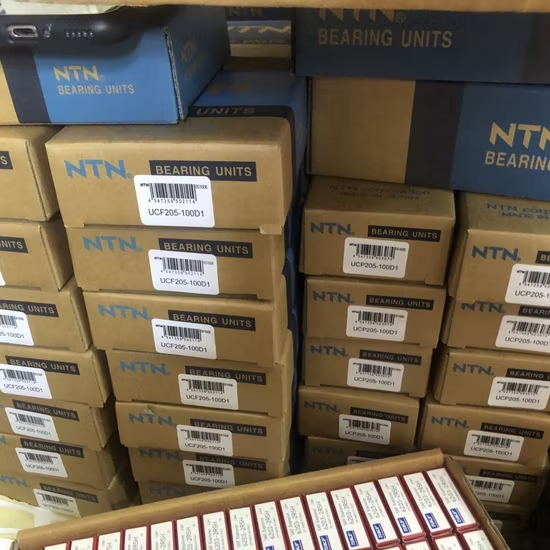
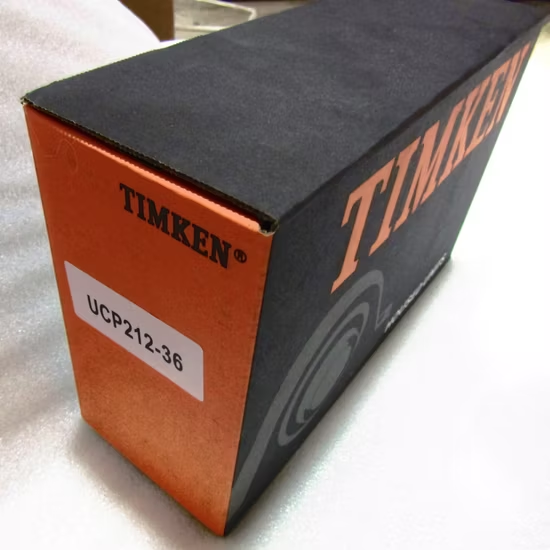
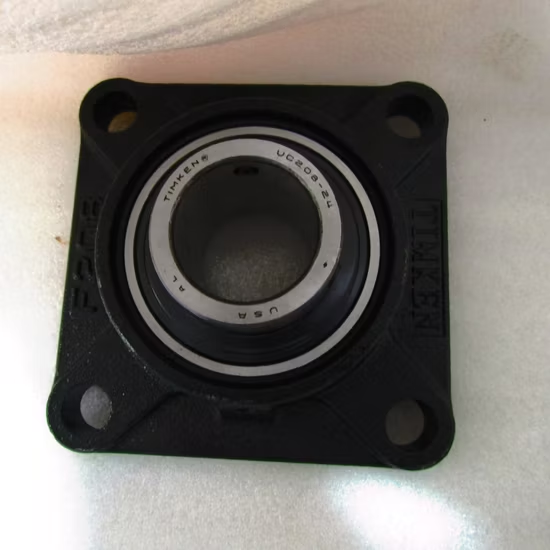
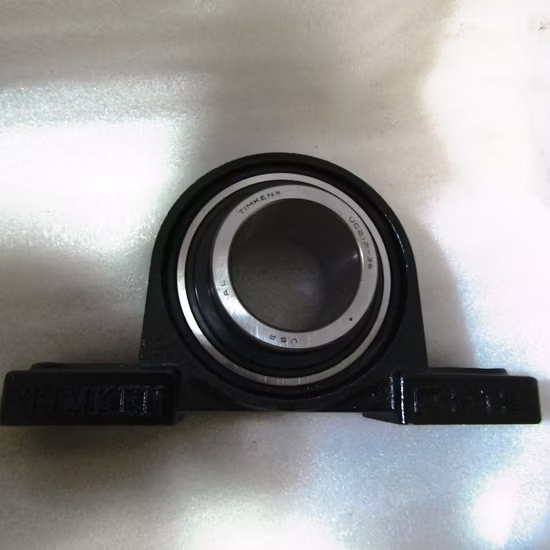
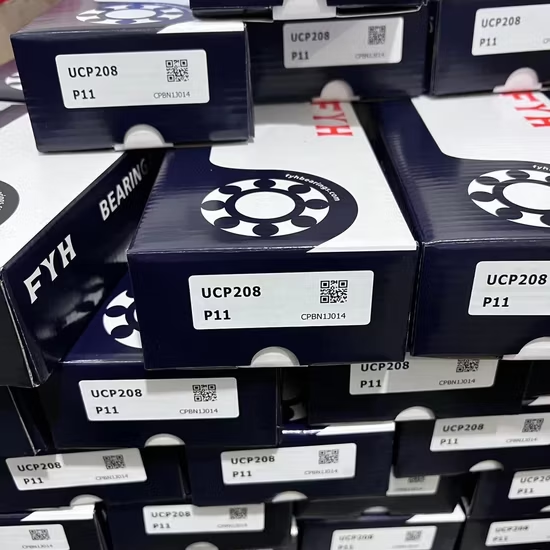
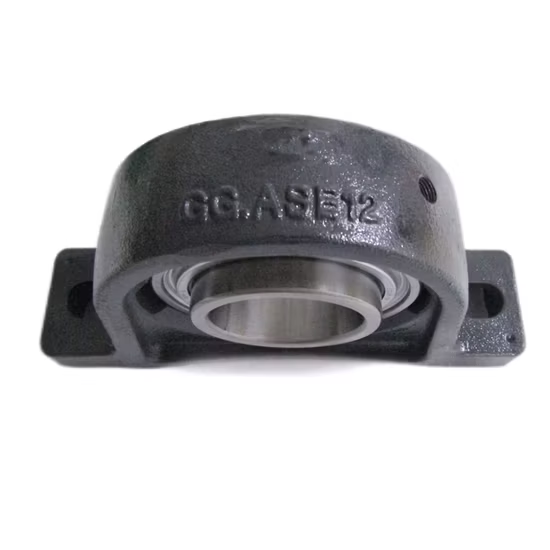
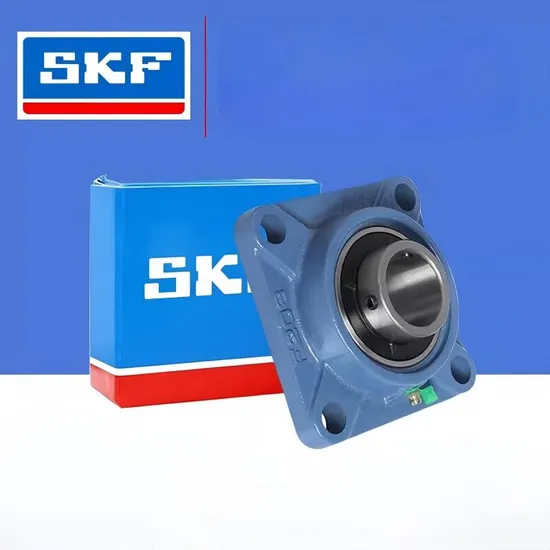
Ucf208/Ucf204 Flange Block Bearing features a square flange cast iron housing with a deep groove insert design for stable radial support in material handling equipment.
Full Batch Traceability — Every Ucf208/Ucf204 unit ships with manufacturer lot records verifying the cast iron housing and deep groove insert origin.
| Parameter | Value |
|---|---|
| Designation | Ucf208/Ucf204 |
| Product Type | Flange Block Bearing |
| Rows Number | Single |
| Raceway | Deep Groove Raceway |
| Housing Material | Cast Iron |
| Housing Style | Square Flange |
| Insert Bearing Type | Deep Groove Insert Bearing |
| Bore Type | Cylindrical with Set Screw Locking |
| Industry | Typical Applications |
|---|---|
| Material Handling | Conveyor belt drive pulleys and return idler mounting points |
| Agriculture | Grain auger drive shafts and harvester reel support brackets |
| Textile Manufacturing | Yarn winding machine tension rollers and loom beam supports |
Matching the base designation is never enough to prevent field failures in flange block applications.
I still see procurement teams source replacements by matching the base number alone, only to watch the equipment fail weeks later. A few years back in Shenzhen, a client replaced a failing unit with a visually identical flange block. The basic number matched perfectly, but the supplier ignored the sealing suffix. Dust from the agricultural environment bypassed the in*zed the shaft. That single oversight caused unplanned downtime that cost far more than the component itself. Finding a reliable Ucf208/Ucf204 flange block bearing supplier means securing a partner who verifies every suffix against your actual operating environment .
Selecting the right Ucf208/Ucf204 flange block bearing supplier ensures the square flange housing aligns perfectly with your machine's mounting surface. The cast iron construction provides the necessary rigidity to handle radial *ring accommodates minor shaft misalignments. We review your specific mounting constraints and load directions to confirm this configuration is the optimal fit for your machinery.
Flange blocks in material handling and agriculture face relentless contamination. Fine particulate matter easily breaches standard seals, grinding away the internal raceway and destroying the rolling elements. High moisture levels in processing environments can also lead to corrosion on the outer housing surface if the casting lacks proper protection. Furthermore, continuous rotation on conveyor systems generates internal friction heat, which demands careful attention to the internal clearance class to prevent thermal binding during operation .
The UCF prefix explicitly defines a square flange cast iron housing paired with a deep groove insert bearing. The 208 and 204 numerals dictate the dimension series and specific bore size codes, ensuring the housing footprint and shaft diameter match your equipment. While the base configuration handles standard radial loads, the sealing suffix determines survival in dirty environments. A triple-lip contact seal provides maximum exclusion for agricultural dust, whereas a standard shield might suffice for clean textile machinery. Additionally, verifying the internal clearance suffix is mandatory; installing a standard clearance insert in a high-heat conveyor drive will cause the internal components to bind and fail as the shaft expands thermally.
Overlooking a single sealing or clearance suffix transforms a routine replacement into a catastrophic machine breakdown. When an incorrect seal allows abrasive dust into the raceway, the resulting wear accelerates exponentially, leading to sudden shaft seizure. Similarly, ignoring thermal expansion requirements causes the internal rolling elements to skid, destroying the cage and scoring the raceway. These premature failures trigger extensive unplanned downtime, void equipment warranties, and often cause secondary damage to adjacent drive components .
We prevent cross-reference errors by matching the clearance, cage material, and precision suffixes, not just the base designation. For the Ucf208/Ucf204 series, we specifically verify the sealing configuration to ensure it matches your exact contamination exposure. Our authorized coverage across major brands allows you to consolidate mixed-brand requirements into a single, fully traceable order. We also provide application-based selection reviews, analyzing your load, speed, and temperature parameters to validate the chosen insert. This rigorous technical vetting eliminates the blind spots that typically cause field failures.
Share your radial and axial load calculations, operating speeds, and ambient temperature ranges so we can validate the internal clearance and sealing selection. If you are replacing an existing unit, provide the exact OEM equipment number or the full designation from the old nameplate for a precise cross-reference check. Our engineering team will review these parameters to confirm the housing footprint and insert configuration perfectly match your application requirements.
Q: Why does the sealing suffix matter so much for the Ucf208/Ucf204 in agricultural equipment?
A: Agricultural environments contain fine, abrasive dust that easily bypasses standard shields. If the sealing suffix is ignored during cross-referencing, contaminants will invade the deep groove raceway, causing rapid wear and shaft seizure. We verify the exact seal type to ensure maximum exclusion for your specific dust exposure levels.
Q: How do you verify the authenticity of the cast iron housing and insert?
A: We provide complete batch traceability for every unit, linking it directly to the manufacturer's production run. You can verify authenticity by scanning the packaging QR code through the brand's official app, which instantly exposes cloned codes and prevents the installation of counterfeits with soft inner rings.
Q: What happens if the internal clearance suffix is incorrect for a conveyor application?
A: Conveyor drives often generate significant friction heat, causing the shaft to expand thermally. If a standard clearance insert is used instead of the required expanded clearance suffix, the internal components will bind, leading to excessive friction, cage failure, and premature seizure. We always verify the clearance matches your thermal profile.
Q: Can you cross-reference these flange blocks to other major brands?
A: Yes, we can cross-reference to SKF, FAG, NSK, NTN, and TIMKEN equivalents. However, we do not just match the base number; we rigorously verify that the internal design, sealing configuration, and clearance suffixes align perfectly with your original equipment requirements to prevent field failures.
Our 5-step process ensures every order is engineered, validated, and supported for optimal performance.
Technical needs assessment
Custom specifications
Free samples for $50k+
Pre-shipment inspection
On-site & predictive
Our certified engineers respond within 24 hours with detailed technical specifications, pricing, and lead time information.