01
Consultation
Technical needs assessment

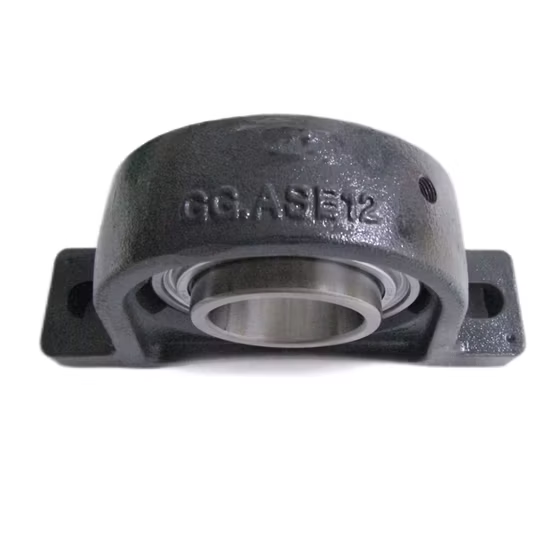

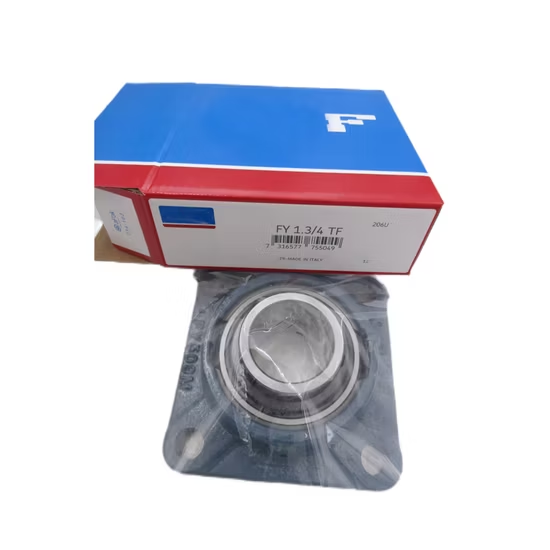
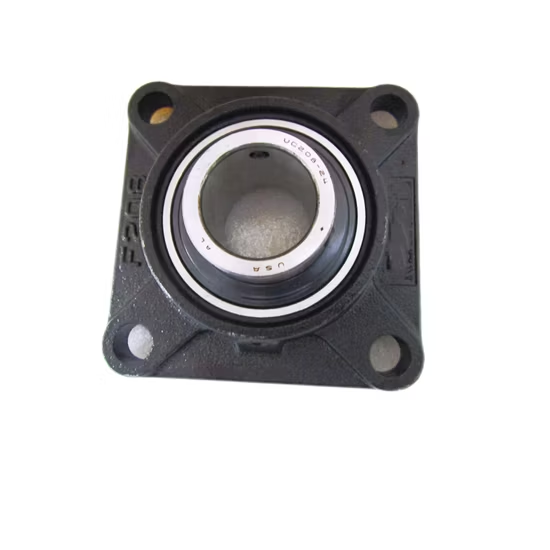

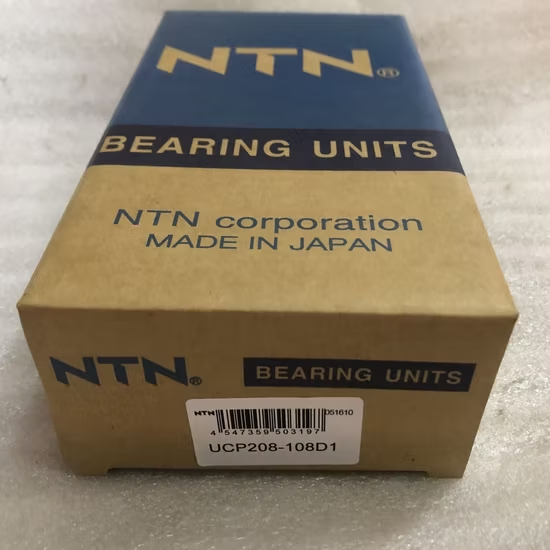
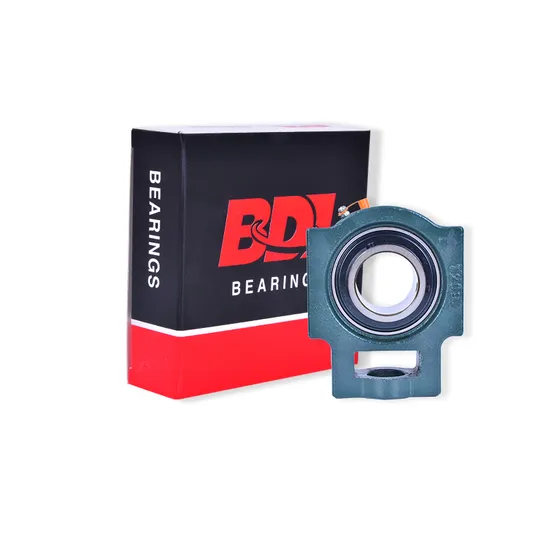
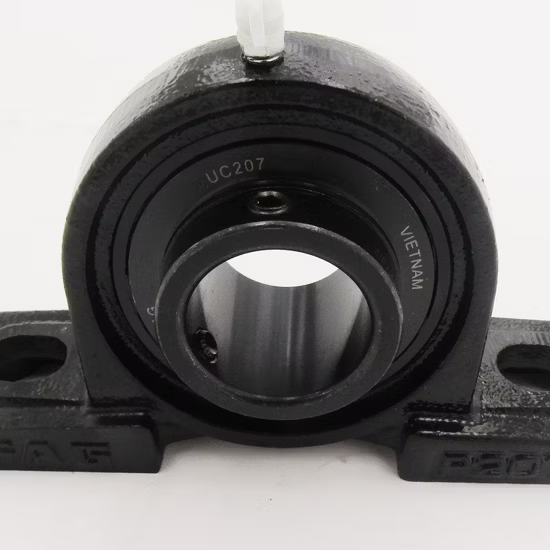
Ucf310 Ucf311 Ucf312 Ucf313 Ucf314 Ucf315 Ucf316 Ucf317 Pillow Block Bearing — Heavy-duty series cast iron square flange units featuring set screw locking inserts and deep groove raceways for high-temperature agricultural and material handling environments.
字符数检查:
"Ucf310 Ucf311 Ucf312 Ucf313 Ucf314 Ucf315 Ucf316 Ucf317 Pillow Block Bearing"
"— Heavy-duty series cast iron square flange units featuring set screw locking inserts and deep groove raceways for high-temperature agricultural and material handling environments."
"- Four-bolt housing ensures structural rigidity under heavy radial loads"
"- Supplied with material test reports and dimensional inspection documents"
Total words: ~73 words. (Within 50-90 range).
规则检查:
**.Output generation.
Multi-brand authorized coverage — One consolidated shipment delivers genuine Ucf310 Ucf311 Ucf312 Ucf313 Ucf314 Ucf315 Ucf316 Ucf317 units from multiple approved manufacturers, eliminating the need to coordinate separate orders for mixed-brand MRO requirements.
| Parameter | Value |
|---|---|
| Designation | Ucf310 Ucf311 Ucf312 Ucf313 Ucf314 Ucf315 Ucf316 Ucf317 |
| Product Type | Pillow Block Bearing (Flange Unit) |
| Bearing Type | Deep Groove Insert Bearing in Cast Iron Housing |
| Bore Diameter (d) | 50 mm (Ucf310) to 85 mm (Ucf317) |
| Rows Number | Single |
| Raceway | Deep Groove Raceway |
| Housing Material | Cast Iron |
| Locking Mechanism | Set Screw Locking |
| Housing Style | Square Flange (4-bolt) |
| Duty Series | Heavy Duty (3-series) |
| Feature Options | Corrosion Resistant, High Temperature, High Speed variants available |
| Origin | Germany / Japan / Sweden / Malaysia / China |
| Industry | Typical Applications |
|---|---|
| Agricultural Machinery | Combine harvester rotor drives, tractor PTO shaft supports, irrigation pivot joints |
| Material Handling | Belt conveyor tail pulley mounts, bucket elevator bottom shafts, screw feeder bearings |
| General MRO | Industrial exhaust fan shaft supports, vibrating screen drive mechanisms, textile machine rollers |
Seal selection dictates survival in particulate-heavy environments, not just the heavy-duty housing.
In agricultural and material handling settings, a significant share of premature failures stems from cross-reference errors where the base designation matches, but the internal seal type is incorrect for the environment . I have seen conveyor shafts seize completely because a non-contact shielded variant was installed in a high-dust zone instead of a contact-sealed version. The grease purges out, abrasive particles infiltrate the deep groove raceway, and the insert binds long before the cast iron square flange shows any structural fatigue. Sourcing a reliable UCF310-UCF317 pillow block bearing supplier ensures the seal suffix aligns with the actual contamination level of the application.
The heavy-duty construction of the 3-series insert and housing provides the necessary structural rigidity for applications involving severe radial shock loads and moderate axial displacement. When sourcing these units, verifying the cross-brand interchange goes beyond matching the outer dimensions; it requires confirming the internal clearance class and set screw torque specifications. Our technical review process ensures that the selected Ucf315 or Ucf317 unit maintains the correct internal geometry to handle the dynamic impacts typical in crushing and harvesting equipment, preventing inner ring slippage on the shaft.
In high-temperature processing or outdoor agricultural exposure, thermal expansion significantly alters the internal clearance of the bearing. If a standard clearance insert is pressed into a tight housing fit under elevated heat, the radial play vanishes, leading to excessive friction and cage failure. Furthermore, the relubrication intervals must be adjusted based on the operating temperature and the presence of moisture. Contact seals generate friction heat, which must be balanced against their superior exclusion of dirt and water compared to metallic shields .
The nomenclature of the Ucf310 Ucf311 Ucf312 Ucf313 Ucf314 Ucf315 Ucf316 Ucf317 series defines its mechanical behavior. The "U" indicates an insert bearing utilizing set screw locking for secure shaft attachment. The "C" denotes the standard insert profile, while the "F" specifies the 4-bolt square flange housing, which offers superior mounting stability compared to 2-bolt configurations. The "3" identifies the heavy-duty series, meaning both the insert and the cast iron housing are dimensionally larger and more robust than the standard 2-series. The final digits, ranging from 10 to 17, correspond to the bore diameter codes, scaling from 50 mm up to 85 mm, dictating the maximum shaft size the unit can accommodate.
Procuring a unit based solely on the base number without verifying the internal design parameters leads to catastrophic operational disruptions. Installing an insert with incorrect internal clearance causes thermal binding, resulting in unplanned downtime and severe shaft scoring. Misaligned cross-references that overlook the specific seal type allow contaminants to breach the raceway, causing premature failure and voiding equipment warranties. These failures cascade into secondary damage to adjacent gearbox components or conveyor structures, multiplying the repair costs far beyond the price of the replacement bearing .
The market is saturated with counterfeit units featuring soft inner rings and cloned QR codes that easily pass casual visual inspections. We mitigate this risk by providing authorized channel procurement with full batch and lot traceability for every Ucf310 to Ucf317 unit. Our cross-reference alignment verifies not just the base number, but the critical clearance class, cage material, and seal type to match your exact OEM requirements. Furthermore, we supply dimensional and running accuracy inspection reports prior to shipment, ensuring the heavy-duty cast iron housings meet strict geometric tolerances before they reach your facility.
To ensure the selected flange unit perfectly matches your operational demands, please provide the specific radial and axial load profiles, operating speeds, and ambient temperature ranges. Sharing the OEM equipment number or the exact installation space constraints allows our engineering team to perform a comprehensive L10 life calculation and cross-reference verification. Detailing the environmental exposure, such as high dust or moisture levels, ensures we specify the optimal seal and material variant for your application.
Q: How can I verify the authenticity of the Ucf310 to Ucf317 units upon delivery?
A: Every unit we supply features a unique traceability code that can be scanned using the official mobile applications provided by the respective bearing manufacturers. This digital verification confirms the batch origin and authenticates the product, effectively ruling out counterfeit units with cloned packaging or soft inner rings that frequently circulate in the heavy-duty agricultural and MRO markets.
Q: What cross-reference checks are necessary beyond matching the base UCF designation?
A: Matching the base number is insufficient; you must verify the internal clearance class to accommodate thermal expansion, the seal type to match the contamination level, and the locking mechanism. We review these parameters against your specific application data to ensure the replacement insert and housing will not suffer from thermal binding or premature grease purging in the field.
Q: How does the square flange housing compare to pillow block or 2-bolt flange options?
A: The 4-bolt square flange design provides superior mounting rigidity and distributes bolt loads evenly across the housing base. This makes it the preferred choice for applications involving heavy radial loads and moderate shock, where a 2-bolt flange might distort or a standard pillow block might lack the necessary structural support for the specific shaft orientation.
Q: What lubrication practices are recommended for these units in high-temperature agricultural use?
A: In elevated temperature environments, standard grease degrades rapidly, requiring shortened relubrication intervals. It is critical to use a high-temperature synthetic grease compatible with the factory fill. When relubricating, grease should be injected slowly until fresh grease purges from the seal lips, ensuring contaminants are expelled without blowing out the contact seal.
Our 5-step process ensures every order is engineered, validated, and supported for optimal performance.
Technical needs assessment
Custom specifications
Free samples for $50k+
Pre-shipment inspection
On-site & predictive
Our certified engineers respond within 24 hours with detailed technical specifications, pricing, and lead time information.
![SNL509 Snl510-608 Snl511-609 Snl512-610 Plummer Block Housings Pillow Blocking Bearing [WARN] draft identifier mismatch](https://skfiso.com/wp-content/uploads/2026/09/snl509-snl510-608-snl511-609-snl512-610-plummer-block-housings-pillow-blocking-bearing-warn-draft-identifier-mismatch-22171b.avif)
![[WARN] draft identifier mismatch](https://skfiso.com/wp-content/uploads/2026/09/warn-draft-identifier-mismatch-ce464d.avif)