01
Consultation
Technical needs assessment

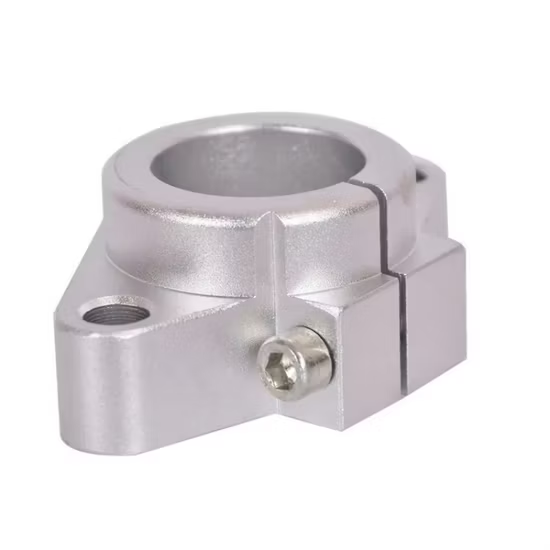
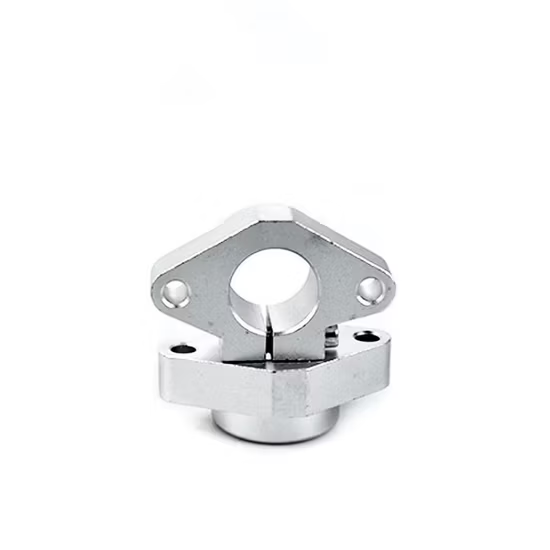
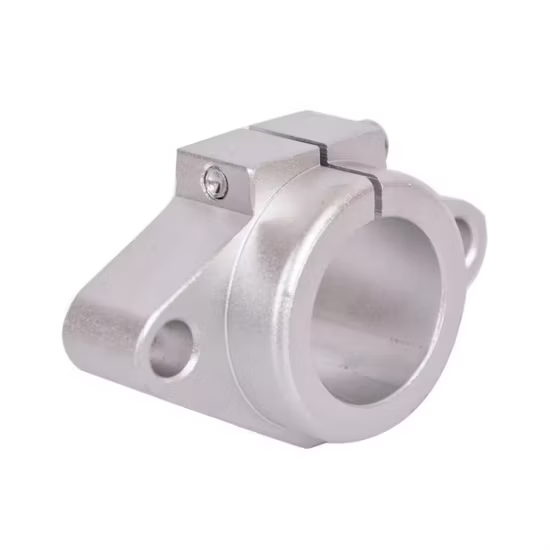
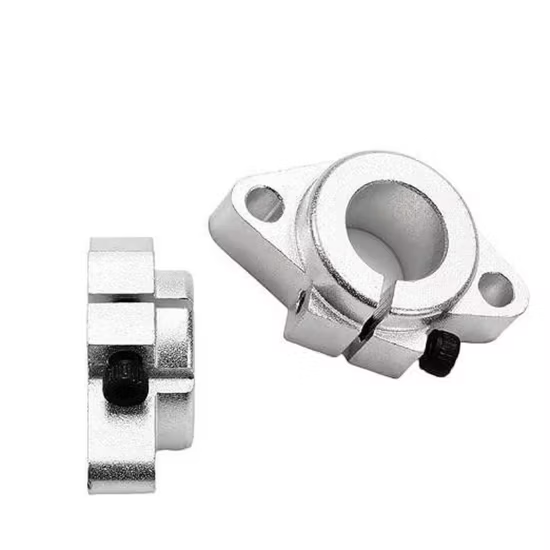
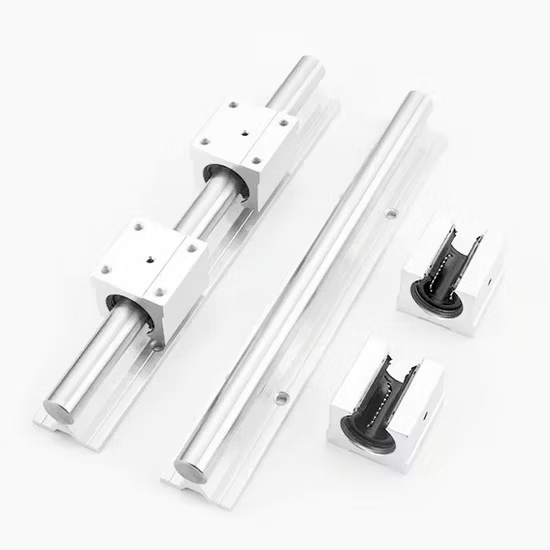
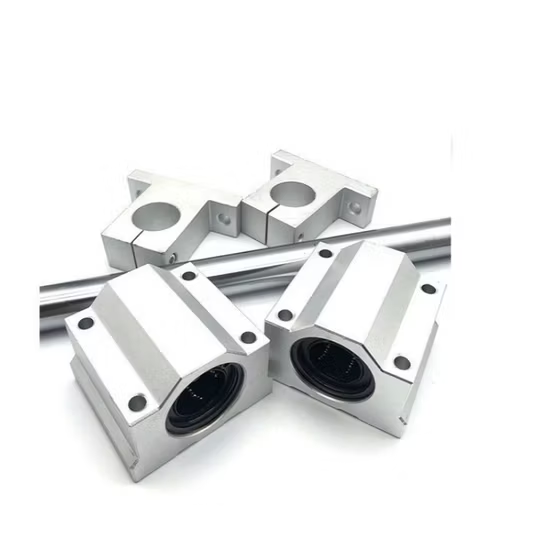
Stainless Steel Linear Motion Slide Bearing Shaft Support — hollow profile construction with polished surface ensures high corrosion resistance.
Verified Origin Authenticity — Every production batch includes scannable codes linking directly to the manufacturer's official validation portal, eliminating the risk of cloned markings on linear motion components.
| Parameter | Value |
|---|---|
| Product Type | Linear Motion Slide Bearing Shaft Support |
| Material Options | Stainless Steel, Carbon Steel, Aluminum Alloys |
| Profile Type | Hollow Profile |
| Surface Treatment | Polished |
| Corrosion Resistance | High Corrosion Resistance |
| Operational Features | High Speed, Low Voice |
| Precision Rating Options | P0, P6, P5, P4, P2 |
| Length | Custom Length |
| Origin Options | Germany, Japan, Sweden, Malaysia, China |
| Certification | CE, CS, EPA, ISO 9001:2000, ISO 9001:2008, RoHS |
| Industry | Typical Applications |
|---|---|
| CNC Machinery | High-speed spindle traverse mechanisms and precision tool changers |
| Automation Equipment | Multi-axis robotic gantry systems and pick-and-place linear actuators |
| 3D Printing | Extruder carriage guidance rails and heated build plate alignment tracks |
| Material Handling | Automated guided vehicle steering columns and conveyor diverter arms |
| Engineering Machinery | Hydraulic cylinder positioning guides and heavy-duty actuator supports |
Dimensional tolerance stacking in linear guides causes catastrophic binding when shaft supports deviate from nominal bore specifications.
In the automation sector, procurement teams frequently encounter cloned QR codes and soft inner rings that pass casual visual inspections but fail under dynamic loads. When cross-reference errors match the base designation but overlook critical profile types and surface treatments, the resulting thermal binding destroys linear sliders. Sourcing from an authorized stainless steel linear motion slide bearing shaft support supplier ensures strict dimensional alignment, preventing the premature wear that plagues unverified supply chains .
Selecting the right stainless steel linear motion slide bearing shaft support supplier involves evaluating material options against specific environmental exposures. While polished stainless steel variants offer high corrosion resistance for washdown zones in food processing, carbon steel or aluminum options may suffice for dry, enclosed automation cells. Our technical team reviews your specific humidity and chemical exposure parameters to recommend the optimal material grade, ensuring the hollow profile maintains rigidity without unnecessary weight penalties.
Linear motion systems endure complex radial and axial load combinations, especially during rapid acceleration and deceleration phases. High-speed operations generate friction heat, which can compromise the interference fit between the shaft and the support base if thermal expansion i*ear bearings is critical, as contaminated environments quickly degrade polished surfaces. Proper installation alignment prevents edge loading, which otherwise accelerates fatigue and generates excessive operational noise .
The precision rating spectrum, ranging from P0 to P2, dictates the allowable geometric deviations in the shaft support bore. For high-speed CNC applications, tighter tolerances prevent micro-vibrations that degrade surface finish quality. The hollow profile design significantly reduces the moving mass of the assembly, allowing servo motors to achieve faster traverse rates while maintaining structural rigidity. Selecting the appropriate precision class ensures the polished surface treatment effectively minimizes friction coefficients during continuous reciprocating motion.
Utilizing shaft supports with out-of-tolerance bores leads to severe slider binding and unpredictable machine downtime. When the internal diameter exceeds specified limits, the linear bearings experience localized stress concentrations that rapidly destroy the recirculating ball pathways. This premature failure often voids equipment warranties and necessitates complete gantry rebuilds. Adhering to strict geometric verification protocols prevents these catastrophic damage scenarios and protects overall equipment effectiveness.
We provide authorized coverage across major linear motion brands, allowing mixed-requirement orders to be fulfilled seamlessly. Our cross-reference expertise matches not just the base designation, but also verifies profile types, surface treatments, and material specifications to prevent field failures. Every shipment includes batch traceability to the manufacturer, backed by official app QR verification to eliminate counterfeit risks. Furthermore, our application-based selection review covers load dynamics and mounting constraints specific to your automation equipment.
To ensure optimal performance, please provide your equipment model, available installation space, and specific load and speed parameters. Detailing the operational environment, including exposure to corrosive agents or extreme temperatures, allows our engineering team to determine the exact material and precision grade required. This technical复核 guarantees the selected shaft support perfectly matches your linear guide system.
Q: How do I determine the exact shaft support model for my linear guide system?
A: Determining the correct model requires analyzing the linear guide's block dimensions, dynamic load requirements, and traverse speed. Provide your equipment specifications and operating environment details, and our engineering team will calculate the necessary bore tolerance and precision rating. This ensures the shaft support perfectly aligns with your specific linear motion application without causing binding or excessive wear.
Q: What are the material selection boundaries for different operating environments?
A: Material selection depends heavily on environmental exposure and weight constraints. Stainless steel variants are essential for washdown areas or high-humidity environments due to their corrosion resistance. Carbon steel offers higher rigidity for heavy-duty engineering machinery, while aluminum alloys reduce moving mass for high-speed 3D printers. We evaluate your specific chemical and thermal conditions to recommend the optimal material option.
Q: What are common failure modes in linear motion shaft supports and how can I prevent them?
A: Common failure modes include bore deformation leading to slider binding, surface scoring from inadequate lubrication, and fatigue spalling caused by edge loading. Prevention requires strict adherence to dimensional tolerances during procurement and proper alignment during installation. Sourcing verified components with accurate precision ratings and maintaining clean operating conditions significantly extends the service life of the entire linear motion assembly.
Q: How can I verify authenticity and avoid counterfeits with cloned markings?
A: Counterfeit shaft supports often feature soft materials and cloned QR codes that fail under dynamic loads. To ensure authenticity, procure strictly through authorized channels and demand batch traceability documentation. We provide official app QR verification and comprehensive dimensional inspection reports, allowing you to confirm the genuine material properties and precision ratings before the components are integrated into your automation equipment.
Q: What customization options are available for specialized engineering machinery?
A: We offer custom length machining and specific profile type modifications to accommodate unique installation spaces in specialized machinery. Depending on your application, we can source hollow or solid profile variants with tailored surface treatments. Provide your exact dimensional drawings and load parameters, and our technical team will coordinate with the manufacturer to deliver precision-matched shaft supports that meet your specific engineering requirements.
Our 5-step process ensures every order is engineered, validated, and supported for optimal performance.
Technical needs assessment
Custom specifications
Free samples for $50k+
Pre-shipment inspection
On-site & predictive
Our certified engineers respond within 24 hours with detailed technical specifications, pricing, and lead time information.
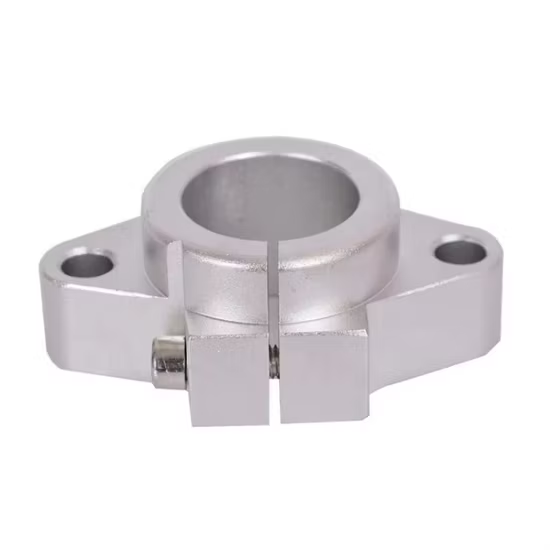
![SHF8 SHF10 SHF12 SHF16 SHF20 Linear Shaft Support Slide Bearing Unit [WARN] draft identifier mismatch](https://skfiso.com/wp-content/uploads/2026/09/shf8-shf10-shf12-shf16-shf20-linear-shaft-support-slide-bearing-unit-warn-draft-identifier-mismatch-68f1da.avif)