01
Consultation
Technical needs assessment

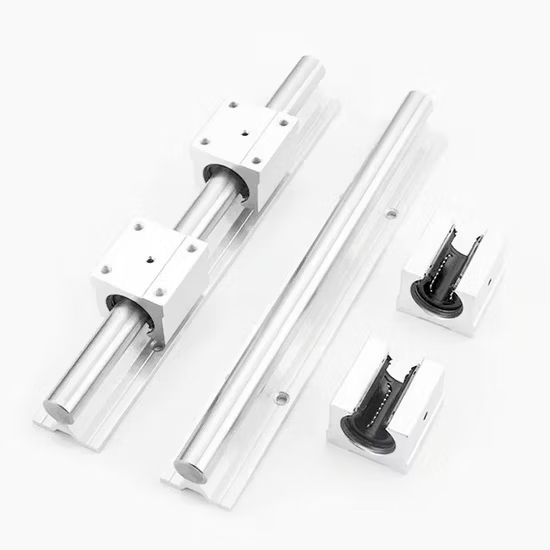
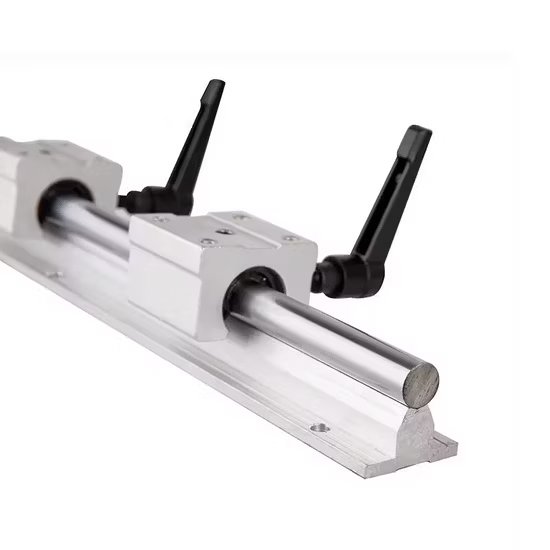
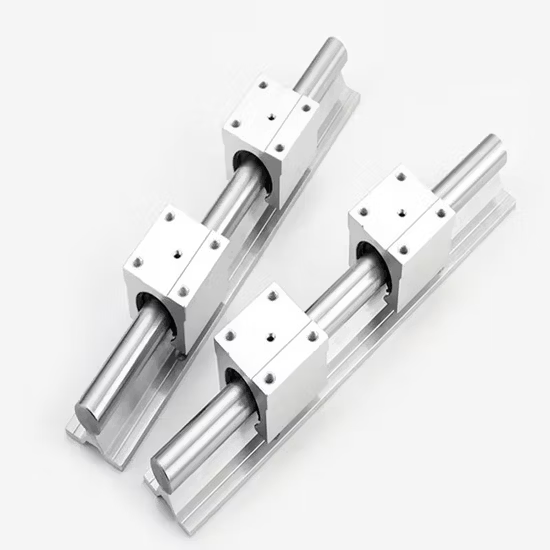
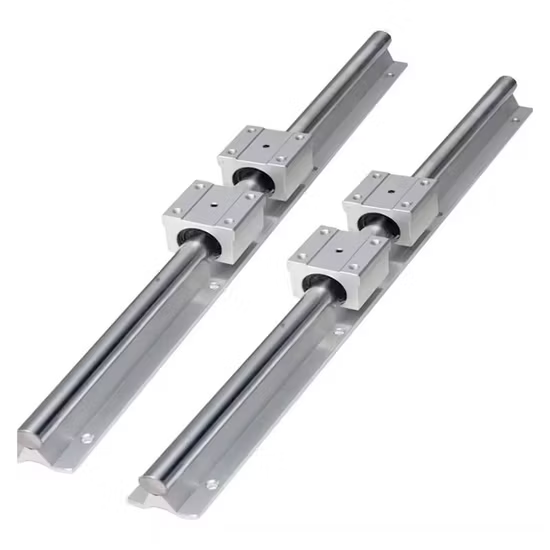
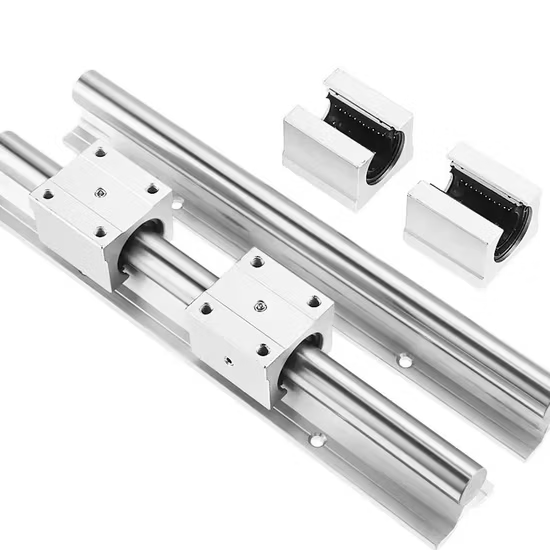
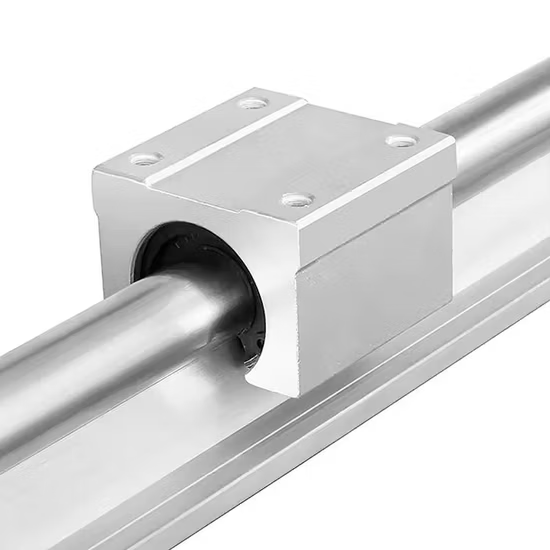
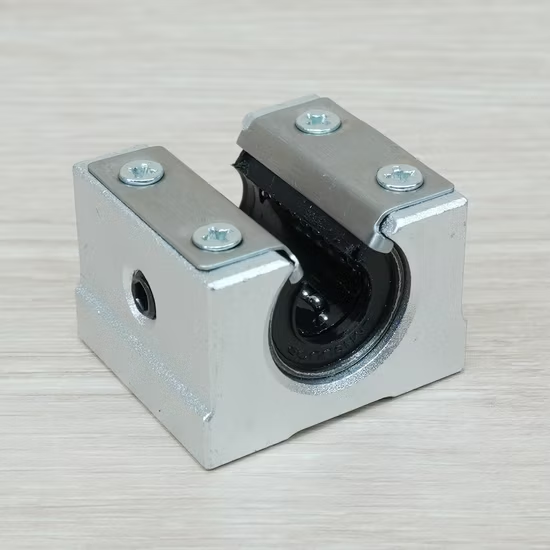
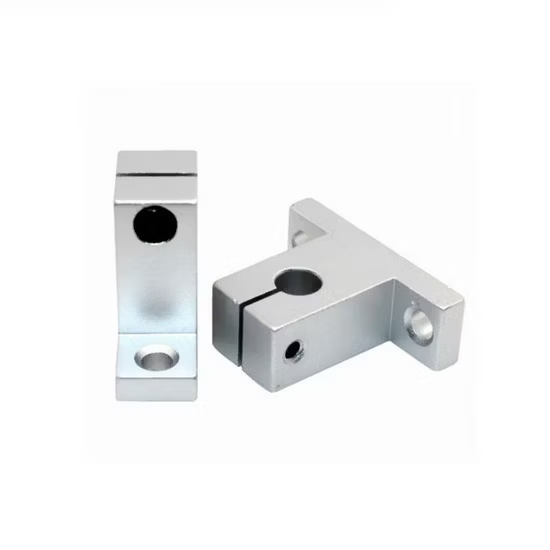
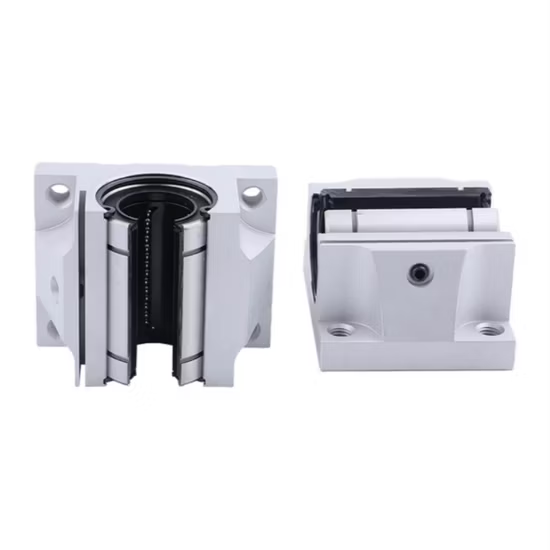
SBR25uu Linear Guide Bearing — stainless steel hollow profile with polished surface for high corrosion resistance in CNC sliding systems.
Cross-Reference Alignment Verified — We match profile type, material grade, and precision class rather than just the base SBR25uu designation to prevent CNC slider binding.
| Parameter | Value |
|---|---|
| Designation | SBR25uu |
| Bearing Type | Linear Guide Bearing |
| Material Options | Available in stainless steel variants |
| Profile Type | Hollow Profile |
| Surface Treatment | Polished |
| Precision Class | P0, P6, P5, P4, P2 |
| Operational Features | High Speed, Low Voice |
| Certification | CE, ISO 9001:2000, ISO 9001:2008, RoHS |
| Origin | Germany, Japan, Sweden, Malaysia, China |
Note: The "uu" and "luu" suffixes are unverified and require manufacturer catalog confirmation for exact sealing or carriage configurations.
| Industry | Typical Applications |
|---|---|
| Machine Tool Manufacturing | CNC sliding systems and precision spindle assemblies |
| Automation Engineering | High-speed precision equipment linear motion axes |
| Heavy Machinery | Engineering machinery guide rails requiring high corrosion resistance |
Matching the base designation without verifying the hollow profile rigidity and surface polish leads to rapid precision loss in CNC sliders.
In the Pearl River Delta manufacturing hub, I have seen countless procurement engineers source linear motion components by basic model numbers alone, only to face severe slider vibration under load. Counterfeit parts with soft inner rings and cloned QR codes often pass casual visual inspections but fail catastrophically during high-speed operation . When the hollow profile lacks the necessary structural rigidity or the surface treatment is inadequate, the SBR25uu linear guide bearing loses its dimensional accuracy, causing unplanned downtime and scrapped workpieces.
Selecting the right SBR25uu linear guide bearing requires looking beyond the catalog number to evaluate the actual operating environment. Our technical team reviews the specific load dynamics and speed requirements of your CNC sliding systems to ensure the selected profile type and material options align with your machine's rigidity needs. This application-based selection review prevents the common mistake of installing standard components in high-precision setups where they cannot maintain tight tolerances.
CNC sliding systems subject linear rails to complex radial and axial loads, often accompanied by high-speed reversals that generate significant friction heat. If the surface treatment is not properly polished, this friction accelerates wear and compromises the low voice operation required for precision equipment. Furthermore, exposure to coolant splashes in machine tool spindles demands high corrosion resistance, making material selection critical to prevent surface pitting that destroys running accuracy . Proper lubrication intervals must also be maintained to protect the rolling elements from micro-pitting.
The hollow profile design of this linear rail optimizes the weight-to-rigidity ratio, which is essential for maintaining stability during rapid traverse rates in engineering machinery. A polished surface treatment minimizes the friction coefficient, directly supporting the high-speed and low voice features demanded by modern CNC sliding systems. Precision ratings ranging from P0 to P2 dictate the dimensional accuracy and straightness of the shaft, where tighter tolerances are mandatory for machine tool spindles to prevent chatter marks on finished parts. Understanding these core specifications ensures the component can withstand the specific thermal expansion and mechanical deflection present in your application.
Installing a linear guide with inadequate profile rigidity or incorrect material hardness results in premature failure and catastrophic damage to the entire sliding mechanism. According to failure analysis frameworks like ISO 15243, surface distress and abrasive wear from soft materials lead to a complete loss of positioning accuracy . This forces emergency machine shutdowns, voids equipment warranties, and incurs massive replacement costs that far exceed the initial savings of buying unverified components.
We provide authorized coverage across all major brands, allowing you to consolidate mixed-brand requirements for your CNC systems into a single, fully traceable order. Our cross-reference alignment ensures that the hollow profile dimensions and precision classes match your OEM requirements exactly, rather than just swapping base numbers. Every batch is backed by official app QR verification to eliminate the risk of cloned codes and soft materials. We also supply comprehensive material test reports and dimensional inspection data, giving your engineering team absolute confidence in the straightness and hardness of the rails before they reach your assembly floor.
To ensure precise technical selection and cross-reference review, please provide the specific radial and axial loads, operating speeds, and thermal conditions of your CNC sliding systems. Sharing the OEM equipment number allows our engineering team to verify the exact profile type and length requirements against our cross-reference database. Detailing the environmental exposure, such as coolant or dust presence, helps us confirm the optimal material and surface treatment options for your application.
Q: How can I verify the authenticity of the linear guide bearings via official QR codes?
A: We provide full batch traceability with QR codes that can be scanned using the brand's official mobile applications. This verification process confirms the manufacturing origin and technical specifications, effectively eliminating the risk of counterfeit parts with soft inner rings that often pass casual visual inspections but fail under high-speed CNC operation.
Q: What cross-reference considerations are critical when replacing linear motion components?
A: A reliable cross-reference must align the profile type, material options, and precision class, not just the base designation. Matching only the basic model number while ignoring the hollow profile rigidity or surface polish can cause thermal binding and rapid accuracy loss in demanding CNC sliding systems and precision equipment applications.
Q: How do material selection boundaries affect performance in corrosive environments?
A: While standard carbon steel offers high load capacity, stainless steel variants provide substantially higher corrosion resistance necessary for machine tool spindles exposed to coolant splashes. Selecting the appropriate material ensures the polished surface maintains its integrity, preventing pitting that would otherwise destroy the running accuracy of the sliding system.
Q: How should I interpret precision ratings for CNC sliding system accuracy?
A: Precision ratings from P0 to P2 define the dimensional and running accuracy of the shaft. Tighter tolerances like P4 or P2 are essential for machine tool spindles to prevent vibration and chatter, whereas standard P0 or P6 classes may suffice for general engineering machinery where extreme positioning accuracy is not the primary operational requirement.
Our 5-step process ensures every order is engineered, validated, and supported for optimal performance.
Technical needs assessment
Custom specifications
Free samples for $50k+
Pre-shipment inspection
On-site & predictive
Our certified engineers respond within 24 hours with detailed technical specifications, pricing, and lead time information.