01
Consultation
Technical needs assessment

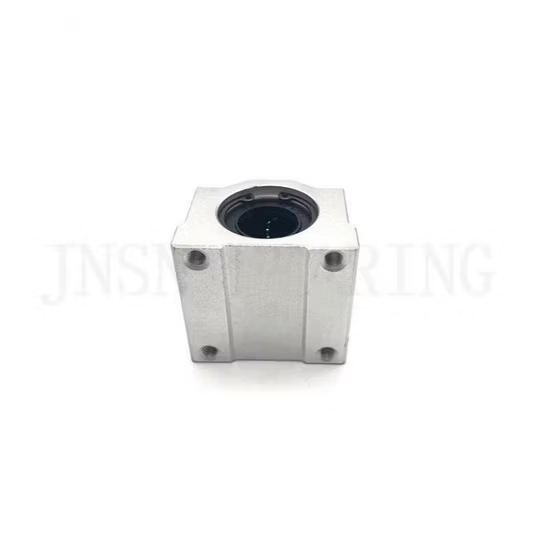


SBR16 SBR20 SBR16uu SBR20uu Linear Motion Guide Blocks — Stainless steel construction with a polished hollow profile ensures high corrosion resistance for demanding environments.
Original Batch Traceability — Every SBR16uu and SBR20uu unit ships with manufacturer lot documentation to verify material origin and production date.
| Parameter | Value |
|---|---|
| Designation | SBR16 SBR20 SBR16uu SBR20uu |
| Product Type | Linear Motion Guide Block / Linear Bearing Unit |
| Material | Available in stainless steel or standard bearing steel variants |
| Profile Type | Hollow Profile |
| Surface Treatment | Polished |
| Precision Rating | P0, P6, P5, P4, P2 |
| Feature | High Speed, Low Noise |
| Certification | CE, ISO 9001:2000, ISO 9001:2008, RoHS |
| Origin | Germany, Japan, Sweden, Malaysia, China |
Note: The "uu" suffix is an unverified designation typically indicating double-sided sealing in linear motion contexts; always confirm exact seal geometry with the manufacturer catalog.
| Industry | Typical Applications |
|---|---|
| CNC Machining | Aluminum shaft systems and high-speed spindle tables |
| Engineering Machinery | Linear actuation mechanisms under corrosive exposure |
| Automation Equipment | Pick-and-place gantries requiring low-noise operation |
| Material Handling | Automated storage retrieval systems with continuous cycling |
Sourcing from a reliable SBR16uu SBR20uu linear motion guide block supplier requires looking far beyond the basic model number.
I have seen countless CNC aluminum shaft systems grind to a halt because the procurement team matched the base SBR16 or SBR20 designation but completely ignored the sealing suffix and precision class. When an open-type block is installed in a machining environment heavily contaminated with coolant mist and aluminum chips, the internal rolling elements suffer rapid abrasion. This leads to severe carriage stuttering and eventual mechanical binding during high-speed traverse moves . The financial impact of unplanned downtime on a multi-axis machining center vastly outweighs the initial savings of skipping the sealed "uu" variant.
Selecting the correct linear bearing unit means aligning the physical profile with the dynamic realities of the machine. A polished hollow profile design significantly reduces the moving mass of the carriage, which is critical for minimizing inertia during rapid acceleration and deceleration cycles in automation equipment. When you partner with an experienced SBR16uu SBR20uu linear motion guide block supplier, the technical review ensures that the chosen block geometry and seal friction characteristics perfectly match the servo motor torque limits and the required positioning accuracy of the specific gantry system.
Linear motion systems in CNC machining and engineering machinery face a brutal combination of chemical exposure and thermal fluctuation. Coolant splashes demand high corrosion resistance, making stainless steel variants highly preferable to standard carbon steel to prevent raceway pitting. Simultaneously, high-speed friction generates localized heat along the shaft. If the internal clearance and preload of the slide block are not specified correctly to accommodate this thermal expansion, the rolling elements will experience excessive preload, leading to elevated operating temperatures and premature fatigue . Proper seal selection is equally vital to retain lubrication while blocking abrasive sludge without introducing prohibitive friction.
The SBR16 and SBR20 designations refer to the specific shaft diameter compatibility and the overall envelope dimensions of the slide block. The "uu" suffix generally denotes a sealed configuration, which is mandatory for retaining factory grease and excluding contaminants in uncontrolled environments. Beyond the seal, the precision rating—ranging from standard P0 up to ultra-precise P2—dictates the dimensional tolerances of the block and its running accuracy. While a P6 block might suffice for general material handling conveyors, a P4 or P2 grade is strictly required for CNC machine tool spindles and precision measuring tables to eliminate microscopic carriage deviation and ensure flawless surface finishes on machined parts.
Overlooking a single suffix or misjudging the aluminum mounting block tolerances triggers a cascade of mechanical failures. An incorrect preload specification causes the slide block to operate with excessive internal stress, rapidly degrading the raceway and generating abnormal acoustic noise during operation. According to standard failure analysis frameworks, this type of improper mounting and selection leads to catastrophic damage to the entire linear shaft assembly . The resulting warranty voidance and emergency replacement logistics create severe disruptions to production schedules.
We prevent cross-reference errors by verifying not just the base SBR16 or SBR20 number, but explicitly confirming the seal type, precision class, and profile geometry against your exact application parameters. Our inventory strategy covers mixed-brand requirements, allowing you to consolidate SKF, FAG, THK, or generic equivalents into a single shipment with full batch traceability. We actively flag situations where a standard open block is mistakenly requested for a high-contamination CNC environment, recommending the sealed "uu" variant instead. Every quotation includes precise lead times and minimum order quantities, backed by post-delivery mounting guidance to ensure the aluminum seat tolerances do not distort the block housing.
To ensure optimal performance and longevity, please provide your specific radial and axial load calculations, maximum traverse speeds, and operating temperature ranges. Sharing the exact OEM equipment number or the dimensional constraints of your aluminum shaft system allows our engineering team to perform a thorough cross-reference and L10 life calculation. Detailing the environmental exposure, such as coolant mist or abrasive dust, helps us confirm whether the sealed "uu" configuration and stainless steel material are the most appropriate choices for your application.
Q: How do I determine the correct shaft diameter and block size for my CNC equipment?
A: Shaft diameter and block size depend on the dynamic load, bending moments, and required rigidity of your specific axis. Provide your load calculations, travel speed, and mounting space constraints. Our engineering team will calculate the required static and dynamic load ratings to recommend whether the SBR16 or SBR20 size provides the necessary safety margin for continuous operation.
Q: Why does the sealing suffix matter if the base SBR model number is identical?
A: The base number only defines the physical dimensions and load capacity. A sealed "uu" variant retains lubrication and blocks abrasive particles, which is critical in machining environments. Installing an open block in a contaminated area leads to rapid raceway abrasion and carriage binding, causing catastrophic failure long before the calculated fatigue life is reached.
Q: When should I specify stainless steel over standard bearing steel for linear blocks?
A: Stainless steel is necessary when the linear motion system is exposed to high humidity, chemical splashes, or coolant mist that would cause standard bearing steel to corrode. While standard steel offers slightly higher load capacity, stainless variants prevent raceway pitting and ensure smooth operation in corrosive engineering machinery and washdown environments.
Q: What is the practical difference between P0 and P4 precision in automation gantries?
A: P0 is a standard commercial grade suitable for general material handling where microscopic positioning is not critical. P4 precision offers significantly tighter dimensional tolerances and running accuracy, which is mandatory for CNC spindle tables and high-speed pick-and-place gantries to eliminate carriage deviation, reduce vibration, and ensure precise endpoint positioning.
Q: How should I maintain sealed "uu" linear bearing units in continuous operation?
A: Sealed "uu" units are generally designed to be maintenance-free for their initial lifecycle, as the seals prevent contamination and retain factory grease. Attempting to force additional grease into a sealed block can blow out the sealing lips. For open variants, establish a regular relubrication schedule based on travel distance and environmental contamination levels to prevent dry running.
Our 5-step process ensures every order is engineered, validated, and supported for optimal performance.
Technical needs assessment
Custom specifications
Free samples for $50k+
Pre-shipment inspection
On-site & predictive
Our certified engineers respond within 24 hours with detailed technical specifications, pricing, and lead time information.