01
Consultation
Technical needs assessment



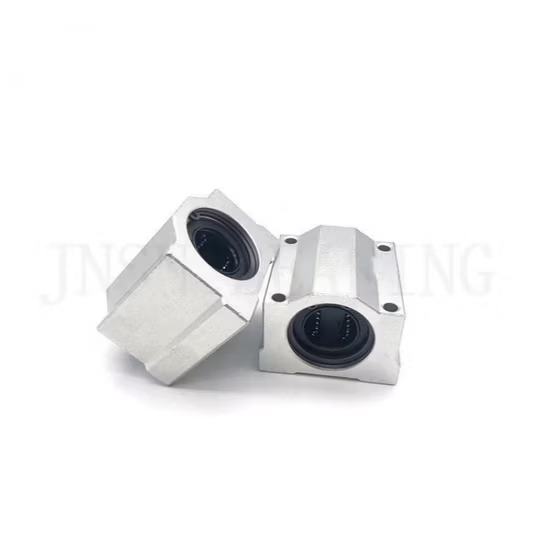
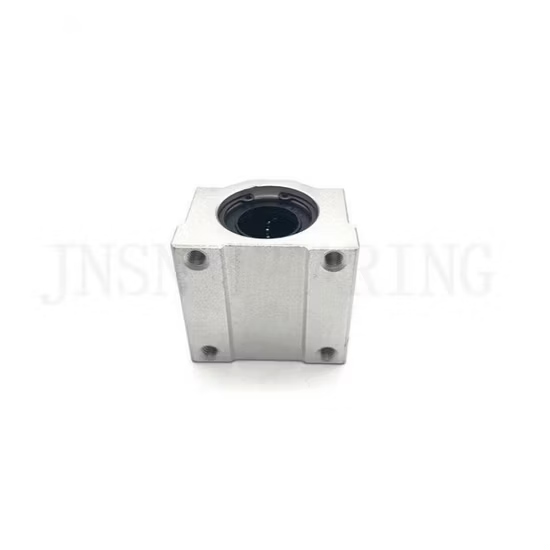

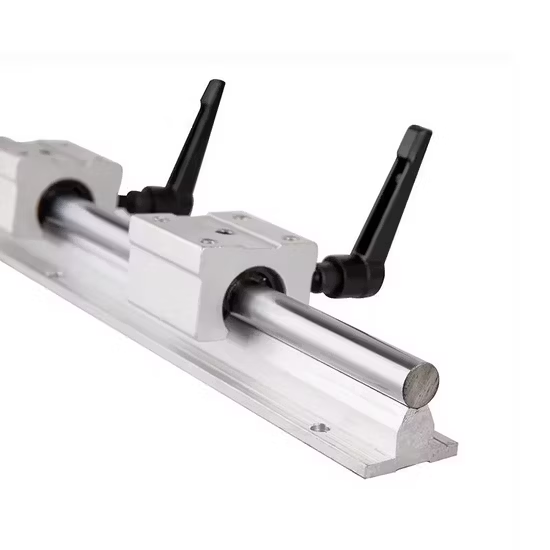
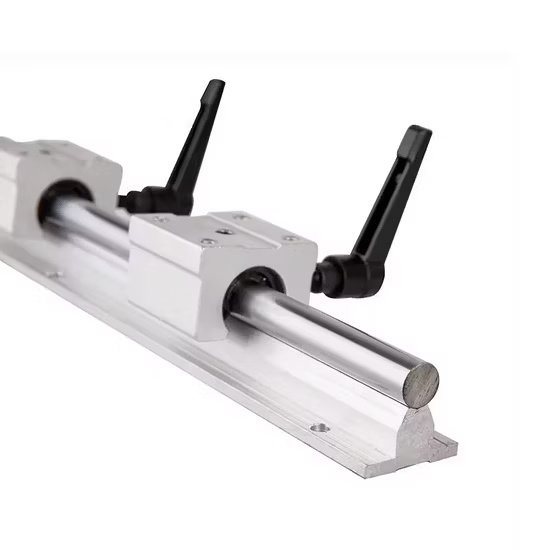
SBR16uu Linear Bearing Slider 16 mm Shaft Diameter — stainless steel construction with high corrosion resistance.
Cross-Reference Alignment Verified — We match the 16 mm shaft diameter, double-sided seal configuration, and open profile type to prevent linear guide binding in automated systems.
| Parameter | Value |
|---|---|
| Designation | SBR16uu |
| Product Type | Linear Bearing |
| Nominal Shaft Diameter (d) | 16 mm |
| Seal Type | Double-sided contact seals (uu) |
| Profile Type | Open / Slotted design for clearance adjustment |
| Material Options | Available in stainless steel or high-carbon bearing steel variants |
| Surface Treatment | Polished finish |
| Precision Class Options | P0, P2, P4, P5, P6 |
| Operational Features | High speed, low noise |
| Corrosion Resistance | High corrosion resistance (stainless variant) |
| Customization | Custom length available |
| Origin Options | Germany, Japan, Sweden, Malaysia, China |
| Certification | CE, RoHS, ISO 9001:2008 |
| Industry | Typical Applications |
|---|---|
| Industrial Automation | Pick-and-place robot arms and high-speed conveyor transfer units |
| Food Processing | Washdown environments for bottling, filling, and packaging lines |
| Medical Equipment | Precision positioning stages in diagnostic imaging machines |
| Electronics Manufacturing | Automated optical inspection and SMT component placement systems |
| Packaging Machinery | Linear actuation for cartoning and sealing equipment |
Matching the base 16 mm designation without verifying the aluminium block tolerance and seal friction leads to catastrophic guide binding.
Procurement engineers often assume that ordering the correct base number guarantees a drop-in replacement. However, a significant share of premature linear motion failures stems from overlooked suffix details and housing mismatches . When the aluminium pillow block tolerance does not perfectly align with the outer diameter of the linear bushing, the internal ball recirculation path distorts. This distortion causes the sliding block to seize under load, halting the entire production line. Sourcing a genuine SBR16uu linear bearing slider requires verifying not just the shaft size, but the exact seal drag and housing fitment to maintain smooth travel.
Selecting the right precision class for your SBR16uu linear bearing slider dictates the repeatability of your automated equipment. While standard P0 or P6 grades suffice for general material handling, high-speed pick-and-place robots demand P4 or P2 tolerances to minimize axial runout. Our technical review process cross-references your specific equipment OEM requirements against the available precision options, ensuring the sliding block delivers the exact positional accuracy your automation cycle requires without over-specifying the budget.
In food processing and packaging environments, linear guides face aggressive cleaning chemicals and constant moisture exposure. The stainless steel material option provides high corrosion resistance, preventing surface pitting that would otherwise destroy the ball-to-raceway contact . Furthermore, the double-sided contact seals (uu) retain lubrication while blocking particulate ingress, though buyers must account for the slight increase in friction drag compared to open or shielded variants when sizing their drive motors.
The "16" designates the 16 mm nominal shaft diameter, which must perfectly match the hardened linear shaft to prevent uneven wear. The "uu" suffix indicates double-sided contact seals, which are critical for retaining factory-applied grease and excluding dust in non-washdown environments. Additionally, the open profile design allows the aluminium housing to be clamped tightly around the bearing outer ring. This clamping action permits micro-adjustments to the internal clearance, compensating for shaft deflection and ensuring the SBR16uu linear bearing slider glides without preload binding.
Ignoring the aluminium block tolerance when replacing a linear slider results in unplanned downtime and catastrophic damage to the linear shaft. If the housing bore is machined too tightly, clamping the open profile will crush the bearing sleeve, causing immediate ball skidding and shaft scoring. Conversely, a loose fit introduces micro-movements that accelerate wear. Referencing ISO guidelines for linear motion assembly , we verify the dimensional compatibility between the bearing outer diameter and your specific housing to prevent these costly installation errors.
We eliminate cross-reference errors by validating the exact seal configuration and open profile dimensions, not just the base 16 mm size. Every batch features full traceability back to the manufacturer's production facilities, supported by official app QR verification where applicable. Our application-based selection review evaluates your load, speed, and washdown requirements to recommend the optimal material variant and precision grade. Furthermore, we provide dimensional and running accuracy inspection reports that confirm the selected P-grade tolerances before the SBR16uu linear bearing slider ships to your facility.
To ensure optimal performance, share your radial and axial load profiles, travel speed, and operating temperature with our engineering team. We will perform a cross-reference review to verify the housing tolerance and recommend the correct precision class and material variant for your specific application, ensuring your linear motion system operates reliably under your exact working conditions.
Q: How do I verify the authenticity and batch traceability of these linear bearings?
A: We provide full batch and lot traceability documentation linking each unit to the original manufacturer. For supported brands, you can scan the QR code via the official brand application to verify material authenticity and confirm the production facility, ensuring you receive genuine components for your automation equipment.
Q: What are the critical cross-reference checks for the SBR16uu model?
A: Beyond the 16 mm shaft diameter, you must verify the double-sided contact seal configuration and the open profile design for housing clamping. We cross-reference these exact parameters against your OEM equipment number to ensure the replacement slider matches the original friction drag and clearance adjustment capabilities.
Q: How do I choose the right precision class for my linear guide application?
A: Standard P0 or P6 grades are suitable for general conveyors, while high-speed robotics and medical imaging require P4 or P2 tolerances to minimize axial runout. Provide your equipment's repeatability requirements, and our team will recommend the appropriate precision class to balance performance and cost.
Q: What causes premature failure of linear sliders in food processing?
A: Moisture ingress and chemical washdowns cause surface pitting on standard carbon steel, leading to ball recirculation failure. Selecting the stainless steel material option with high corrosion resistance and verifying the integrity of the double-sided contact seals prevents these environment-induced breakdowns.
Q: How should I adjust the clearance during installation of the open profile?
A: The open profile allows the aluminium housing to clamp around the bearing. Tighten the housing bolts evenly and gradually while testing the slide resistance. This micro-adjustment compensates for shaft deflection without crushing the sleeve, ensuring smooth travel and preventing internal binding.
Our 5-step process ensures every order is engineered, validated, and supported for optimal performance.
Technical needs assessment
Custom specifications
Free samples for $50k+
Pre-shipment inspection
On-site & predictive
Our certified engineers respond within 24 hours with detailed technical specifications, pricing, and lead time information.

![SHF8 SHF10 SHF12 SHF16 SHF20 Linear Shaft Support Slide Bearing Unit [WARN] draft identifier mismatch](https://skfiso.com/wp-content/uploads/2026/09/shf8-shf10-shf12-shf16-shf20-linear-shaft-support-slide-bearing-unit-warn-draft-identifier-mismatch-68f1da.avif)