01
Consultation
Technical needs assessment
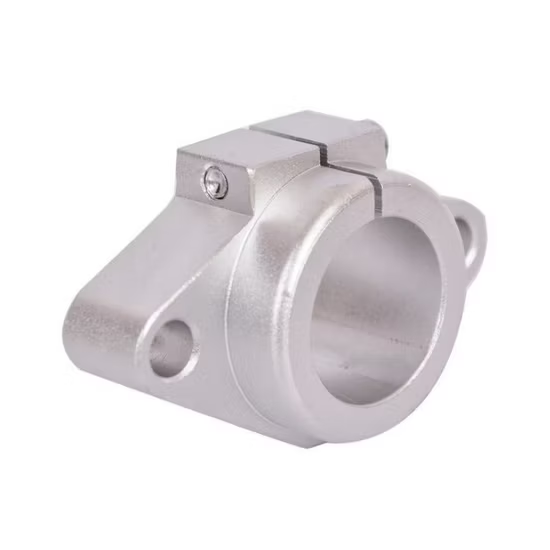


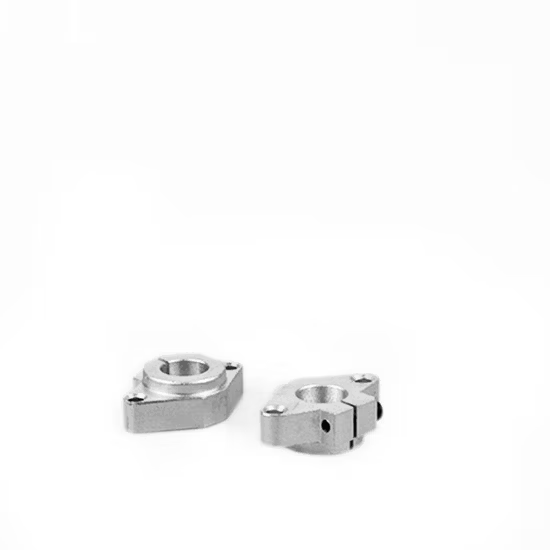
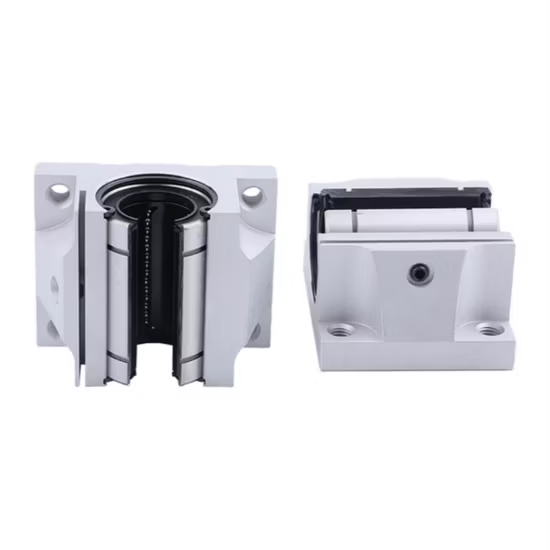
Linear Motion Sliding Bearing for High-Precision Machinery — stainless steel hollow profile with polished surface delivers high corrosion resistance for washdown and harsh environments. Suited for engineering machinery and automation equipment requiring sustained high-speed, low-noise linear motion under CE and RoHS compliance. Selection focuses on load type, installation space, and maintenance intervals to match operating conditions.
Full Batch Traceability — Every linear motion component ships with manufacturer lot documentation and QR verification for complete supply chain transparency.
| Parameter | Value |
|---|---|
| Product Type | Linear Motion Sliding Bearing |
| Material Options | Stainless steel or standard bearing steel variants |
| Precision Class Options | P0, P6, P5, P4, P2 |
| Profile Type | Hollow profile design |
| Surface Treatment | Polished finish |
| Corrosion Resistance | High corrosion resistance |
| Performance Features | High speed, low noise operation |
| Certifications | CE, ISO 9001:2000, ISO 9001:2008, RoHS |
| Origin Options | Germany, Japan, Sweden, Malaysia, China |
| Industry | Typical Applications |
|---|---|
| Engineering Machinery | Heavy-duty actuator guides and boom sliding mechanisms |
| High Precision Machinery | Machine tool spindle housings and optical inspection stages |
| Automation Equipment | Pick-and-place linear modules and cleanroom transfer systems |
| Material Handling | Automated storage retrieval system carriages and conveyor guides |
Selecting a verified linear motion sliding bearing supplier prevents the hidden costs of premature wear and positional drift in high-precision assemblies.
I have seen countless straight-line modules suffer from excessive vibration and shortened service life simply because a buyer opted for non-standard bushings to save on initial costs. In the Pearl River Delta manufacturing hub, mismatched tolerances on hollow shafts frequently cause noticeable shaking under dynamic loads . When the basic designation matches but the internal clearance or material hardness is wrong, the sliding interface fails to maintain smooth, gap-free movement. This leads to catastrophic surface scoring and unplanned downtime that far outweighs any initial procurement savings.
Choosing the right material variant is critical for long-term reliability. Stainless steel options provide high corrosion resistance, making them ideal for washdown environments or food processing machinery where standard bearing steel would rapidly degrade. For dry or cleanroom applications, polished surface treatments minimize friction and particulate generation. A competent linear motion sliding bearing supplier will always evaluate the specific environmental exposure before recommending a final material configuration.
Linear systems in automation equipment frequently encounter combined loading, including moment loads that induce edge stresses on the sliding interface. High-speed traversal generates frictional heat, which can alter the internal clearance and cause thermal binding if the precision class is not properly matched to the operating temperature. Proper alignment during installation is equally critical; even minor parallelism errors will accelerate localized wear . Selecting the appropriate precision class ensures the running accuracy remains stable despite these thermal and mechanical fluctuations.
The hollow profile design significantly reduces the moving mass of the carriage, allowing for higher acceleration rates without overloading the drive motors. When paired with a polished surface treatment, the sliding friction is noticeably reduced, which directly contributes to low voice operation and smoother kinematic performance. These geometric and surface optimizations are essential for high-speed engineering machinery where rapid directional changes and strict acoustic limits are mandatory.
Failing to verify the exact precision class and material hardness often results in unplanned downtime and catastrophic damage to the mating shaft. According to failure analysis frameworks outlined in ISO 15243, surface smearing and adhesive wear are common consequences of inadequate lubrication or incorrect clearance selection in sliding contacts . When a non-standard component is installed in a high-precision machine tool, the resulting positional inaccuracy can void the equipment warranty and scrap expensive workpieces.
We maintain authorized distribution coverage across major international brands, allowing you to consolidate mixed-brand requirements into a single, fully documented shipment. Cross-reference matching goes beyond the base designation; we verify profile types, material grades, and precision suffixes to prevent field failures caused by thermal binding. Every component features batch traceability to the manufacturer, supported by official app QR verification to eliminate the risk of counterfeit parts with soft inner rings. Our technical selection review evaluates your specific load, speed, and temperature conditions to ensure the chosen configuration matches the application perfectly.
To ensure accurate selection and cross-reference verification, please provide the equipment model, available installation space, and specific load and speed parameters. Detailing the operating environment, including exposure to moisture, dust, or elevated temperatures, allows our engineering team to determine the optimal material and precision class for your application.
Q: How do I determine the exact linear bearing designation for my equipment?
A: Provide your equipment model, shaft diameter, load conditions, and required travel speed. Our engineering team will analyze these parameters to select the correct precision class, material option, and profile type, ensuring the final configuration meets your specific running accuracy and lifespan requirements without guessing the base designation.
Q: When should I choose stainless steel over standard bearing steel?
A: Stainless steel variants are necessary for applications involving moisture, chemical exposure, or strict hygiene requirements like food processing. While standard bearing steel offers higher load capacity in dry environments, stainless options provide the high corrosion resistance needed to prevent surface degradation and maintain smooth sliding in harsh conditions.
Q: What causes premature failure in high-speed linear sliding systems?
A: Premature failures often stem from mismatched clearances, inadequate shaft surface finish, or misalignment during installation. High speeds generate frictional heat; if the precision class and material are not suited for the thermal expansion, the bearing can experience thermal binding, leading to severe surface scoring and catastrophic module failure.
Q: How do you manage lead times for custom hollow profiles?
A: Lead times depend on the specific precision class, material option, and required dimensions. By leveraging our authorized distribution network and maintaining close coordination with manufacturer production facilities, we optimize the supply chain to minimize delays for non-standard configurations while ensuring full batch traceability and quality documentation.
Q: Why are ISO certifications important for exported machinery parts?
A: Certifications like ISO 9001 and RoHS ensure the components meet international quality management and environmental safety standards. This compliance is critical for customs clearance and guarantees that the linear motion parts integrated into your exported engineering machinery will perform reliably without violating regional material restrictions.
Our 5-step process ensures every order is engineered, validated, and supported for optimal performance.
Technical needs assessment
Custom specifications
Free samples for $50k+
Pre-shipment inspection
On-site & predictive
Our certified engineers respond within 24 hours with detailed technical specifications, pricing, and lead time information.