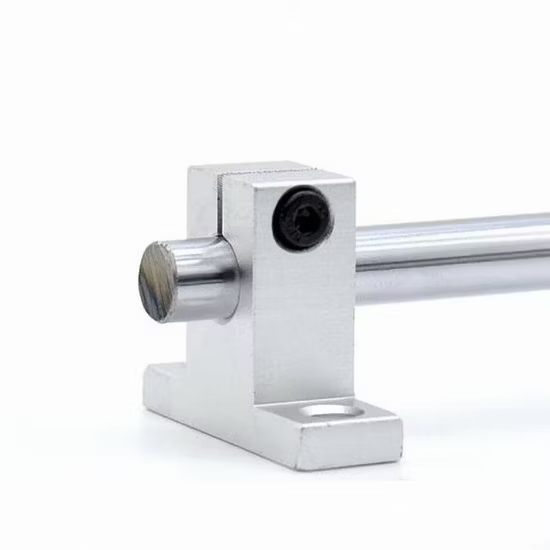
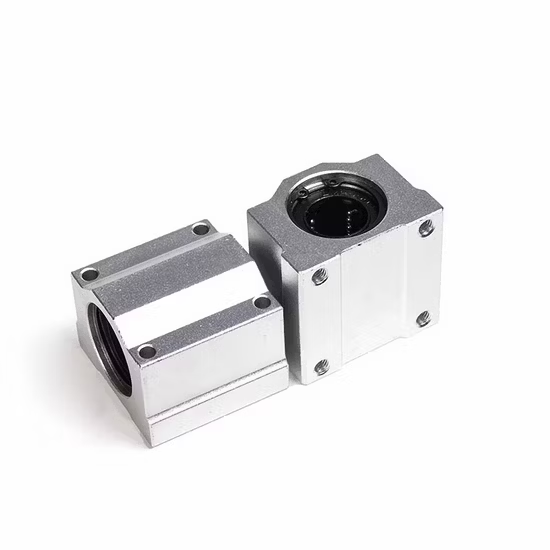
01
Consultation
Technical needs assessment


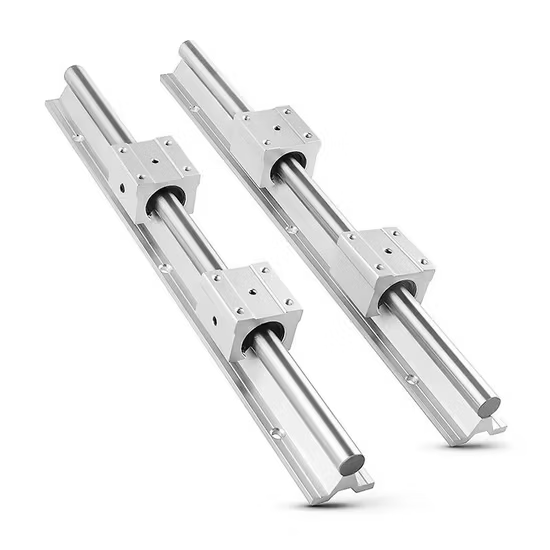
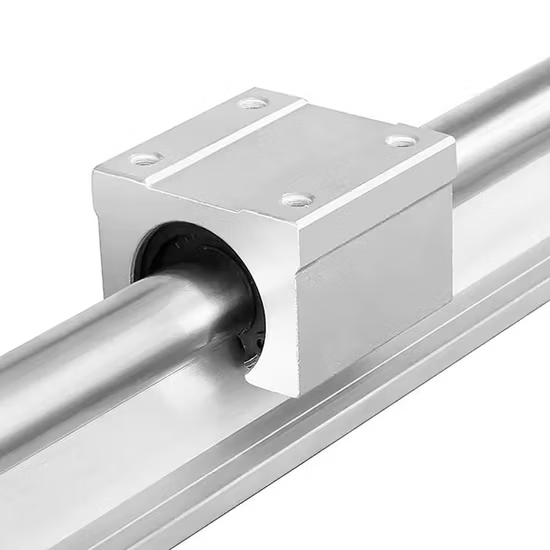
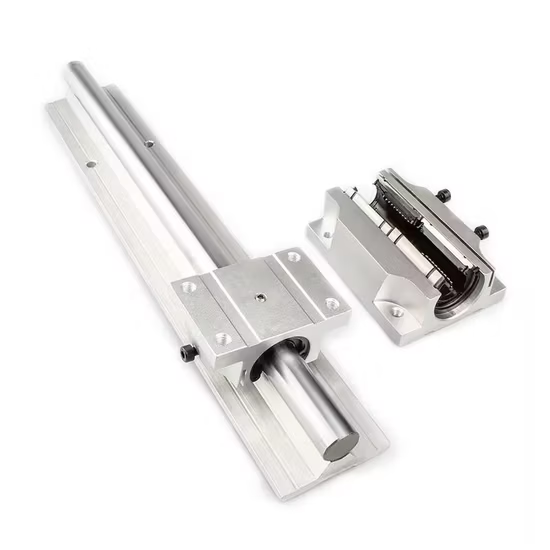
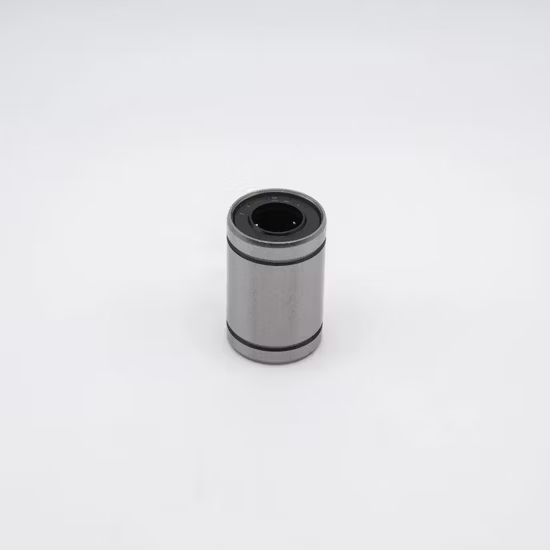

SBR16uu Linear Guide Block features polished stainless steel construction with a hollow profile, delivering high corrosion resistance for demanding automation and food processing environments.
Cross-Reference Alignment Verified — We match the SBR16uu base designation, block length, and precision class to prevent thermal binding in CNC sliding systems.
| Parameter | Value |
|---|---|
| Designation | SBR16uu |
| Product Type | Linear Motion Bearing / Linear Guide Block |
| Material Options | Available in stainless steel or carbon steel variants |
| Surface Treatment | Polished |
| Profile Type | Hollow Profile |
| Precision Class | P0, P6, P5, P4, P2 |
| Corrosion Resistance | High Corrosion Resistance |
| Features | High Speed, Low Voice |
| Length | Custom Length |
| Certification | CE, CS, EPA, ISO 9001:2000, ISO 9001:2008, RoHS |
Note: Specific suffix definitions for this series remain unverified and require manufacturer catalog confirmation prior to final order.
| Industry | Typical Applications |
|---|---|
| CNC Machining | Sliding systems, tool changers, and precision spindle positioning |
| Food Processing | Washdown conveyor guides and automated packaging actuators |
| Medical Equipment | Imaging bed translation mechanisms and sterile laboratory automation |
| Industrial Automation | Pick-and-place robotic arms and cleanroom transfer systems |
Mismatched block lengths and ignored seal friction destroy sliding accuracy long before the rail wears out.
Procurement teams often focus solely on the base rail width, overlooking the critical interchange details between standard and extended block variants. When an extended block is forced into a space designed for a standard one, or when seal friction is ignored in high-speed applications, the resulting thermal binding causes catastrophic damage to the sliding surface. I have seen CNC machines in Dongguan shut down for weeks because a replacement block lacked the correct internal clearance, leading to severe galling under heavy cutting loads .
Selecting the right SBR16uu stainless steel linear guide bearing supplier involves more than checking the outer dimensions. The internal ball retainer design and seal geometry must align with the specific speed and load profile of your automation equipment. We review your application parameters to ensure the selected block variant provides the necessary rigidity without introducing excess friction, safeguarding your positioning accuracy over extended production runs.
In environments requiring frequent chemical washdowns, standard carbon steel components quickly degrade, making stainless steel variants essential for maintaining structural integrity. However, stainless steel introduces different thermal expansion characteristics. When combined with high-speed traversal, the friction from contact seals can generate localized heat, altering the internal clearance. Selecting the appropriate seal type and precision class ensures the block accommodates these thermal shifts without binding or losing preload .
The availability of multiple precision classes, from P0 up to P2, allows for exact matching to your machine's tolerance requirements. Higher precision grades minimize running noise and ensure smoother motion, which is critical for medical imaging and optical inspection systems. Furthermore, the hollow profile design reduces overall moving mass, enabling faster acceleration and deceleration in pick-and-place operations. Custom length options ensure the block footprint perfectly matches the mounting interface, preventing overhang and uneven load distribution across the recirculating ball circuits.
Substituting a standard block for an extended one without recalculating the moment load capacity leads to uneven stress distribution on the recirculating balls. This localized overloading causes premature spalling and retainer fragmentation, resulting in unplanned downtime and voided equipment warranties. According to industry failure analysis frameworks, improper geometric matching is a primary driver of early guide block exhaustion, turning a minor spare part replacement into a major spindle rebuild .
We do not just ship the base designation; we verify the exact block length, seal type, and precision suffix to ensure true interchangeability. Our cross-reference process catches discrepancies between standard and extended variants that generic catalogs often gloss over. Every shipment includes full batch traceability, allowing you to verify the material origin and manufacturing date. We also provide application-based selection reviews, analyzing your specific load and speed conditions to recommend the optimal internal geometry and lubrication strategy.
To ensure optimal performance, share your specific radial and axial load profiles, maximum traversal speeds, and operating temperature ranges. Providing the original equipment manufacturer's part numbers allows us to perform a comprehensive cross-reference check, verifying that the block length and seal configuration perfectly match your machine's requirements. Our engineering team will evaluate these parameters to confirm the L10 life and recommend the most suitable precision class and material variant for your application.
Q: What is the critical difference between standard and extended linear guide blocks?
A: Extended blocks feature a longer mounting footprint and additional recirculating ball circuits, significantly increasing the moment load capacity and rigidity. Installing a standard block in an application designed for an extended one concentrates stress on fewer load-bearing points, leading to rapid fatigue and premature failure of the internal retainer under heavy cutting or dynamic loads.
Q: How does material choice affect performance in washdown environments?
A: Stainless steel variants offer substantially higher corrosion resistance compared to standard carbon steel, preventing surface pitting and track degradation during chemical cleaning. However, stainless steel has different thermal expansion characteristics and load capacities, requiring careful evaluation of the operating temperature and load profile to ensure the internal clearance remains stable during high-speed operation.
Q: Why is precision class selection critical for automated equipment?
A: Higher precision classes minimize dimensional variations and running noise, ensuring smoother motion and tighter positioning accuracy. Using a lower precision block in a high-speed CNC or medical imaging system introduces micro-vibrations and tracking errors, which degrades the final product quality and accelerates wear on both the block and the mating rail profile.
Q: How can I verify the authenticity of the linear guide components?
A: Authentic components feature distinct manufacturing marks and are accompanied by comprehensive documentation, including Certificates of Conformity and material test reports. Utilizing official brand applications to scan the QR codes on the packaging provides immediate batch traceability, confirming the exact production origin and protecting your operation from the hidden risks of counterfeit parts.
Our 5-step process ensures every order is engineered, validated, and supported for optimal performance.
Technical needs assessment
Custom specifications
Free samples for $50k+
Pre-shipment inspection
On-site & predictive
Our certified engineers respond within 24 hours with detailed technical specifications, pricing, and lead time information.