01
Consultation
Technical needs assessment

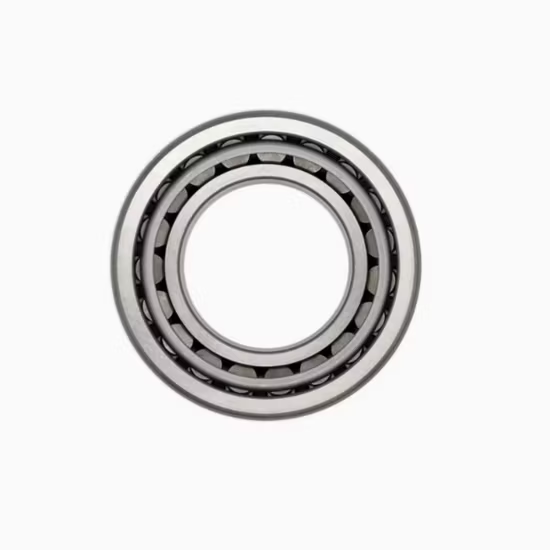
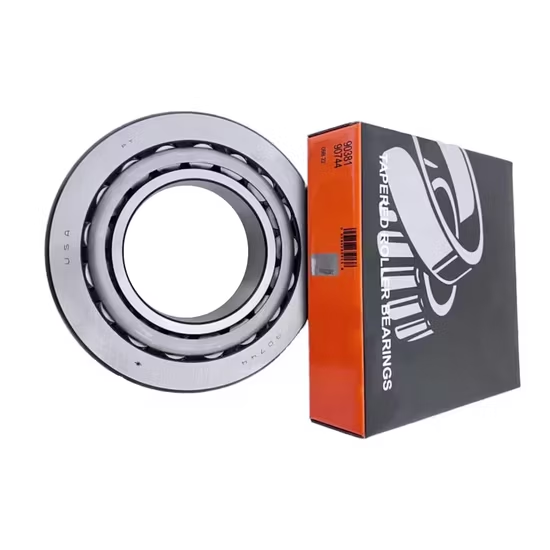
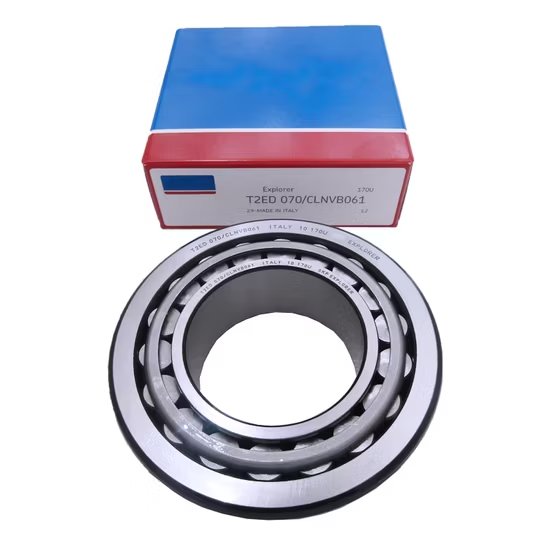


30221 30222 Single Row Tapered Roller Bearing P4 — Manufactured from GCr15 bearing steel with P4 precision class to deliver tight running accuracy and high fatigue resistance for industrial gearboxes and heavy vehicle axles.
Cross-reference alignment verified — We match the base designation, P4 precision class, and specific cage material to prevent thermal binding when replacing this component.
| Parameter | Value |
|---|---|
| Designation | 30221 30222 |
| Bearing Type | Tapered Roller Bearing |
| Number of Rows | Single Row |
| Precision Class | P4 |
| Cage Material | Nylon / Brass / Iron |
| Material | GCr15 Bearing Steel |
| Origin | Germany / Japan / Sweden / Malaysia / China |
| Minimum Order Quantity | 1 PCS |
| Industry | Typical Applications |
|---|---|
| Automotive & Heavy Vehicles | Commercial truck axles and wheel hubs subjected to heavy combined loads |
| Industrial Manufacturing | Industrial gearbox shafts and marine drive systems requiring high running accuracy |
| Building Materials | Heavy-duty conveyor pulleys and crusher mechanisms operating under high shock |
Matching the basic designation is never enough to guarantee operational reliability.
Procurement teams often source replacements based solely on the base number, overlooking critical internal design variations. When a standard clearance component is installed in a high-temperature gearbox without accounting for thermal expansion, the internal clearance vanishes, leading to catastrophic thermal binding. I witnessed this exact failure mode in Dubai when a standard replacement seized under heavy load because the precision class and internal geometry did not align with the equipment's actual operating profile . Sourcing a genuine 30221 30222 tapered roller bearing requires strict verification of every suffix and tolerance parameter to eliminate unplanned downtime.
Heavy-duty axles and industrial gearboxes demand exact geometric alignment to distribute combined loads effectively across the raceways. Our technical team reviews the specific equipment requirements to ensure the selected 30221 30222 tapered roller bearing matches the original equipment manufacturer's internal design parameters. This rigorous cross-referencing process prevents premature wear caused by microscopic misalignments in the roller-to-raceway contact zone.
These components constantly navigate complex radial and axial forces while managing significant heat generation from mechanical friction. Operating temperatures directly dictate the necessary internal clearance; a standard setup will rapidly fail if the thermal expansion of the shaft and housing is not properly calculated. Proper lubrication intervals and selecting the correct cage material are equally vital to prevent smearing and surface fatigue under continuous heavy loading .
The P4 precision class ensures tighter dimensional and running accuracy, which is essential for minimizing vibration and noise in high-speed gearbox applications. Cage material selection must be matched to the specific operational environment: nylon cages offer quiet operation and low friction, brass cages provide superior durability under high vibration and heavy loads, while iron cages deliver reliable performance in standard industrial conditions. Understanding these material boundaries ensures the component survives the specific shock and speed profiles of the application.
Installing a component with the wrong internal geometry or precision class inevitably triggers a cascade of mechanical failures. According to ISO 281 framework principles, ignoring the thermal and load boundaries drastically reduces the calculated fatigue life, resulting in sudden seizure or catastrophic raceway spalling. These failures void equipment warranties and force expensive emergency repairs, turning a minor procurement oversight into massive operational losses .
Our authorized distribution network guarantees that every 30221 30222 tapered roller bearing is sourced through verified channels, completely eliminating the risk of counterfeit parts with soft inner rings. We align the cross-reference on precision class and cage material, not just the base number, ensuring exact compatibility with your machinery. Every shipment includes full batch traceability to the manufacturer, providing procurement engineers with absolute confidence in the product's authenticity and operational readiness.
To ensure precise application matching, please provide your equipment's radial and axial load profiles, operating speeds, and expected temperature ranges. Sharing the original equipment manufacturer part numbers allows our engineering team to perform a comprehensive cross-reference check and L10 life verification. This technical data enables us to recommend the exact cage material and internal clearance required for your specific machinery.
Q: How can I verify the authenticity of the received components?
A: Every component features a unique QR code linked to the manufacturer's production database. By scanning this code using the official brand application on your smartphone, you can instantly verify the batch origin, production date, and authenticity. This digital traceability completely eliminates the risk of installing counterfeit parts with compromised metallurgical properties into your critical machinery.
Q: Why is matching the precision class just as important as the base number?
A: The base number only defines the outer dimensions, while the precision class dictates the internal running accuracy and vibration limits. Installing a standard precision part in a high-speed gearbox designed for P4 tolerances will cause excessive vibration, accelerated lubricant degradation, and premature fatigue. Exact precision matching ensures the component operates within the engineered thermal and mechanical boundaries.
Q: How do I choose between nylon, brass, and iron cages for my application?
A: The cage material must align with your specific load and speed conditions. Nylon cages are ideal for high-speed, low-vibration environments due to their low friction and quiet operation. Brass cages offer superior structural strength for applications with heavy shock loads and high vibration, while iron cages provide a reliable, cost-effective solution for standard industrial operating conditions.
Q: What mounting practices are recommended to maintain P4 running accuracy?
A: Maintaining P4 tolerances requires precise mounting techniques to avoid brinelling or raceway deformation. We strongly recommend using calibrated induction heaters for interference fits, strictly controlling the temperature to prevent thermal damage to the GCr15 steel. Applying force directly to the correct ring during press-fitting ensures the rolling elements and cage assembly remain perfectly aligned.
Our 5-step process ensures every order is engineered, validated, and supported for optimal performance.
Technical needs assessment
Custom specifications
Free samples for $50k+
Pre-shipment inspection
On-site & predictive
Our certified engineers respond within 24 hours with detailed technical specifications, pricing, and lead time information.


