01
Consultation
Technical needs assessment

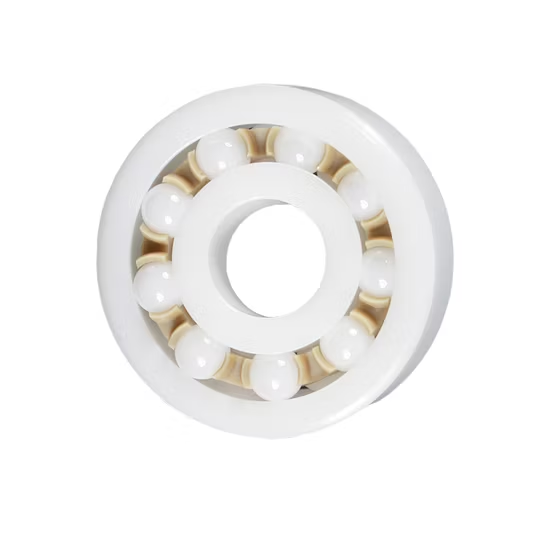

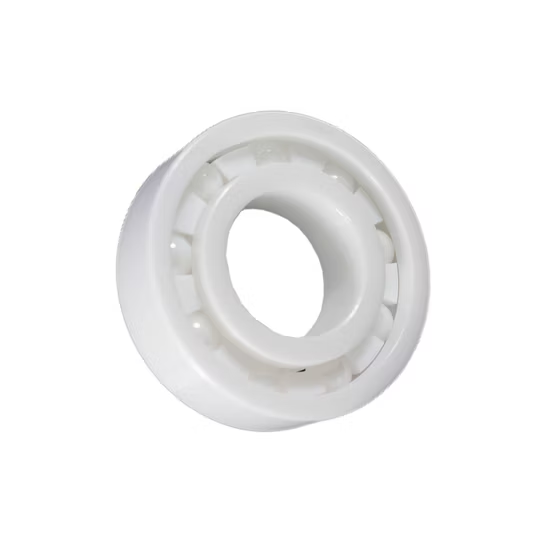

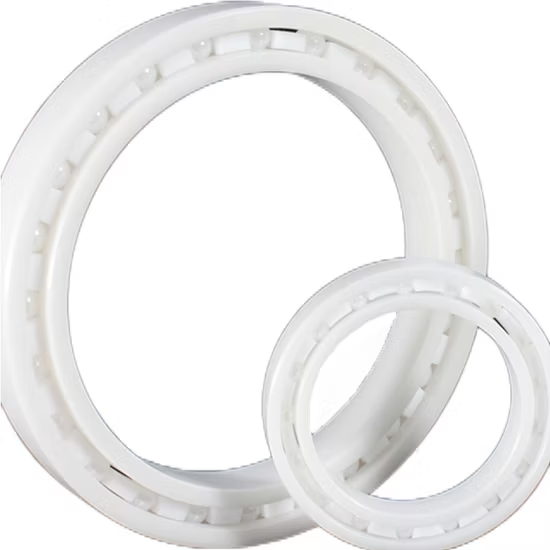

6312CE P4 Zirconia Deep Groove Ball Bearing — P4 precision class ensures tight running accuracy for machine tool spindles and high-speed precision equipment.
Verified via official QR — Every 6312CE unit ships with batch traceability scannable through the manufacturer's native application to rule out cloned codes and soft inner rings.
| Parameter | Value |
|---|---|
| Designation | 6312CE |
| Bearing Type | Deep Groove Ball Bearing |
| Material | Zirconia ceramic variants available |
| Precision Class | P4 |
| Seal or Shield Type | Open, rubber seals, or iron seals available |
| Quality Level | Z1V1 to Z4V4 noise and vibration grades |
| Feature | Low noise, high-speed capability, extended service life |
| Origin | Sourced from authorized facilities in Germany, Japan, Sweden, Malaysia, or China |
The "CE" suffix typically denotes a 15° contact angle in angular contact series, but in this deep groove context, it designates the zirconia ceramic variant; always verify against the specific manufacturer catalog.
| Industry | Typical Applications |
|---|---|
| Electric Motors | High-speed rotor supports requiring electrical insulation |
| Precision Equipment | Machine tool spindle positions demanding tight P4 running accuracy |
| Chemical Processing | Pump impeller shafts exposed to corrosive media |
| Medical Devices | Imaging equipment gantries needing non-magnetic, low-noise operation |
Matching the base number while ignoring the ceramic material variant and P4 precision suffix is a fast track to thermal binding.
I have seen production lines in Dongguan shut down for days because a standard steel 6312 was forced into a high-speed motor application that strictly required the thermal stability and electrical insulation of a ceramic variant. When procurement teams rely on basic cross-references that overlook internal design and material suffixes, the resulting friction heat causes rapid cage failure . A 6312CE zirconia ceramic deep groove ball bearing operates under entirely different thermal expansion dynamics than its steel counterpart, and treating them as interchangeable ignores the fundamental physics of the application.
Selecting the right variant goes far beyond the inner and outer diameters. We ensure the specific seal type, noise grade, and ceramic material option align perfectly with your operational environment. By cross-referencing the exact suffix combination, we prevent the all-too-common scenario where a standard clearance bearing is installed in an application demanding specific thermal expansion allowances, thereby securing the intended performance of the 6312CE zirconia ceramic deep groove ball bearing.
High-speed electric motors generate significant internal heat, which drastically alters the internal clearance of standard bearing steel. When electrical currents pass through the shaft, standard components suffer from electrical pitting, a failure mode that zirconia variants effectively eliminate due to their inherent insulating properties. Furthermore, maintaining P4 precision at elevated rotational speeds requires strict adherence to specific lubrication intervals and contamination control . If the sealing arrangement does not match the environmental particulate load, microscopic debris will quickly compromise the tight dimensional tolerances required for smooth operation.
The P4 precision class dictates exceptionally tight dimensional and running accuracy, which is non-negotiable for machine tool spindles and precision equipment where vibration translates directly into poor surface finishes. Zirconia ceramic rolling elements are noticeably lighter than steel, reducing centrifugal forces on the cage during high-speed rotation and allowing for cooler operation. Available in open, rubber-sealed, or iron-sealed configurations, the choice depends entirely on the balance between friction heat generation and the need for contamination exclusion. Selecting the correct noise and vibration grade, from Z1V1 up to Z4V4, ensures the component meets the acoustic requirements of sensitive medical or precision machinery.
Installing a component with incorrect internal clearance or material properties inevitably leads to unplanned downtime and catastrophic damage to the surrounding housing. When thermal expansion is miscalculated, the bearing binds, generating excessive heat that destroys the lubricant and seizes the shaft. This premature failure not only voids equipment warranties but also forces emergency air-freight replacements that disrupt entire production schedules .
We cover all major international brands, meaning your mixed-brand requirements for a complete motor overhaul are handled in a single, coordinated order. Our cross-reference process strictly aligns the base designation, precision class, and material suffixes, ensuring you never receive a standard steel part when a zirconia variant is specified. Every shipment includes full batch traceability, allowing your quality team to verify authenticity directly through the brand's official app. We also conduct application-based selection reviews, checking your load, speed, and temperature parameters to confirm the chosen configuration will survive the actual operating environment.
To ensure the selected configuration meets your exact operational demands, please provide your specific radial and axial load profiles, operating speeds, and ambient temperature ranges. Sharing the original OEM equipment number allows our engineering team to perform a precise cross-reference check, verifying that the material and precision suffixes align with the factory design. This technical review guarantees the component will deliver the expected L10 life under your unique application conditions.
Q: How does the CE suffix on this deep groove bearing differ from standard angular contact catalogs?
A: In standard angular contact series, CE typically indicates a 15° contact angle. However, for this deep groove variant, it designates the zirconia ceramic material option. Always verify the exact suffix meaning against the specific manufacturer's current catalog to avoid ordering the wrong internal geometry or material for your application.
Q: Why is P4 precision critical when replacing standard bearings in high-speed motors?
A: High-speed applications generate significant centrifugal forces and heat. P4 precision ensures tighter dimensional and running accuracy, minimizing vibration and preventing the thermal binding that often destroys lower-precision components. This tight tolerance is essential for maintaining rotor stability and extending the operational life of precision equipment.
Q: Can I use standard steel cross-references when sourcing the zirconia variant?
A: No. While the base dimensions might match, zirconia ceramic has entirely different thermal expansion coefficients, density, and elastic modulus compared to bearing steel. Using a standard steel cross-reference without adjusting for clearance and material properties will likely result in premature failure due to thermal binding or electrical pitting.
Q: How do you verify the authenticity of the ceramic material and precision grade?
A: Every unit ships with full batch traceability and a Certificate of Conformity. You can scan the provided QR code using the manufacturer's official application to instantly verify the origin, material composition, and P4 precision grade, effectively eliminating the risk of receiving counterfeit products with cloned markings.
Our 5-step process ensures every order is engineered, validated, and supported for optimal performance.
Technical needs assessment
Custom specifications
Free samples for $50k+
Pre-shipment inspection
On-site & predictive
Our certified engineers respond within 24 hours with detailed technical specifications, pricing, and lead time information.