01
Consultation
Technical needs assessment



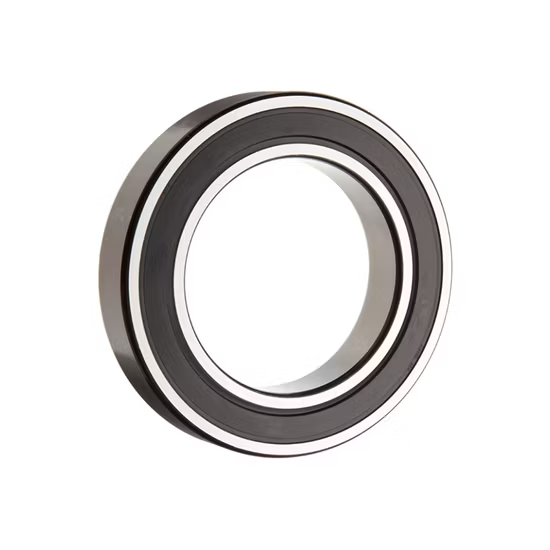

6911 6912 6913 6914 6915 Zz 2RS Deep Groove Ball Bearing P5 P6 — Thin-section series spanning five bore sizes with dual seal configurations. ZZ shields provide dust protection at moderate speeds, while 2RS contact rubber seals deliver enhanced contamination exclusion for demanding environments. P5/P6 precision grades ensure tight dimensional and running accuracy for runout-sensitive electric motor and automotive applications. Each shipment includes original factory batch documentation with traceability codes supporting direct manufacturer authenticity verification.
Multi-brand authorized coverage — sourcing mixed international equivalents for the 6911 6912 6913 6914 6915 Zz 2RS deep groove ball bearing series in a single consolidated shipment eliminates multi-vendor coordination delays.
| Parameter | Value |
|---|---|
| Designation | 6 |
| Product Type | Deep Groove Ball Bearing |
| Precision Class | P5 / P6 |
| Seal or Shield Type | Open, Zz (Iron Shields), 2RS (Rubber Seals) |
| Quality Level | Z1V1, Z2V2, Z3V3, Z4V4 |
| Origin | Germany / Japan / Sweden / Malaysia / China |
| HS Code | 848210 |
| Industry | Typical Applications |
|---|---|
| Electric Motors | Rotor shaft support requiring low-vibration Z4V4 grading |
| Auto Parts | Alternator pulleys and tensioner assemblies needing dust protection |
| Bicycle | Bottom bracket and hub assemblies demanding low rolling friction |
| Pumps | Impeller shaft positioning where moisture ingress is a constant risk |
| Gearboxes | High-speed intermediate shafts requiring precise P5 radial runout control |
| Household Appliances | Washing machine drum supports necessitating quiet operation |
Cross-referencing base numbers while ignoring seal suffixes and precision grades remains the leading cause of thermal binding in thin-section applications.
In the Pearl River Delta distribution network, I have witnessed countless 6911-2RS units misapplied as standard open bearings, directly leading to motor lock-ups from ignored P5 precision and clearance mismatches. Procurement teams frequently align the base 69xx number but overlook that a Zz shield cannot retain grease under the high-speed friction of an electric motor spindle, whereas a 2RS contact seal will overheat if pushed beyond its friction limit . The 6911 6912 6913 6914 6915 Zz 2RS deep groove ball bearing lineup demands exact suffix alignment, because a simple cross-reference error here causes catastrophic cage failure in the field.
Selecting the correct variant from the 6911 6912 6913 6914 6915 Zz 2RS deep groove ball bearing matrix requires mapping the seal type directly to the contamination profile. Our technical review process ensures that the Z1V1 to Z4V4 noise and vibration grading perfectly aligns with the acoustic requirements of household appliances and precision electric motors.
The thin cross-section of the 69-series makes these units highly sensitive to thermal growth and friction heat. Zz iron shields provide non-contact protection ideal for high-speed gearboxes where grease retention is managed externally, minimizing friction. Conversely, 2RS rubber seals offer superior defense against moisture in pump applications but introduce contact friction that limits maximum RPM. Operating a 2RS variant at speeds meant for open or Zz configurations rapidly degrades the seal lip, allowing contaminants to breach the raceway . Furthermore, applying P0 grade tolerances in a precision spindle application where P5 or P6 is specified will induce immediate vibration and premature fatigue.
The distinction between Zz and 2RS goes far beyond simple nomenclature; it dictates the tribological behavior of the bearing. Zz shields maintain a microscopic air gap, preventing large debris ingress without adding rotational drag, making them optimal for high-RPM auto parts. The 2RS designation indicates a double contact rubber seal that physically wipes the inner ring, essential for bicycle hubs exposed to mud and water. Meanwhile, the P5 and P6 precision classes govern the dimensional and running accuracy. Upgrading to P5 ensures tighter radial runout, which is non-negotiable for the high-speed rotor shafts in electric motors where slight deviations cause severe harmonic vibration. The Z4V4 quality level guarantees that these tight tolerances translate into exceptionally quiet operation.
Installing a Zz shielded bearing in a wet environment inevitably leads to moisture ingress, washing out the lubricant and causing corrosion-induced spalling. Conversely, forcing a 2RS sealed unit into a high-speed spindle generates excessive seal friction, melting the elastomer and resulting in unplanned downtime. Using standard precision instead of the specified P5/P6 class in sensitive gearboxes accelerates cage wear and voids equipment warranties. These misapplications routinely trigger premature failure long before the calculated L10 life is reached .
We enforce a strict three-point alignment check—base number, seal suffix, and precision grade—because matching only the 6911 or 6915 base designation is a guaranteed path to field failure. Our batch traceability ensures every P5/P6 unit is backed by original manufacturer documentation, eliminating the risk of soft inner rings found in counterfeit batches. We verify cross-references against exact Zz or 2RS requirements rather than assuming interchangeability. Furthermore, our application-based selection review evaluates your specific speed and temperature parameters to confirm the Z/V noise grading is adequate. Finally, we provide comprehensive dimensional and running accuracy inspection reports to validate the precision class before shipment.
To ensure accurate selection and cross-referencing, please provide your specific radial and axial load profiles, operating speeds, and ambient temperature ranges. Supplying the exact OEM equipment number allows our engineering team to verify the required Zz or 2RS seal configuration and confirm the necessary P5 or P6 precision class. Sharing the available mounting space and housing tolerances enables us to conduct a thorough L10 life calculation and recommend the optimal Z/V noise grading for your application.
Q: Why does matching the base number fail when replacing 69-series bearings?
A: Base numbers only define the physical dimensions. Ignoring the Zz or 2RS suffix leads to friction overheating or contamination ingress, while missing the P5/P6 precision requirement causes severe vibration in high-speed motors. Exact suffix alignment is mandatory for operational survival.
Q: How do P5 and P6 precision classes benefit electric motor applications?
A: These tighter tolerance classes minimize radial runout and dimensional deviations. In electric motors, this precision prevents harmonic vibrations, reduces acoustic noise, and ensures the rotor shaft spins true, significantly extending the operational life of the winding and surrounding components.
Q: What is the operational boundary between Zz shields and 2RS seals?
A: Zz iron shields offer non-contact protection suitable for high-speed, low-contamination environments where minimizing friction is critical. The 2RS rubber seals provide contact wiping for high-moisture or dusty conditions but generate more friction, thereby limiting the maximum permissible RPM.
Q: How can buyers verify the authenticity of thin-wall deep groove bearings?
A: Buyers should demand original batch traceability documents and use the manufacturer's official mobile app to scan the QR code on the packaging. This digital verification exposes soft inner rings and cloned labels that easily pass casual visual inspections.
Q: How does the Z1V1 to Z4V4 grading affect household appliances?
A: This grading system measures noise and vibration levels. For household appliances like washing machines, specifying a Z4V4 grade ensures the bearing operates with minimal acoustic disturbance and smooth rotation, directly enhancing the end-user experience and product quality perception.
Our 5-step process ensures every order is engineered, validated, and supported for optimal performance.
Technical needs assessment
Custom specifications
Free samples for $50k+
Pre-shipment inspection
On-site & predictive
Our certified engineers respond within 24 hours with detailed technical specifications, pricing, and lead time information.


