01
Consultation
Technical needs assessment

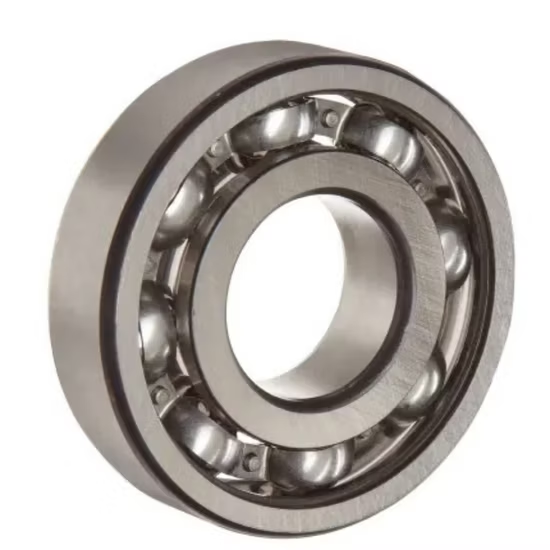
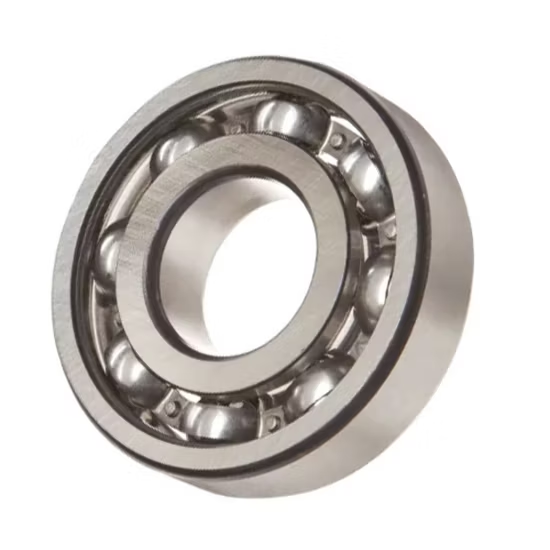
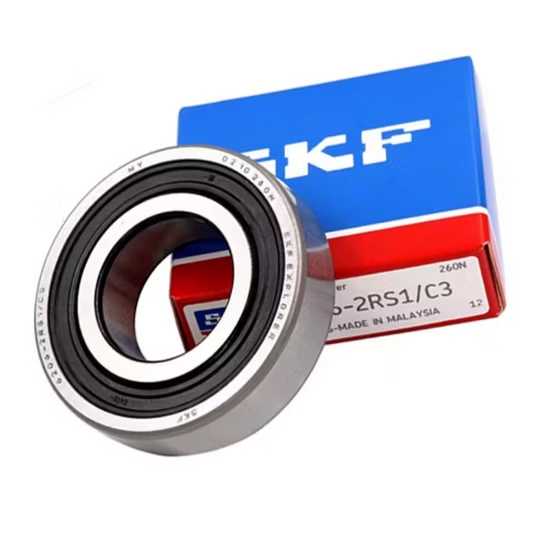


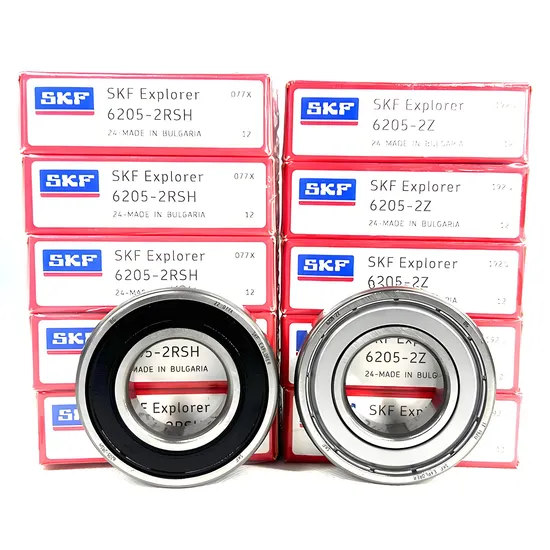
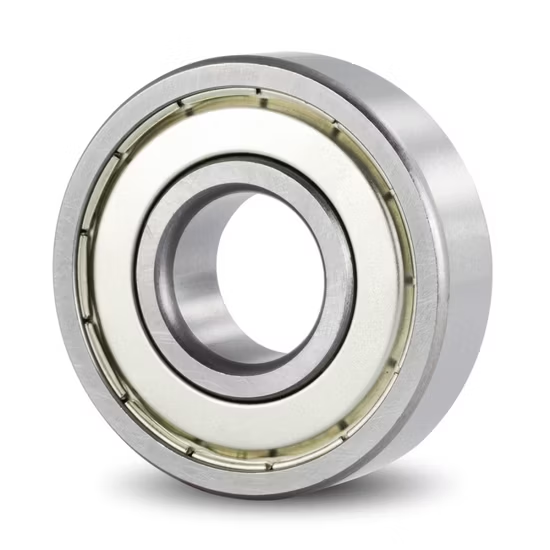
6209 Deep Groove Ball Bearing — forged from GCr15 bearing steel for reliable hardness and wear resistance in automotive applications.
Authorized Multi-Brand Sourcing — Procure your 6209 deep groove ball bearing alongside mixed SKF, FAG, and NSK equivalents in a single consolidated shipment without juggling multiple vendors.
| Parameter | Value |
|---|---|
| Designation | 6209 |
| Bearing Type | Deep Groove Ball Bearing |
| Bore Diameter (d) | 45 mm |
| Outside Diameter (D) | 85 mm |
| Width (B) | 19 mm |
| Material | Available in GCr15 bearing steel or stainless steel variants |
| Seal or Shield Type | Open, ZZ, or 2RS options |
| Clearance Class | CN, C3, or C4 options |
| Precision Class | P0 to P6 options |
| Cage Material | Pressed steel or machined brass options |
| Industry | Typical Applications |
|---|---|
| Automotive Parts | Alternator pulleys, transmission shafts, and wheel hub assemblies |
| Electric Motors | Rotor shaft supports in high-speed industrial AC and DC motors |
| Manufacturing Plant | Conveyor drive rollers and automated assembly line actuators |
| Industrial Pumps | Centrifugal pump impeller shafts and circulation pump bearings |
Matching the base designation is never enough to prevent thermal binding.
Sourcing a 6209 deep groove ball bearing based solely on the four-digit identifier often leads to catastrophic field failures. I have seen countless automotive alternators and industrial gearboxes fail prematurely because procurement teams overlooked the internal clearance and cage material during cross-referencing. When a standard clearance variant is forced into a high-temperature motor application, the thermal expansion eliminates the internal play, causing the inner ring to seize and turn blue from friction heat .
Selecting the right 6209 deep groove ball bearing requires aligning the internal geometry with the specific operational demands of your automotive or industrial machinery. We review your exact load profiles and speed requirements to ensure the selected variant handles both radial forces and moderate axial thrust without premature fatigue. This application-based selection prevents the common mismatch where a standard pressed steel cage is specified for an environment that actually demands the vibration resistance of a machined brass cage.
Automotive and manufacturing environments subject bearings to fluctuating temperatures and abrasive particulates that degrade standard lubricants. When operating at elevated temperatures, the internal clearance must accommodate the thermal expansion of the shaft and housing to prevent the rolling elements from skidding. In dusty material handling or agricultural settings, the choice between non-contact metal shields and contact rubber seals dictates the balance between friction heat generation and moisture ingress protection . Proper lubrication intervals and the correct grease viscosity are equally critical to maintaining the hydrodynamic film under combined loading conditions.
The 45 mm bore and 85 mm outside diameter of this deep groove design provide a versatile footprint for standard motor and gearbox housings. The availability of GCr15 bearing steel ensures optimal hardness and wear resistance for general industrial use, while stainless steel variants offer a solution for corrosive environments. The deep raceway geometry allows the bearing to accommodate moderate axial loads in both directions alongside primary radial loads. Selecting the appropriate cage material—whether lightweight pressed steel for high-speed electric motors or robust machined brass for heavy vibration zones—directly influences the operational lifespan and noise signature of the assembly.
Installing a standard clearance bearing in an application requiring extra internal play inevitably leads to unplanned downtime and catastrophic equipment damage. When the internal clearance is insufficient for the operating temperature, the rolling elements experience excessive preload, generating friction *he raceway. This type of premature failure not only voids equipment warranties but also triggers costly secondary damage to adjacent shafts and housings .
We eliminate the risk of receiving counterfeits with soft inner rings by sourcing exclusively through authorized channels with full batch traceability. Our cross-reference process goes beyond matching the base 6209 number; we verify that the internal clearance, cage material, and precision class perfectly align with your OEM specifications. Mixed-brand orders are consolidated seamlessly, allowing you to source automotive and industrial spares from multiple premium manufacturers in a single shipment. Every unit undergoes a rigorous pre-shipment inspection to ensure dimensional accuracy and running precision before it leaves our facility.
To ensure accurate selection and cross-referencing, please provide the specific radial and axial loads, operating speeds, and ambient temperatures for your application. Sharing the exact OEM equipment number or the original bearing's full suffix string allows our engineering team to verify the required internal clearance and seal configuration. This technical data enables us to perform a precise L10 life calculation and recommend the optimal material and cage combination for your machinery.
Q: How do I choose between Open, ZZ, and 2RS seals for my application?
A: Open bearings are ideal for gearboxes where the housing provides oil lubrication and contamination control. ZZ metal shields offer low-friction protection against large dust particles in electric motors, while 2RS rubber seals provide superior moisture and fine particulate exclusion for automotive and agricultural environments, albeit with slightly higher friction limits.
Q: Why is matching the internal clearance critical when replacing this bearing?
A: Internal clearance dictates how the bearing handles thermal expansion during operation. Installing a standard clearance variant in a high-temperature motor can cause the bearing to seize as the shaft expands, whereas a C3 clearance provides the necessary thermal play to maintain optimal rolling contact and prevent premature cage failure.
Q: What cross-reference details matter most when sourcing across different brands?
A: Beyond matching the base 6209 identifier, you must verify that the substitute matches the original internal clearance, cage material, and precision class. Overlooking these suffixes often results in a bearing that fits physically but fails prematurely due to incompatible thermal or vibrational characteristics.
Q: How can I verify the authenticity of the received bearings?
A: Every bearing we supply features batch and lot traceability that can be verified using the manufacturer's official mobile app via QR code scanning. We also provide a Certificate of Conformity and material test reports to ensure the rings and rolling elements meet the specified metallurgical standards.
Our 5-step process ensures every order is engineered, validated, and supported for optimal performance.
Technical needs assessment
Custom specifications
Free samples for $50k+
Pre-shipment inspection
On-site & predictive
Our certified engineers respond within 24 hours with detailed technical specifications, pricing, and lead time information.