01
Consultation
Technical needs assessment


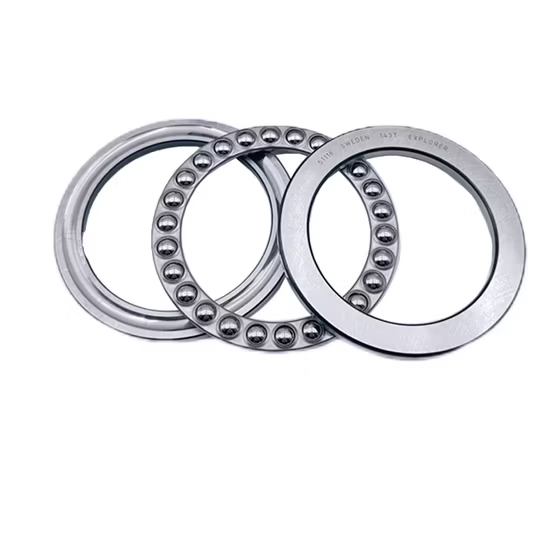
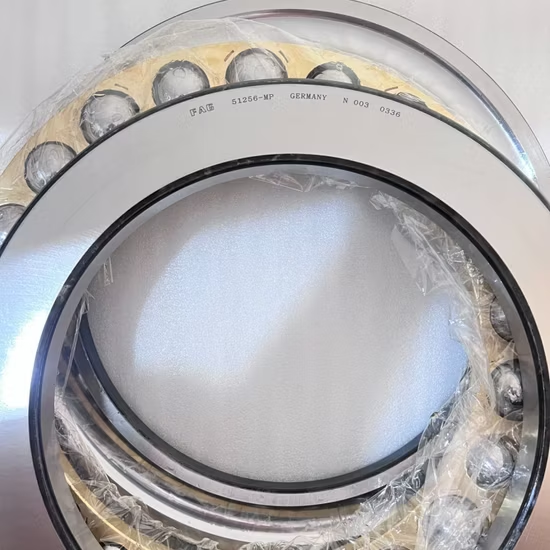


51215 8215 Thrust Ball Bearing 75 mm bore — single-direction design handles pure axial loads for crane hooks and vertical water pumps.
Original Batch Traceability — Every 51215 8215 thrust ball bearing ships with verifiable lot codes linked directly to the manufacturer's production records.
| Parameter | Value |
|---|---|
| Designation | 51215 8215 |
| Bearing Type | Thrust Ball Bearing, single direction |
| Bore Diameter (d) | 75 mm |
| Dimension Series | 02 |
| Cross-Reference | 8215 |
| Origin Options | Germany, Japan, Sweden, Malaysia, China |
| HS Code | 8482104000 |
Note: 8215 is an unverified alternative designation requiring manufacturer catalog confirmation.
| Industry | Typical Applications |
|---|---|
| Heavy Lifting & Material Handling | Crane hook thrust washers, heavy-duty lifting equipment swivels |
| Fluid Handling | Vertical water pump shaft thrust collars |
| General Industrial | Industrial gearboxes, machine tool vertical spindles |
A matching designation does not guarantee internal design compatibility.
Procurement teams often source a 51215 8215 thrust ball bearing based solely on the base number, overlooking critical internal variations. When a standard clearance is installed in a vertical pump application requiring thermal expansion allowances, or when a standard cage is used in high-vibration crane hooks, the result is premature cage fracture or thermal binding. These cross-reference errors bypass visual inspection and only reveal themselves under full operational load, leading to catastrophic equipment downtime.
Pure axial load environments demand precise alignment between the raceway curvature and the rolling elements. When evaluating a 51215 8215 thrust ball bearing for vertical pumps or crane hooks, the focus must shift from basic dimensions to internal contact angles and cage stability. Our technical review ensures the selected variant handles the specific thrust loads without inducing edge stresses, leveraging deep cross-brand interchange expertise to match internal geometries rather than just exterior measurements.
Vertical water pumps subject thrust collars to continuous axial loading combined with high rotational speeds, generating significant friction heat. This thermal buildup necessitates specific clearance classes to prevent the bearing from seizing as components expand. In crane hooks, the challenge shifts to heavy static loads and shock impacts during lifting operations, which demand robust cage materials to maintain ball spacing. Furthermore, outdoor material handling equipment faces moisture and particulate contamination, making the selection of appropriate seal variants or external shielding critical for longevity.
The designation breakdown reveals a single-direction thrust ball bearing with a dimension series 02, indicating a specific width and diameter proportion optimized for moderate to heavy axial loads. The bore diameter code 15 translates to a 75 mm shaft fit, a standard size for mid-range industrial gearboxes and pump shafts. While the base number defines the envelope dimensions, the actual field performance relies on suffix specifications that dictate cage material and precision grades. Selecting the correct configuration ensures the bearing maintains its structural integrity under the specific speed and load combinations of the target machinery.
Ignoring suffix variations during procurement inevitably leads to unplanned downtime and premature failure in critical lifting and pumping systems. Installing a bearing with incorrect internal clearances causes thermal binding, rapidly degrading the raceways and voiding equipment warranties. In crane applications, a mismatched cage material can fracture under shock loads, resulting in catastrophic damage to the hook assembly. These failures highlight the severe operational and financial risks of relying on superficial cross-references.
Our distribution network provides authorized coverage across major international brands, allowing mixed-brand requirements for complex machinery to be fulfilled in a single order. We prevent cross-reference errors by verifying that the internal design, cage material, and clearance of the replacement match the original equipment specifications exactly. Batch traceability is maintained for every unit, ensuring full accountability from the manufacturer's production facilities to your site. Additionally, our application-based selection review evaluates your specific load, speed, and temperature parameters to confirm the chosen variant is technically sound.
To ensure optimal performance and longevity, provide our engineering team with your specific operational parameters, including continuous and peak axial loads, rotational speeds, and operating temperatures. Sharing the OEM equipment number or existing housing dimensions allows us to perform a precise cross-reference check and L10 life calculation. For environments involving chemical exposure or extreme heat, detailing the specific contaminants and thermal cycles enables us to recommend the most suitable material variants and sealing arrangements.
Q: How do cross-reference errors in thrust bearings cause field failures?
A: Base number matches often ignore internal variations like cage material and clearance. Installing a standard clearance in a high-heat vertical pump causes thermal binding, while using a light-duty cage in a crane hook leads to fracture under shock loads. Accurate cross-referencing must align internal geometry, not just exterior dimensions, to prevent these premature failures.
Q: What documentation verifies the origin of these bearings?
A: We provide a Certificate of Conformity, material test reports, and country-of-origin documents. Crucially, every unit includes batch traceability and QR codes verifiable through official brand applications. This comprehensive documentation package ensures the metallurgical composition and manufacturing origin meet strict OEM standards before installation.
Q: How is the correct clearance class selected for vertical pumps?
A: Vertical pumps generate significant friction heat, requiring clearance classes that accommodate thermal expansion without seizing. We evaluate the specific operating temperature and shaft speed to recommend the appropriate internal clearance. This prevents the bearing from tightening excessively during continuous operation, ensuring stable axial load support.
Q: What causes thrust bearing failures in crane hooks?
A: Failures typically stem from shock loads exceeding the cage's structural limits or contamination entering the raceways. Selecting a variant with a heavy-duty cage material and appropriate sealing prevents ball skewing and raceway spalling. Regular maintenance and correct initial selection based on maximum dynamic load ratings are essential for hook reliability.
Q: How does the cross-brand interchange process ensure exact matching?
A: Our interchange process goes beyond basic dimensions to verify internal design, precision grades, and cage configurations. We cross-reference the original equipment requirements against authorized brand catalogs to find exact functional equivalents. This ensures the replacement maintains the precise dimensional tolerances and load-carrying capacity required by the machinery.
Our 5-step process ensures every order is engineered, validated, and supported for optimal performance.
Technical needs assessment
Custom specifications
Free samples for $50k+
Pre-shipment inspection
On-site & predictive
Our certified engineers respond within 24 hours with detailed technical specifications, pricing, and lead time information.