01
Consultation
Technical needs assessment


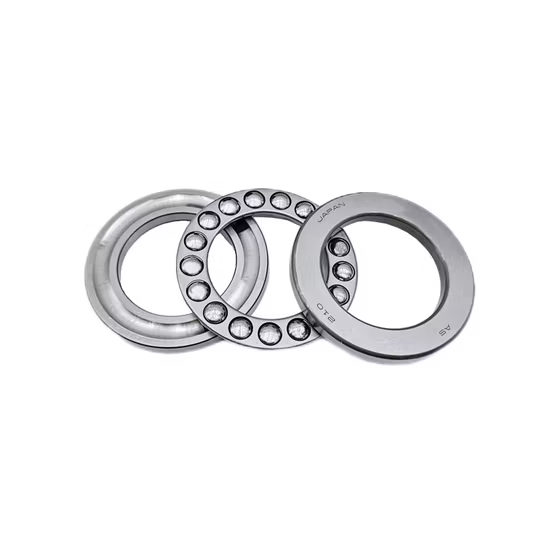


51140 51144 51148 51152 51156 Single Direction Thrust Ball Bearings — manage heavy unidirectional axial loads in crane hooks and vertical water pumps.
Factory Lot Traceability — Every 51140 51144 51148 51152 51156 single direction thrust ball bearing ships with verifiable manufacturer batch records, eliminating the risk of soft inner ring counterfeits in critical lifting operations.
| Parameter | Value |
|---|---|
| Designation | 51140 51144 51148 51152 51156 |
| Product Type | Thrust Ball Bearing |
| Bearing Type | Single Direction Thrust Ball Bearing |
| Origin | Germany / Japan / Sweden / Malaysia / China |
| HS Code | 8482104000 |
| Cage Material | Available in machined brass or pressed steel variants |
| Precision Class | Available in standard or higher precision grades |
| Industry | Typical Applications |
|---|---|
| Material Handling | Crane hook swivels and heavy-duty lifting blocks |
| Fluid Management | Vertical water pump thrust collars and impeller shafts |
| Heavy Machinery | Hydraulic press rams and vertical mixer shafts |
| Automotive & Repair | Heavy vehicle steering pivot joints and transmission supports |
Matching the base designation is only the first step; ignoring internal design variations leads to rapid cage disintegration under axial shock loads.
In heavy lifting and vertical pumping, procurement teams often source parts based solely on the basic 511-series number, overlooking critical internal geometry and cage material requirements. I once investigated a catastrophic failure in an automotive transmission where a standard pressed steel cage was installed in a high-speed, high-vibration environment instead of the required machined brass variant. The cage shattered, destroying the entire gearbox assembly. When sourcing a 51140 51144 51148 51152 51156 single direction thrust ball bearing, assuming all variants share identical internal clearances and cage designs is a dangerous shortcut . Counterfeit suppliers exploit this assumption by cloning outer markings while using substandard, soft inner rings that deform under sustained axial pressure.
Selecting the correct internal configuration for these thrust applications requires looking past the external dimensions. A 51140 51144 51148 51152 51156 single direction thrust ball bearing must be matched to the specific vibration and load profile of the equipment. Our cross-referencing process verifies that the cage material and internal geometry align perfectly with the OEM requirements, ensuring the bearing can withstand the intense axial forces without premature fatigue.
Vertical water pumps and crane hooks subject thrust bearings to continuous unidirectional axial loads, often accompanied by severe shock loading during engagement. In pump applications, thermal expansion along the vertical shaft can alter the internal clearance, making the selection of the appropriate clearance class vital to prevent binding. Furthermore, crane hook swivels operate in highly contaminated environments where particulate ingress accelerates raceway wear . Proper lubrication intervals and effective sealing arrangements are essential to maintain the hydrodynamic film between the balls and the raceways under these demanding conditions.
The fundamental design of these single direction thrust bearings separates the shaft washer, housing washer, and ball-cage assembly to handle pure axial loads. The choice of cage material drastically alters performance limits: machined brass cages provide superior stability and vibration damping for heavy, shock-prone crane hooks, while pressed steel cages offer lower inertia for smoother, higher-speed pump operations. Internal clearance must be carefully evaluated; a standard clearance might suffice for ambient temperature lifting gear, but vertical pumps generating significant shaft heat require a larger internal clearance to accommodate thermal expansion without seizing. Precision in the raceway grinding process directly dictates the load distribution across the rolling elements, preventing localized stress concentrations that lead to spalling.
Installing a thrust bearing with the wrong internal clearance or inadequate cage strength results in unplanned downtime that far exceeds the component cost. When a crane hook swivel seizes due to thermal binding, the resulting load drop can cause catastrophic structural damage to the lifting rig and void equipment warranties. Similarly, premature cage failure in a vertical water pump leads to sudden loss of hydraulic pressure, disrupting entire processing lines . Relying on unverified cross-references often means receiving a part that fits physically but fails mechanically under operational stress.
We eliminate the guesswork in thrust bearing procurement by validating every technical parameter against the application demands. Our cross-brand interchange expertise ensures that when we supply an alternative to your preferred brand, the internal design, cage material, and precision class match exactly, not just the base number. For the 51140 51144 51148 51152 51156 single direction thrust ball bearing series, we actively screen out counterfeits with soft inner rings by enforcing strict authorized channel sourcing. We provide comprehensive application-based selection reviews, analyzing your specific axial loads and operating temperatures to confirm the optimal clearance and cage configuration before the order is placed.
To ensure precise application matching, provide the maximum continuous axial load, peak shock load values, and operating RPM. Share the specific OEM equipment model number or the exact dimensions of the existing housing and shaft seats. Detailing the operating temperature range and the presence of moisture or particulate contamination allows our engineering team to specify the optimal clearance class and cage material for your thrust bearing application.
Q: How can I verify the authenticity of the thrust bearings I receive?
A: Every authorized bearing we supply includes batch traceability documentation and a unique identification mark. You can verify the authenticity of the shaft washers, housing washers, and cage assemblies by scanning the provided codes through the manufacturer's official mobile application, ensuring the internal metallurgy meets strict OEM standards and eliminating the risk of counterfeit parts.
Q: What cross-reference checks are critical beyond matching the base number?
A: Matching the basic 511-series number is insufficient for heavy-duty applications. We verify the internal cage material, ensuring machined brass is used where high vibration dictates, and confirm the exact precision class and internal clearance. This comprehensive alignment prevents the catastrophic cage failures and thermal binding that occur when internal design variations are ignored during replacement.
Q: How do I select the correct internal clearance for a vertical water pump?
A: Vertical pumps generate significant heat along the shaft during continuous operation, causing thermal expansion that reduces internal clearance. If a standard clearance is used, the bearing may bind and seize. We analyze your specific operating temperature gradients and shaft dimensions to recommend an enlarged clearance class, ensuring the thrust bearing maintains a safe operational gap at peak thermal loads.
Q: What mounting practices prevent premature failure in crane hook swivels?
A: Crane hooks subject thrust bearings to severe axial shock loads. It is critical to ensure the shaft and housing washers are perfectly square to the axis during installation to prevent uneven load distribution. Using the correct induction heating methods for tight fits and applying the specified heavy-duty extreme pressure lubricant will protect the raceways from brinelling and premature spalling under dynamic lifting conditions.
Q: How do I identify counterfeit bearings that pass a casual visual inspection?
A: Counterfeiters often clone external markings and QR codes while using substandard, soft steel for the inner rings. These soft washers deform under sustained axial pressure, leading to rapid failure. True verification requires checking the batch traceability through official brand channels and reviewing the material test reports, which confirm the raceway hardness and metallurgical composition meet the required engineering specifications.
Our 5-step process ensures every order is engineered, validated, and supported for optimal performance.
Technical needs assessment
Custom specifications
Free samples for $50k+
Pre-shipment inspection
On-site & predictive
Our certified engineers respond within 24 hours with detailed technical specifications, pricing, and lead time information.


