01
Consultation
Technical needs assessment


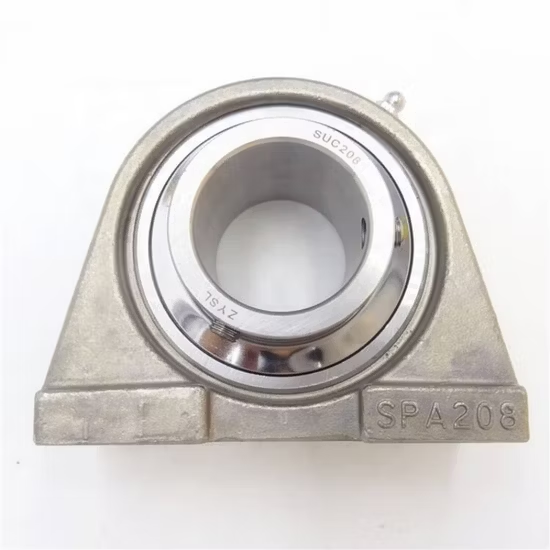
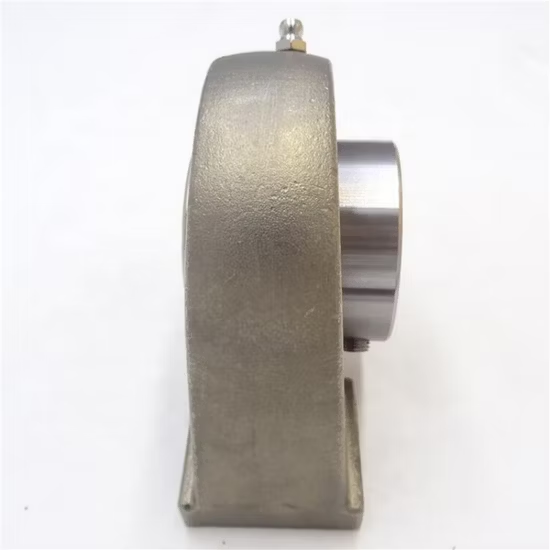
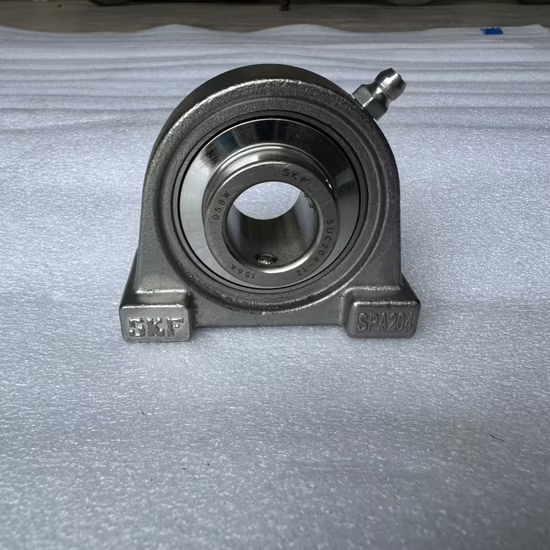
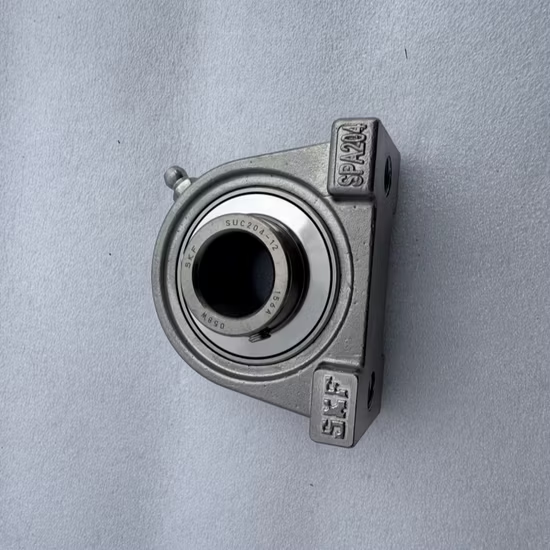
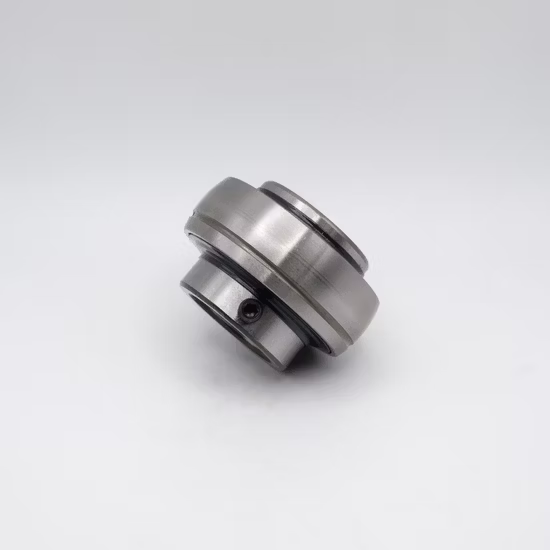
Sucpa210 Pillow Block Bearing Unit
Multi-Brand Authorized Sourcing — Consolidate mixed-brand conveyor components into a single shipment without coordinating across fragmented suppliers.
| Parameter | Value |
|---|---|
| Designation | Sucpa210 |
| Product Type | Pillow Block Bearing Unit |
| Bearing Type | Deep Groove Ball Bearing |
| Bearing Block Model | P (Pillow Block) |
| Rows Number | Single |
| Raceway | Deep Groove Raceway |
| Material Options | Available in stainless steel or standard bearing steel variants |
| Feature Options | Corrosion resistant, high temperature, high speed capabilities |
| Origin | Germany / Japan / Sweden / Malaysia / China |
| HS Code | 8483200000 |
Note: The specific suffixes S, UC, and PA within this designation are unverified and require manufacturer catalog confirmation to confirm exact internal design and sealing specifics.
| Industry | Typical Applications |
|---|---|
| Material Handling | Conveyor belt drive and tail pulleys in washdown environments |
| Food & Beverage | Bottling line transfer mechanisms requiring frequent chemical sanitation |
| Agriculture | Harvesting equipment exposed to high moisture and crop residues |
A Sucpa210 stainless steel pillow block bearing unit prevents the rapid raceway degradation that standard steel experiences during aggressive chemical sanitation.
In the Pearl River Delta distribution network, I have inspected countless conveyor failures where standard steel housings rusted internally after repeated high-pressure washdowns. The corrosion pits act as stress concentrators, leading to spalling and unplanned line stoppages. When procurement teams overlook the housing material and only match the base bore size, the entire conveying system becomes vulnerable to moisture ingress . Selecting the correct corrosion-resistant variant ensures the housing and the inner bearing degrade at a matched, predictable rate rather than failing catastrophically.
Selecting the right housing material is just as critical as the internal rolling elements. A Sucpa210 stainless steel pillow block bearing unit provides the necessary resistance to caustic cleaning agents used in food processing and packaging lines. By verifying the exact housing alloy and seal configuration against your specific sanitation chemicals, we prevent the premature housing degradation that often compromises the internal bearing seals.
Conveyor pulleys in food processing face a brutal combination of thermal cycling and chemical exposure. High-pressure hot water washdowns force moisture past inadequate seals, while subsequent cooling creates a vacuum that draws contaminated water directly into the raceway. Furthermore, thermal expansion from hot washdowns can eliminate internal clearance if the wrong class is selected, causing the bearing to bind and overheat. Proper seal selection and clearance matching are mandatory to prevent the lubricant from being washed out or thermally degraded .
The deep groove raceway design inherent in this pillow block configuration excels at handling the predominantly radial loads typical of conveyor pulleys, while accommodating minor axial displacements during belt tracking adjustments. The single-row arrangement minimizes internal friction, which is crucial for high-speed sorting lines. When evaluating material options, stainless steel variants offer substantially higher resistance to oxidizing environments compared to standard bearing steel, though they require careful load management due to differences in material hardness. Ensuring the block model matches the mounting surface geometry prevents misalignment-induced edge loading on the rolling elements.
Ignoring the precise suffix configuration often results in a base number match that fails in the field. Installing a unit with incorrect internal clearance or incompatible seal friction leads to thermal binding, excessive energy consumption, and eventual cage failure. This triggers unplanned downtime, voids equipment warranties, and forces emergency air-freight replacements. According to ISO 281 frameworks, operating a bearing outside its verified thermal and load limits drastically reduces the calculated L10 life, turning a minor specification oversight into a major operational bottleneck .
We eliminate the guesswork in cross-referencing by verifying the base designation alongside the exact clearance, cage material, and seal type. I once traced a batch of premature conveyor failures to a supplier who matched the base pillow block number but supplied a standard steel cage instead of the required high-temperature variant. Our technical review catches these discrepancies before shipment. We provide authorized coverage across all major international brands, allowing you to fulfill mixed-brand MRO requirements in one consolidated order. Every unit is backed by batch traceability to the manufacturer, ensuring you receive genuine components that withstand rigorous washdown conditions.
To ensure the selected unit perfectly matches your conveyor application, please provide the radial and axial load profiles, operating speeds, and the specific chemical agents used during washdown cycles. Sharing the OEM equipment number or the exact shaft and housing dimensions allows our engineering team to perform a comprehensive cross-reference check. This technical review guarantees the internal clearance, seal friction, and material variant are fully optimized for your operational environment.
Q: How do we differentiate between stainless steel and standard steel pillow blocks during cross-referencing?
A: Base designations often look identical, but the housing material and internal component specs differ. We verify the exact material grade, seal type, and internal clearance against your OEM requirements. Relying solely on the base number risks installing a standard steel unit in a washdown environment, leading to rapid corrosion and premature failure.
Q: What causes internal binding in conveyor pillow blocks after hot washdowns?
A: Hot water causes the shaft and housing to expand at different rates. If the internal clearance class is not specified correctly for this thermal expansion, the rolling elements can bind, generating excessive heat and destroying the cage. We review your thermal cycling data to recommend the appropriate clearance class to prevent this thermal seizure.
Q: How can we verify the authenticity of the bearing units upon delivery?
A: Counterfeiters often clone visual markers and QR codes. We supply units with batch traceability that can be verified directly through the manufacturer's official application. This digital verification confirms the exact production lot, material specifications, and origin, ensuring the components meet the rigorous demands of your processing environment.
Our 5-step process ensures every order is engineered, validated, and supported for optimal performance.
Technical needs assessment
Custom specifications
Free samples for $50k+
Pre-shipment inspection
On-site & predictive
Our certified engineers respond within 24 hours with detailed technical specifications, pricing, and lead time information.