01
Consultation
Technical needs assessment


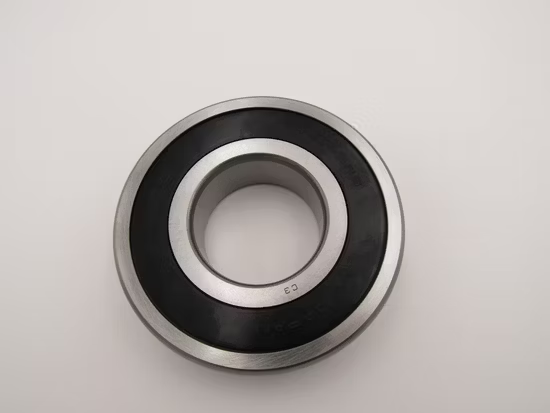


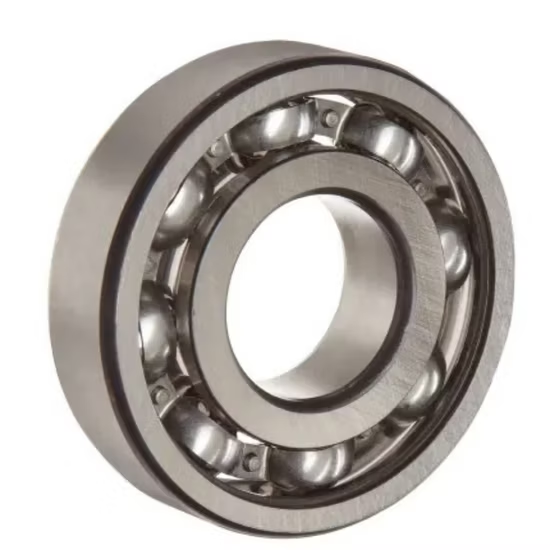
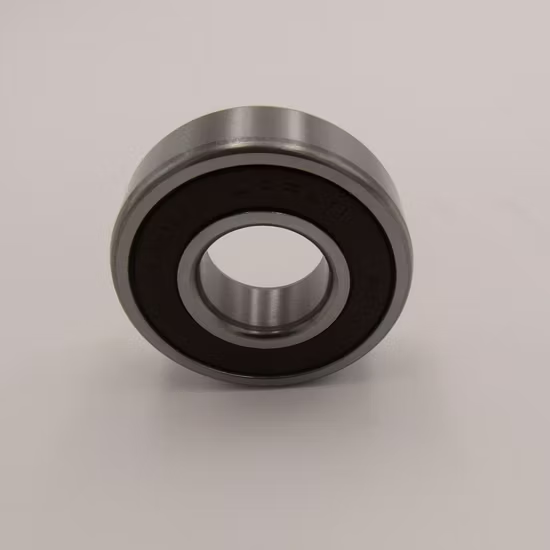
6206 2RS Deep Groove Ball Bearing — constructed from GCr15 bearing steel for optimal hardness in general machinery.
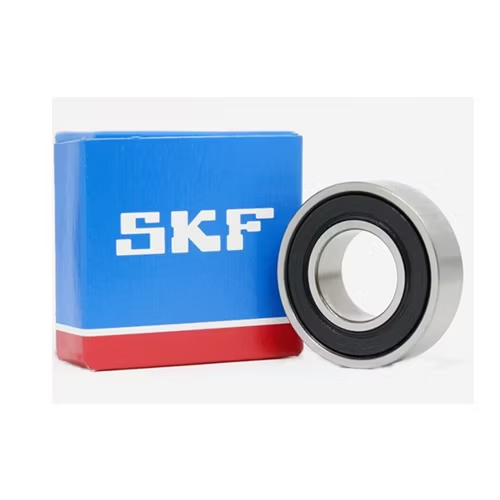
Multi-brand authorized coverage — Source genuine 6206 2RS deep groove ball bearings alongside mixed SKF, FAG, or NSK requirements in a single consolidated shipment.
| Parameter | Value |
|---|---|
| Designation | 6206 2RS |
| Bearing Type | Deep Groove Ball Bearing |
| Material | GCr15 (Bearing Steel) |
| Seal or Shield Type | 2RS (Double contact seal) |
| Structure | Deep Groove |
| Origin | Shanghai |
| Industry | Typical Applications |
|---|---|
| Electric Motors | Rotor shaft support and end-shield mounting |
| Industrial Gearboxes | High-speed input shafts and intermediate gearing |
| Material Handling | Conveyor pulley bearings and roller idlers |
| General Machinery | Pump shafts and agricultural drive components |
A mismatched seal type turns a standard replacement into a rapid failure point.
In the Pearl River Delta manufacturing hubs, I have witnessed countless motor seizures traced back to a single procurement oversight. Purchasing teams often match the base number but overlook the critical seal suffix, installing open variants where double contact seals were specified. This allows abrasive dust to infiltrate the raceway, causing thermal binding and catastrophic shaft lockup . Ensuring your 6206 2RS deep groove ball bearing matches the exact sealing configuration prevents these avoidable downtime events.
Selecting the correct sealing arrangement dictates the operational lifespan of the component in dirty environments. The 6206 2RS deep groove ball bearing utilizes double contact rubber seals that maintain constant physical engagement with the inner ring, effectively blocking fine particulate ingress. This specific configuration is mandatory for applications like agricultural drives or material handling conveyors where airborne dust is prevalent, ensuring the internal lubricant remains uncontaminated throughout the service interval.
Every sealing choice introduces specific operational constraints that must align with the equipment's thermal profile. While the 2RS contact seals provide superior contamination exclusion, the physical rubbing generates marginally higher friction compared to non-contact metal shields. Engineers must evaluate whether the operating speed and ambient temperature will cause the internal grease to degrade prematurely under this frictional heat. Balancing the need for absolute sealing against the acceptable friction threshold is critical for optimizing the relubrication cycle and overall energy efficiency of the driven assembly.
The 2RS suffix indicates that both sides of the bearing are fitted with steel-reinforced elastomeric contact seals. Unlike metal shields that leave a microscopic gap, these rubber lips maintain continuous sliding contact with a dedicated sealing groove on the inner ring. This physical barrier prevents moisture and microscopic abrasive particles from entering the raceway while retaining the factory-filled grease. The deep groove raceway geometry further complements this by accommodating minor misalignments and supporting combined radial and axial loads without compromising the seal's integrity.
Substituting components based solely on dimensional equivalence ignores critical internal design variations. When a cross-reference matches the basic boundary dimensions but fails to account for internal clearance or seal type, the resulting mismatch leads to unplanned downtime and premature failure. A bearing operating with incorrect internal clearance will experience excessive heat generation or skidding, ultimately causing raceway spalling . These cascading failures often result in catastrophic damage to adjacent shafts and housings, voiding equipment warranties and inflating maintenance budgets far beyond the initial component cost.
Our distribution network covers all major international brands, allowing you to consolidate mixed-brand requirements into a single shipment without coordinating multiple vendors. We strictly enforce cross-reference alignment that verifies the 2RS seal suffix and internal clearance simultaneously, eliminating the risk of receiving open or shielded variants. Every shipment includes full batch traceability to the manufacturer, ensuring you receive original packaging rather than repackaged counterfeits. Furthermore, our technical team reviews your specific load and speed parameters to confirm the selected configuration is optimal for your exact application.
To ensure optimal performance, please provide your specific operational parameters, including radial and axial loads, rotational speed, and ambient temperature ranges. Sharing these details allows our engineering team to verify the L10 life calculation and confirm the internal clearance class is appropriate for your thermal expansion conditions. If you are replacing an existing component, providing the OEM equipment number enables us to perform a comprehensive cross-reference check to guarantee exact suffix alignment.
Q: How can I verify the authenticity of the 6206 2RS deep groove ball bearing upon delivery?
A: You can verify authenticity by scanning the QR code printed on the original packaging using the manufacturer's official mobile application. This digital check confirms the batch number, production date, and origin, ensuring the component is not a counterfeit with cloned packaging. We also provide physical batch traceability documentation with every shipment for additional verification.
Q: Why must the seal suffix match exactly during cross-referencing?
A: Matching only the base designation while ignoring the 2RS suffix often results in installing open or shielded bearings in high-contamination environments. This oversight allows abrasive dust to enter the raceway, causing rapid wear and motor seizure. Exact suffix alignment ensures the friction and sealing characteristics match the original equipment designer's specifications for that specific application.
Q: What is the operational difference between 2RS contact seals and ZZ shields?
A: The 2RS designation indicates double rubber contact seals that physically rub against the inner ring, providing superior protection against fine dust and moisture ingress. In contrast, ZZ metal shields maintain a microscopic non-contact gap, offering lower friction but less effective contamination exclusion. Selecting between them depends on balancing the need for absolute sealing against the acceptable friction threshold in your application.
Q: How do I select the correct internal clearance class for my equipment?
A: Internal clearance must account for the thermal expansion generated during operation and the interference fit of the shaft and housing. A standard CN clearance suits general applications, while C3 or C4 clearances are required for high-speed motors or hot environments to prevent thermal binding. Providing your operating temperature and mounting tolerances allows us to recommend the precise clearance class needed to avoid premature failure.
Our 5-step process ensures every order is engineered, validated, and supported for optimal performance.
Technical needs assessment
Custom specifications
Free samples for $50k+
Pre-shipment inspection
On-site & predictive
Our certified engineers respond within 24 hours with detailed technical specifications, pricing, and lead time information.