01
Consultation
Technical needs assessment



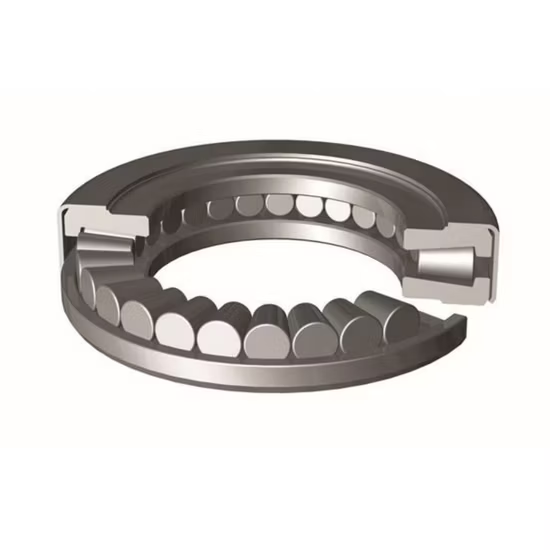
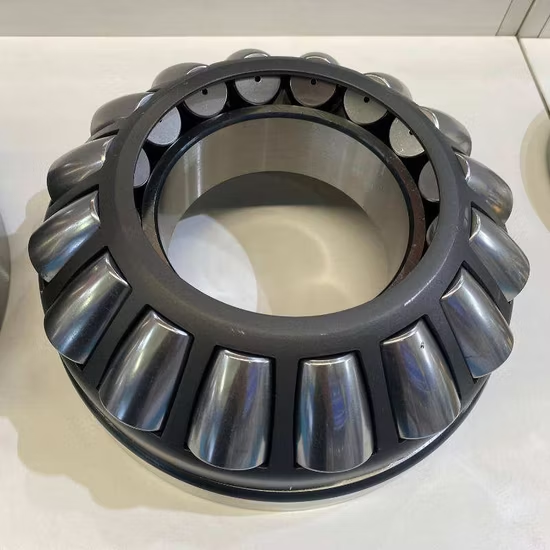
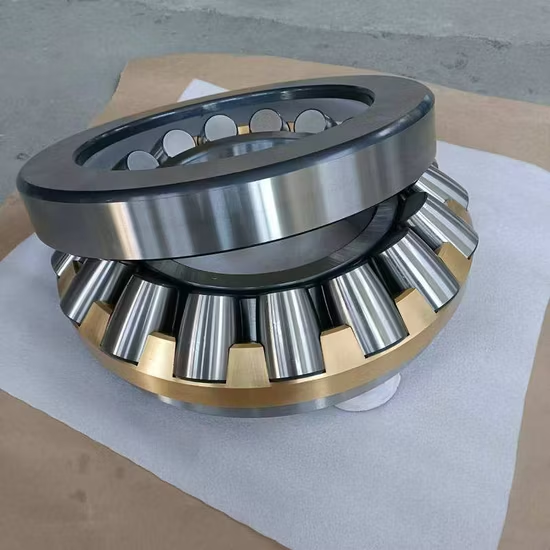
T411 T441 T511 T611 T651 T711 Thrust Roller Bearing
Batch-Level Traceability — every T-series thrust unit ships with manufacturer lot documentation to verify metallurgical origin.
| Parameter | Value |
|---|---|
| Designation | T411 T441 T511 T611 T651 T711 |
| Product Type | Thrust Roller Bearing |
| Bearing Type | Spherical Thrust Roller Bearing / Thrust Tapered Roller Bearing |
| Origin | Germany / Japan / Sweden / Malaysia / China |
| Industry | Typical Applications |
|---|---|
| Mining and Crushing | Gyratory crusher main shaft thrust seating, jaw crusher toggle plate pivots |
| Steel and Metallurgy | Continuous caster segment rolls, rolling mill screw-down mechanisms |
| Heavy-duty Gearboxes | Extruder gearbox main thrust collars, marine propulsion gear thrust pads |
Matching the base T-number without verifying the internal roller geometry guarantees catastrophic failure under shock loads.
Working with mining operations across the Middle East, I have inspected numerous destroyed crusher main shafts. In one memorable case, a maintenance crew replaced a failed thrust tapered roller bearing with a standard thrust ball bearing because the basic envelope dimensions seemed compatible. Under the immense axial shock loads of rock crushing, the ball bearing collapsed almost instantly, scoring the shaft and causing weeks of unplanned downtime. Sourcing from a reliable T411 T441 T511 T611 T651 T711 thrust roller bearing supplier is not just about getting the right part number; it is about ensuring the internal contact angles and roller profiles actually match the severe duty cycle .
Selecting the correct T411 T441 T511 T611 T651 T711 thrust roller bearing requires looking past the basic designation. While a T611 might physically fit into a housing, the specific application dictates whether a spherical thrust design or a tapered thrust design is required. Spherical variants accommodate slight misalignments common in heavy structural frames, whereas tapered designs handle extreme unidirectional axial forces. Our technical review process cross-references your exact load profiles to ensure the selected geometry prevents premature cage fracture.
Crushing and metallurgy environments subject thrust bearings to severe shock loading and abrasive dust ingress. The axial forces fluctuate wildly as material is processed, demanding roller geometries that distribute stress evenly across the raceway. At elevated temperatures generated by continuous heavy operation, standard lubricants degrade rapidly, making the choice of high-temperature grease or continuous oil circulation critical. Furthermore, effective sealing arrangements must be implemented externally to prevent silica dust from penetrating the roller paths, which would otherwise act as a grinding paste and destroy the bearing internals .
The T411 through T711 designations represent a progression in physical size and load-carrying capacity, but the internal engineering is what truly defines their performance. In tapered thrust configurations, the rollers and raceways are designed with a specific contact angle to handle pure axial loads without generating internal radial forces. Spherical thrust variants utilize asymmetrical barrel-shaped rollers that allow for slight angular misalignment between the shaft and housing, a crucial feature in heavy gearboxes where structural deflection occurs under peak torque. Understanding these geometric differences ensures the bearing operates within its designed kinematic boundaries.
Installing an undersized or geometrically mismatched thrust bearing in a critical drive system leads to rapid spalling and cage disintegration. When a main thrust bearing fails in a continuous caster or a primary crusher, the resulting shaft damage often requires complete component replacement rather than a simple bearing swap. This transforms a routine maintenance task into a major capital expenditure event, accompanied by massive production losses. Adhering to ISO 281 life calculation standards requires accurate load data; ignoring these parameters voids any predictable maintenance schedule and guarantees unexpected breakdowns .
The market is flooded with counterfeit heavy-load bearings featuring soft inner rings that fail under minimal stress. We mitigate this by providing comprehensive batch traceability for every T411 T441 T511 T611 T651 T711 thrust roller bearing we supply. Our cross-reference verification goes beyond basic dimensions, checking internal clearances and cage materials against OEM specifications to prevent thermal binding. Furthermore, we maintain inventory across multiple premium origins, allowing us to fulfill mixed-brand requirements for large-scale plant overhauls without the delays typically associated with sourcing specialized heavy-duty sizes.
To ensure accurate selection and cross-referencing, please provide the specific axial and radial load profiles, operating speeds, and continuous temperature ranges of your application. Supplying the original equipment manufacturer part numbers or existing housing dimensions allows our engineering team to verify internal clearances and propose the optimal T-series geometry. Include details regarding the lubrication method and environmental contamination levels so we can confirm the suitability of the proposed bearing configuration.
Q: How do I determine whether my application requires a spherical or tapered thrust design?
A: The choice depends on the alignment and load characteristics of your machinery. Tapered thrust bearings are ideal for applications with extreme, strictly unidirectional axial loads and rigid housings. Spherical thrust bearings are preferred when slight misalignment between the shaft and housing is expected due to structural deflection. Providing your equipment parameters allows us to recommend the correct internal geometry.
Q: What cross-reference checks are critical when replacing T-series thrust bearings?
A: Matching the base T-number is insufficient. You must verify the internal clearance class, cage material, and specific contact angles. Installing a standard clearance bearing in an application requiring extra clearance for thermal expansion will cause thermal binding and rapid failure. We verify all these suffixes and internal design parameters against your specific OEM requirements before shipment.
Q: How can I verify the authenticity of large thrust bearings on-site?
A: Every bearing we supply includes batch and lot traceability documentation. You can verify the authenticity by scanning the manufacturer's marking using their official mobile application, which cross-references the production data. We also provide material test reports and dimensional inspection certificates to guarantee the metallurgical integrity of the components.
Q: What causes premature cage failure in mining crusher thrust applications?
A: Premature cage failure typically results from severe shock loads, inadequate lubrication, or the ingress of abrasive contaminants. Using a bearing with an incorrect internal geometry for the specific load profile concentrates stress on the cage pockets. Ensuring the correct T-series designation is matched to the application, combined with robust external sealing, prevents these catastrophic failures.
Our 5-step process ensures every order is engineered, validated, and supported for optimal performance.
Technical needs assessment
Custom specifications
Free samples for $50k+
Pre-shipment inspection
On-site & predictive
Our certified engineers respond within 24 hours with detailed technical specifications, pricing, and lead time information.