01
Consultation
Technical needs assessment

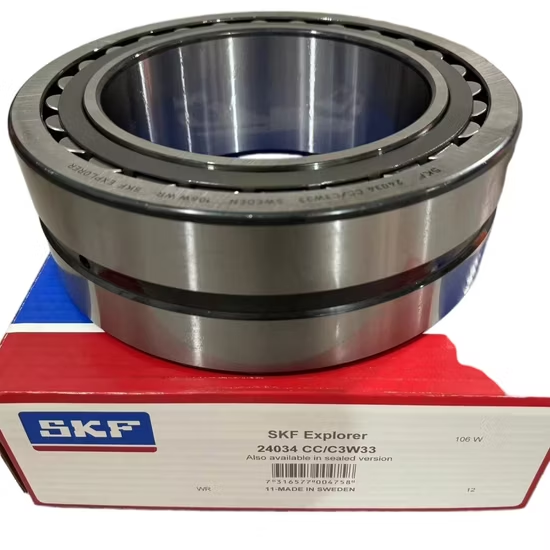
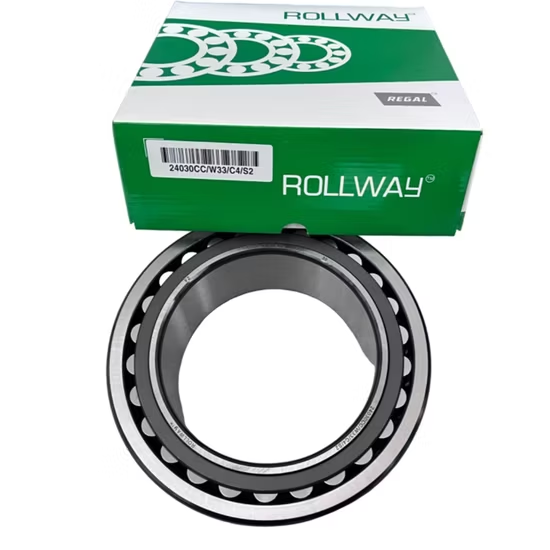
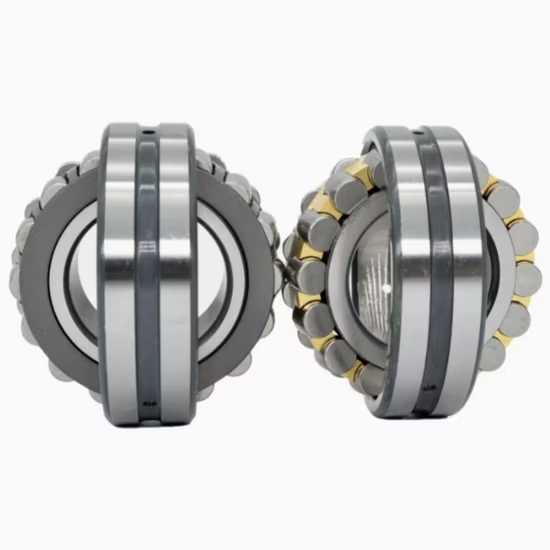

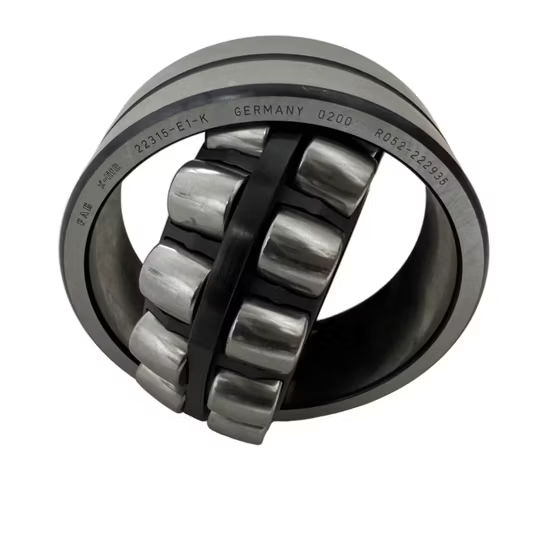
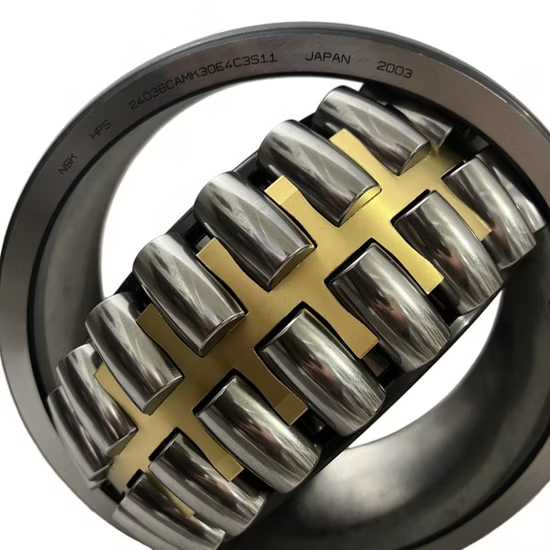
Spherical Roller Bearing for Mining and Steel Mill Equipment — engineered for high-vibration and heavy shock load environments with multi-origin supply options.
Verified Origin Authenticity — Every dispatched batch includes scannable QR codes linking directly to the manufacturer's official verification app for instant validation.
| Parameter | Value |
|---|---|
| Product Type | Spherical Roller Bearing |
| Origin Options | Germany, Japan, Sweden, Malaysia, China |
| Operational Features | Low Noise, High Speed, Long Service Life |
| Customization | Available for specific application requirements |
| Industry | Typical Applications |
|---|---|
| Mining and Crushing | Vibrating screen shafts, jaw crusher pitmans, cone crusher main frames |
| Steel and Metallurgy | Continuous caster segments, rolling mill work rolls, ladle turret slewing |
| Cement Production | Rotary kiln support rollers, clinker cooler drives, raw mill separators |
| Heavy-Duty Material Handling | Bucket wheel excavators, stacker reclaimers, bulk conveyor pulleys |
Matching the base designation is only the first step; ignoring internal geometry and clearance classes guarantees field failure.
Procurement teams often focus solely on the basic part number, overlooking critical suffixes that dictate performance under extreme conditions. In high-vibration mining environments, installing a standard clearance unit where thermal expansion demands a C3 or C4 class leads to rapid thermal binding and catastrophic cage collapse. Similarly, specifying metal shields instead of heavy-duty contact seals in dusty cement plants allows abrasive particulates to infiltrate the raceway, grinding the rolling elements to dust long before fatigue limits are reached . A reliable spherical roller bearing supplier prevents these mismatches by validating the complete technical profile against the actual operating environment.
Selecting the correct internal profile is critical for surviving the punishing shock loads inherent to mineral processing and metallurgy. As a specialized spherical roller bearing supplier, we evaluate the specific load spectra, misalignment angles, and vibration frequencies of your equipment to recommend the optimal roller profile and cage design. This application-driven approach ensures that the bearing maintains proper load distribution and prevents edge stressing, even when shaft deflection occurs under peak operational tonnages.
Heavy machinery in steel mills and cement plants operates under severe thermal gradients and intense particulate contamination. Elevated ambient temperatures combined with friction heat necessitate expanded radial internal clearances to prevent the rolling elements from seizing within the raceway. Furthermore, the sealing arrangement must balance contamination exclusion with friction heat generation; choosing an inappropriate shield over a robust contact seal in a dusty environment inevitably leads to abrasive wear . Proper lubrication intervals and the correct grease viscosity are equally vital to maintain a protective elastohydrodynamic film under these punishing conditions.
The internal configuration dictates the survival of the component in aggressive settings. Units are available in various material and clearance options to suit specific operational demands, such as specialized cage materials that withstand high-vibration shaking screens without fracturing. Selecting the appropriate radial internal clearance—ranging from standard to C3 or C4—is mandatory to accommodate the thermal expansion of heavy shafts and housings during continuous duty cycles. Additionally, optimized roller profiles and surface finishes are available to minimize friction heat and operational noise, ensuring stable performance across varying speed and load combinations.
Overlooking the precise internal design and sealing requirements results in severe operational disruptions rather than simple maintenance delays. When a bearing seizes due to inadequate clearance or contamination ingress, the resulting unplanned downtime halts entire production lines, leading to massive revenue losses. The catastrophic damage often extends beyond the bearing itself, destroying expensive shafts, housings, and adjacent drive components. Furthermore, utilizing incorrectly specified components inevitably results in warranty voidance, leaving the facility to absorb the full cost of emergency repairs and expedited freight .
Sourcing critical spares requires more than just matching a part number on a purchase order. We provide comprehensive cross-brand interchange expertise that verifies not just the base designation, but the exact clearance, cage material, and sealing suffixes required for your specific machinery. Every shipment is backed by authorized distribution channels, ensuring complete batch traceability and eliminating the risk of counterfeit components with soft inner rings. Our technical team reviews your application parameters to confirm the selection, preventing the costly errors that occur when standard catalog numbers are blindly substituted into high-stress, high-temperature environments.
To ensure the selected component withstands your specific operational demands, please provide the equipment model, installation space limitations, and detailed load parameters. Sharing the operating temperature range, rotational speed, and environmental exposure—such as heavy dust or water washdown—allows our engineering team to determine the precise internal geometry, clearance class, and sealing arrangement required for optimal service life.
Q: How do we determine the exact bearing designation and suffixes based on equipment operating parameters?
A: Provide the radial and axial loads, rotational speed, operating temperature, and environmental conditions. Our engineering team analyzes these parameters to calculate the required fatigue life and thermal expansion, specifying the exact clearance class, cage material, and seal type needed for your application.
Q: What are the common failure modes in vibrating screens and crushers?
A: High-vibration environments frequently cause cage fatigue and roller skidding if the internal geometry is incorrect. In crushers, severe shock loads and misalignment can lead to edge stressing and raceway spalling. Selecting the correct cage design and internal clearance mitigates these specific failure mechanisms.
Q: How do we select the correct radial internal clearance for high-temperature applications?
A: Standard clearance is insufficient when shafts expand significantly under heat. We evaluate the thermal gradient between the inner and outer rings to recommend C3 or C4 clearances. This prevents the rolling elements from binding and generating excessive friction heat during continuous high-temperature operation.
Q: What material and cage options are available for customized OEM orders?
A: We offer various cage materials, including machined brass for high-vibration resistance and pressed steel for standard duties. Ring and roller materials can be customized for specific hardness or corrosion resistance requirements, ensuring the component survives aggressive chemical or abrasive environments.
Q: How do we find a reliable replacement when the original OEM bearing is discontinued?
A: We perform a comprehensive cross-reference analysis that goes beyond the base number. By evaluating the exact internal geometry, clearance, and sealing requirements of the original unit, we identify an exact functional equivalent from our authorized global brand network, ensuring seamless integration and performance.
Our 5-step process ensures every order is engineered, validated, and supported for optimal performance.
Technical needs assessment
Custom specifications
Free samples for $50k+
Pre-shipment inspection
On-site & predictive
Our certified engineers respond within 24 hours with detailed technical specifications, pricing, and lead time information.


