01
Consultation
Technical needs assessment
![SHF8 SHF10 SHF12 SHF16 SHF20 Linear Shaft Support Slide Bearing Unit [WARN] draft identifier mismatch - 1](https://skfiso.com/wp-content/uploads/2026/09/shf8-shf10-shf12-shf16-shf20-linear-shaft-support-slide-bearing-unit-warn-draft-identifier-mismatch-68f1da.avif)
![SHF8 SHF10 SHF12 SHF16 SHF20 Linear Shaft Support Slide Bearing Unit [WARN] draft identifier mismatch - 2](https://skfiso.com/wp-content/uploads/2026/09/shf8-shf10-shf12-shf16-shf20-linear-shaft-support-slide-bearing-unit-warn-draft-identifier-mismatch-df1669.avif)
![SHF8 SHF10 SHF12 SHF16 SHF20 Linear Shaft Support Slide Bearing Unit [WARN] draft identifier mismatch - 3](https://skfiso.com/wp-content/uploads/2026/09/shf8-shf10-shf12-shf16-shf20-linear-shaft-support-slide-bearing-unit-warn-draft-identifier-mismatch-bfcbc6.avif)
![SHF8 SHF10 SHF12 SHF16 SHF20 Linear Shaft Support Slide Bearing Unit [WARN] draft identifier mismatch - 4](https://skfiso.com/wp-content/uploads/2026/09/shf8-shf10-shf12-shf16-shf20-linear-shaft-support-slide-bearing-unit-warn-draft-identifier-mismatch-47b72f.avif)
![SHF8 SHF10 SHF12 SHF16 SHF20 Linear Shaft Support Slide Bearing Unit [WARN] draft identifier mismatch - 5](https://skfiso.com/wp-content/uploads/2026/09/shf8-shf10-shf12-shf16-shf20-linear-shaft-support-slide-bearing-unit-warn-draft-identifier-mismatch-b3f4b9.avif)
![SHF8 SHF10 SHF12 SHF16 SHF20 Linear Shaft Support Slide Bearing Unit [WARN] draft identifier mismatch - 6](https://skfiso.com/wp-content/uploads/2026/09/shf8-shf10-shf12-shf16-shf20-linear-shaft-support-slide-bearing-unit-warn-draft-identifier-mismatch-8850dd.avif)
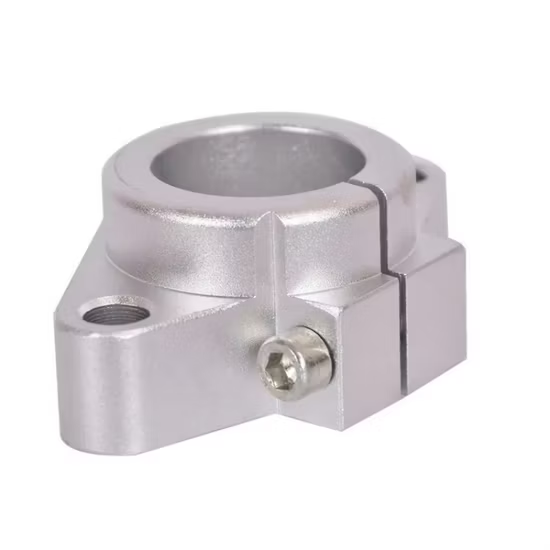
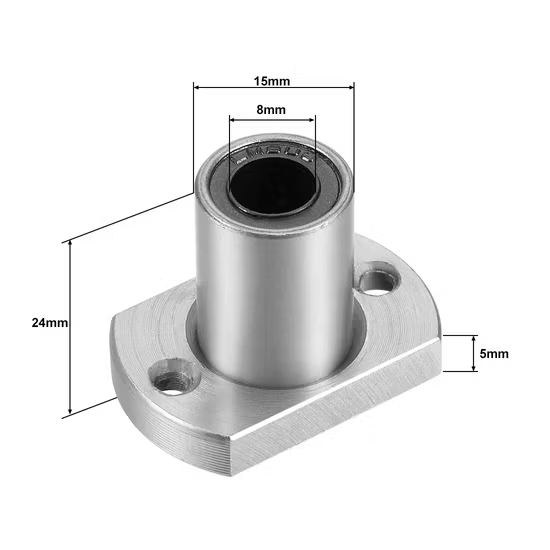
Shf8 Shf10 Shf12 Shf16 Shf20 Linear Shaft Support Slide Bearing Unit — polished stainless steel hollow profiles deliver high corrosion resistance for demanding linear motion applications.
Batch Traceability Guaranteed — Every Shf8 Shf10 Shf12 Shf16 Shf20 linear shaft support slide bearing unit ships with verifiable lot documentation linking directly to the manufacturer's production records.
| Parameter | Value |
|---|---|
| Designation | Shf8 Shf10 Shf12 Shf16 Shf20 |
| Product Type | Linear Shaft Support Slide Bearing Unit |
| Material Options | Stainless Steel |
| Profile Type | Hollow Profile |
| Surface Treatment | Polished |
| Precision Rating Options | P0, P6, P5, P4, P2 |
| Operational Features | High Speed, Low Voice |
| Corrosion Resistance | High Corrosion Resistance |
| Length | Custom Length |
| Certification | ISO 9001:2000, ISO 9001:2008, CE, RoHS |
| Origin Options | Germany, Japan, Sweden, Malaysia, China |
| Industry | Typical Applications |
|---|---|
| Engineering Machinery | Automated gantry systems, CNC machine tool guideways |
| Material Handling | Automated storage and retrieval system carriages, conveyor diverters |
| Automation Equipment | Robotic arm linear axes, precision pick-and-place modules |
| General MRO | Replacement carriages for legacy linear motion tracks |
Internal clearance and precision class dictate actual field performance.
Procurement teams often source components based solely on the base designation, assuming any matching unit will fit the rail. In my years on the workshop floor in Ningbo, I have seen countless automated gantries suffer from severe carriage wobble simply because the specified tolerance class was ignored. When a standard precision unit is forced into a high-speed application requiring tight geometric tolerances, the resulting friction generates excess heat, leading to thermal binding and premature track degradation . Sourcing the correct Shf8 Shf10 Shf12 Shf16 Shf20 linear shaft support slide bearing unit requires looking past the basic model number to verify the exact internal geometry and precision rating required by the equipment builder.
Selecting the right Shf8 Shf10 Shf12 Shf16 Shf20 linear shaft support slide bearing unit involves aligning the precision rating with the specific motion profile of the machinery. A standard P0 class might suffice for slow-moving material handling conveyors, but high-speed CNC tool changers demand P4 or P2 precision to maintain micron-level positioning accuracy. We review the application's speed and load parameters to ensure the selected tolerance class prevents the slider from jamming under dynamic operational stresses.
Linear motion systems in food processing or marine engineering face relentless moisture exposure, making high corrosion resistance a non-negotiable requirement. The polished stainless steel hollow profile minimizes surface friction while preventing rust accumulation that typically destroys standard carbon steel carriages. Furthermore, high-speed operations generate significant kinetic energy; the low voice and high-speed design features ensure that the internal slide elements maintain smooth contact with the shaft, preventing the chaotic vibration that accelerates wear in poorly lubricated or contaminated environments .
The hollow profile design is not merely a weight-saving measure; it fundamentally alters the rigidity-to-mass ratio of the carriage. By utilizing a polished stainless steel hollow profile, the unit achieves high structural integrity while reducing the moving mass, which allows for faster acceleration and deceleration cycles in automation equipment. The available precision ratings, ranging from P0 up to P2, dictate the exact dimensional tolerances of the internal sliding surfaces. Choosing the correct precision class ensures that the carriage glides without the micro-hesitations that plague mismatched linear assemblies.
Installing a carriage with incorrect internal clearances or the wrong precision class leads directly to unplanned downtime. When the slider binds due to thermal expansion in a high-speed cycle, it can shear the mounting bolts or damage the linear shaft, resulting in catastrophic damage to the entire motion axis. According to failure analysis frameworks, a significant share of premature linear motion failures stems from improper component matching rather than material defects . This misalignment voids equipment warranties and forces expensive emergency repairs.
Our technical team verifies every cross-reference to ensure the internal slide bearing clearance and precision suffixes match your exact OEM requirements, preventing the all-too-common error of supplying a base-matching but internally incompatible unit. We provide full batch and lot traceability for every Shf8 Shf10 Shf12 Shf16 Shf20 linear shaft support slide bearing unit, allowing you to verify the origin through official channels. Our application-based selection review covers the specific load, speed, and temperature conditions of your machinery to guarantee the selected hollow profile unit performs reliably.
To ensure optimal performance, please provide the specific radial and axial loads, operating speeds, and ambient temperature conditions of your application. Our engineering team will use these parameters to recommend the exact precision class and confirm the L10 life calculation for your linear motion system. If you are replacing existing components, sharing the OEM equipment number allows us to perform a comprehensive cross-reference check to guarantee perfect compatibility.
Q: How do I determine the exact precision class needed for my automation equipment?
A: The required precision class depends on the positioning accuracy and speed of your application. High-speed CNC machines typically need P4 or P2 ratings to prevent thermal binding, while standard conveyors can use P0. Provide your equipment's speed and load parameters, and our technical team will recommend the optimal tolerance to ensure smooth linear motion without premature wear.
Q: What are the common failure modes for linear slide units in high-speed machinery?
A: The most frequent failures include thermal binding caused by incorrect precision classes, surface scoring from inadequate lubrication, and carriage wobble due to improper mounting alignment. High-speed operations amplify these issues, making it critical to select a unit with the correct internal geometry and to ensure the shaft and rail are perfectly parallel during installation.
Q: Why choose a stainless steel hollow profile over standard bearing steel?
A: Stainless steel offers substantially higher corrosion resistance, making it essential for washdown environments or high-humidity facilities. The hollow profile reduces the moving mass, allowing for faster acceleration in automated systems without sacrificing structural rigidity. This combination ensures reliable operation where standard carbon steel carriages would rapidly degrade from rust or inertia limitations.
Q: How can I verify the authenticity of multi-origin linear motion components?
A: Every unit we supply includes comprehensive batch traceability and a QR code that can be scanned using official brand applications. We also provide material test reports and dimensional inspection certificates. This documentation guarantees that the stainless steel grade and precision ratings meet the original manufacturer's specifications, eliminating the risk of counterfeit components.
Our 5-step process ensures every order is engineered, validated, and supported for optimal performance.
Technical needs assessment
Custom specifications
Free samples for $50k+
Pre-shipment inspection
On-site & predictive
Our certified engineers respond within 24 hours with detailed technical specifications, pricing, and lead time information.