01
Consultation
Technical needs assessment


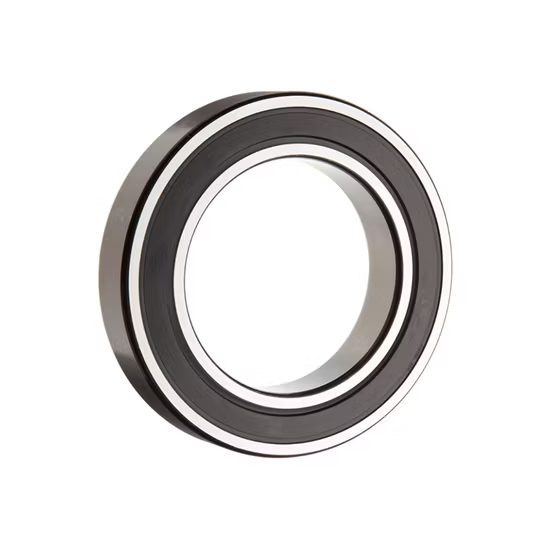


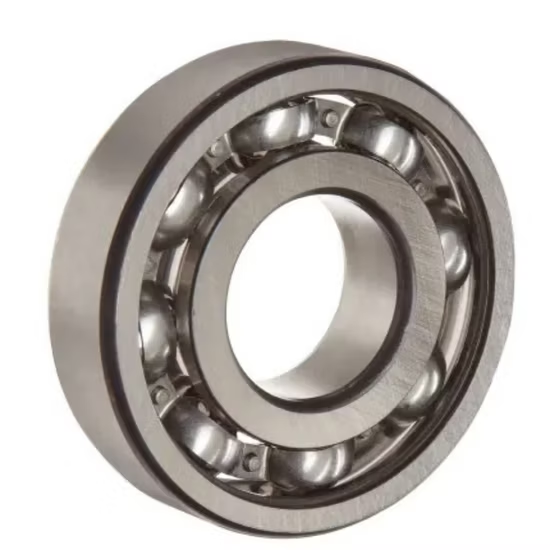
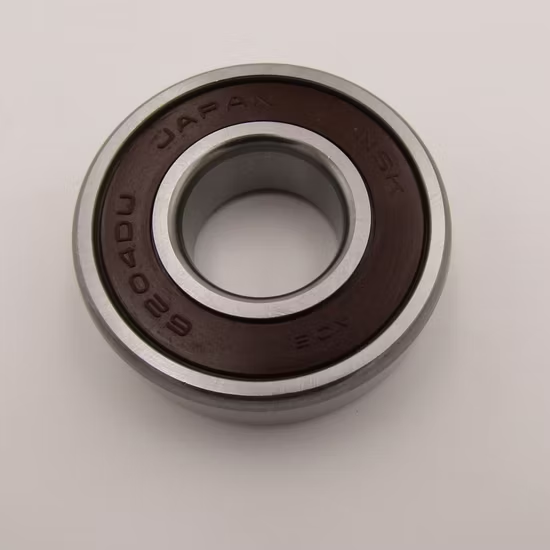
61902 Deep Groove Ball Bearing — engineered for reliable radial load support and high-speed rotation in electric motors, pumps, and automotive assemblies.
Traceable Factory Batches — Every 61902 unit ships with lot-specific origin documentation verifiable through official brand applications.
| Parameter | Value |
|---|---|
| Designation | 61902 |
| Bearing Type | Deep Groove Ball Bearing |
| Seal or Shield Type | Open, Rubber Seals, Iron Seals |
| Noise and Vibration Level | Z1V1, Z2V2, Z3V3, Z4V4 |
| Cross-Reference | 6902 |
| Origin | Germany, Japan, Sweden, Malaysia, China |
| Industry | Typical Applications |
|---|---|
| Electric Motors | High-speed rotor shafts requiring low-noise Z3V3 or Z4V4 grading |
| Automotive Parts | Precision instrument clusters and auxiliary drive pulleys |
| Gearboxes | Secondary shaft support where low-friction iron seals are preferred |
| Household Appliances | Spindle motors in washing machines and vacuum cleaners |
Ignoring acoustic tolerances turns a precision component into a system liability.
Procurement sheets often specify only the base number, assuming any 61902 6902 deep groove ball bearing will perform identically in a high-speed electric motor. In reality, installing a standard Z1V1 grade where a Z4V4 is required introduces micro-vibrations that accelerate cage wear and generate excess heat . I frequently see buyers sourcing these for automotive auxiliary drives without checking the vibration suffix, leading to premature acoustic failure and warranty claims long before the steel actually fatigues.
Selecting the correct shield or seal is just as critical as the dimensional fit. An open design minimizes friction for high-speed applications but requires a pristine, externally lubricated housing. Iron shields provide excellent dust exclusion with minimal friction, making them ideal for enclosed gearboxes. Rubber seals offer superior moisture protection but introduce contact friction that limits maximum rotational speed. We review your specific contamination and thermal constraints to recommend the exact configuration, ensuring the 61902 6902 deep groove ball bearing operates reliably without overheating or ingesting debris.
Operating temperature directly dictates the necessary internal clearance. A standard CN clearance might work perfectly in a climate-controlled appliance, but it will cause thermal binding and catastrophic seizure if installed in an automotive engine bay component where ambient and operational heat expand the inner ring. Conversely, specifying a C3 clearance for a precision instrument cluster introduces unnecessary radial play, degrading rotational accuracy and increasing noise. Evaluating the thermal gradient between the shaft and housing ensures the selected clearance maintains optimal load distribution under actual working conditions .
The Z and V suffixes define the strictness of the manufacturing tolerances regarding surface waviness and rolling element roundness. A Z1V1 rating indicates standard commercial quality, perfectly adequate for general conveyors or basic household appliances. However, precision electric motors and automotive sensors demand Z3V3 or Z4V4 grading, where raceway superfinishing drastically reduces acoustic emissions and high-frequency vibrations. Understanding these quality bands prevents the costly mistake of installing a noisy standard bearing into a vibration-sensitive assembly.
Treating the ISO 61902 and JIS 6902 designations as universally interchangeable without verifying internal geometry is a common procurement trap. While the outer dimensions match, substituting a variant with the wrong cage material or seal type alters the friction profile and thermal limits. This mismatch leads to unplanned downtime, accelerated degradation of adjacent seals, and catastrophic damage to the shaft journal. Adhering to ISO 281 life calculation principles requires exact alignment of all internal design parameters, not just the basic envelope dimensions .
Our technical review process catches the exact errors that cause field failures. When a buyer requests a 61902 for an automotive application, we immediately flag the thin-section limitations and verify they are not mistakenly substituting it for a heavy-duty tapered roller hub unit. We cross-reference the 6902 JIS equivalent while strictly validating that the requested clearance, cage material, and vibration grade match the OEM equipment requirements. This prevents the thermal binding and premature cage failures that plague orders placed with suppliers who only match the base number.
To ensure the selected configuration matches your exact requirements, please provide the radial and axial load profiles, operational speed ranges, and expected thermal gradients. Sharing the OEM equipment number allows our engineering team to perform a comprehensive cross-reference check, verifying that the seal type and vibration grading align perfectly with your assembly's design parameters.
Q: What is the exact difference between the 61902 and 6902 designations?
A: The 61902 follows the ISO designation standard, while 6902 is the JIS equivalent. Both share identical envelope dimensions, but treating them as blindly interchangeable is risky. We verify the internal clearance, cage design, and precision suffixes during cross-referencing to ensure the replacement perfectly matches the original equipment manufacturer's specific engineering requirements.
Q: How do I choose between rubber seals, iron shields, or open designs?
A: Open designs offer the lowest friction for high-speed, clean environments. Iron shields provide excellent dust exclusion with minimal friction, ideal for enclosed gearboxes. Rubber seals offer superior moisture and contaminant protection but generate more contact friction. We evaluate your operating temperature and contamination exposure to recommend the optimal configuration.
Q: What do the Z1V1 to Z4V4 quality levels actually mean?
A: These codes define the strictness of manufacturing tolerances regarding surface waviness and rolling element roundness. Z1V1 is standard commercial quality for general machinery. Z3V3 and Z4V4 indicate superfinished raceways that drastically reduce acoustic emissions and high-frequency vibrations, which is mandatory for precision electric motors and sensitive automotive instrument clusters.
Q: Why did a standard CN clearance bearing fail in my high-temperature application?
A: Standard CN clearance leaves minimal room for thermal expansion. In high-heat environments, the inner ring expands faster than the outer ring, eliminating the internal clearance and causing the bearing to seize. Specifying a C3 or C4 clearance provides the necessary thermal expansion allowance, preventing thermal binding and ensuring smooth operation under elevated temperatures.
Q: How can I verify the authenticity of the bearings upon delivery?
A: Every shipment includes lot-specific traceability documentation and a Certificate of Conformity. You can scan the QR codes on the packaging using the official brand mobile applications to instantly verify the product's authenticity, manufacturing origin, and batch history, ensuring you receive genuine components rather than visually similar counterfeits.
Our 5-step process ensures every order is engineered, validated, and supported for optimal performance.
Technical needs assessment
Custom specifications
Free samples for $50k+
Pre-shipment inspection
On-site & predictive
Our certified engineers respond within 24 hours with detailed technical specifications, pricing, and lead time information.