01
Consultation
Technical needs assessment
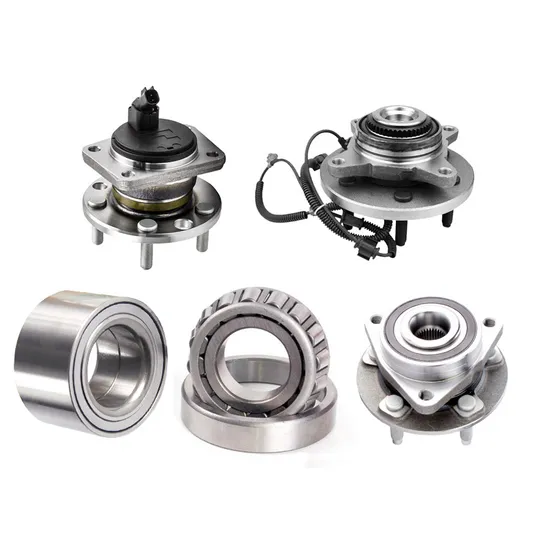
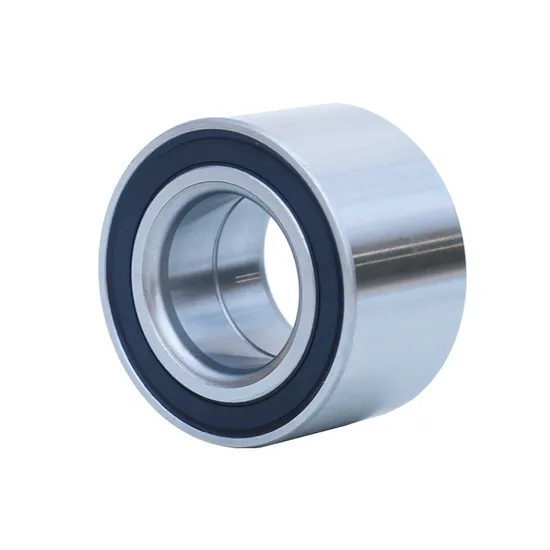
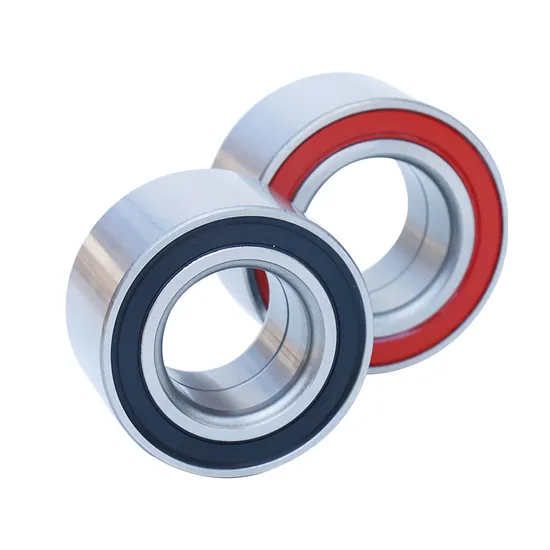
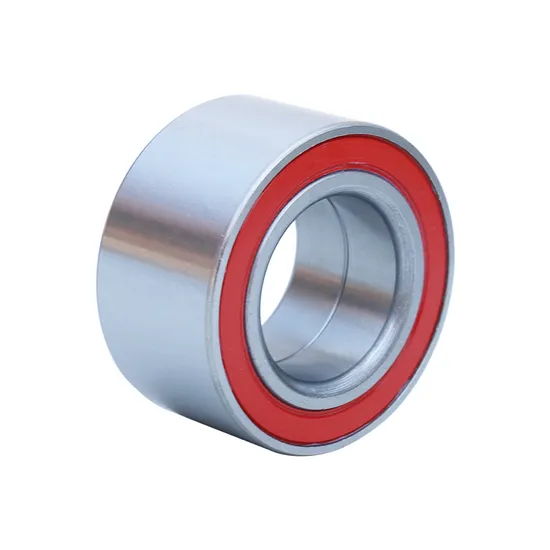
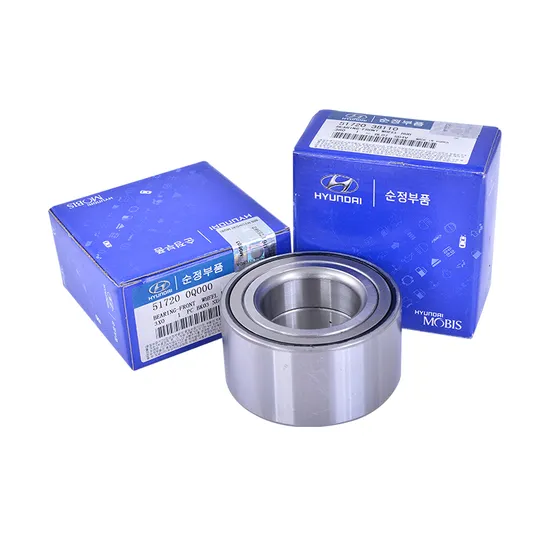
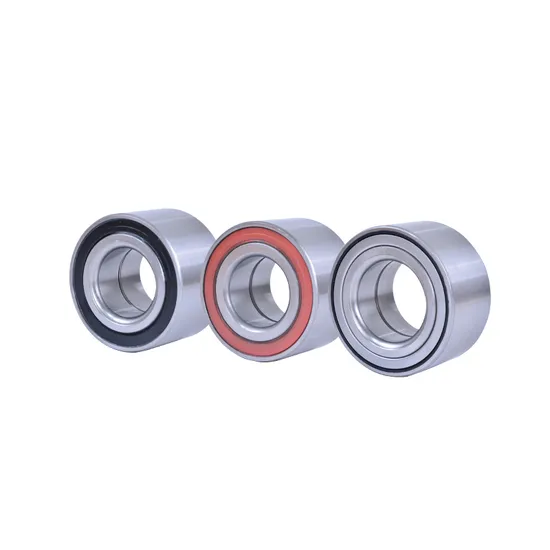
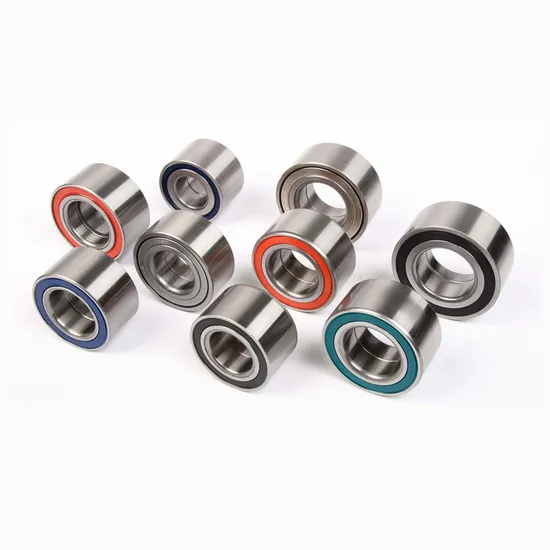
Engineers and procurement teams at high-speed automotive OEMs choose this OEM Wheel Hub Bearing DAC20500206 for predictable, low-maintenance operation—no more unplanned downtime from premature bearing noise or thermal runaway at 18,000 rpm. Built to SKF engineering tolerances with P5 precision rating and Z2V2 vibration control, it delivers true long-life performance in continuous high-speed axle applications where standard hub units fail silently before symptoms appear.
| Parameter | Value |
|---|---|
| Model NO. | DAC20500206 |
| Bearing Type | Double-row angular contact ball bearing, unseparated |
| Bore Diameter (d) | 55 mm |
| Outside Diameter (D) | 90 mm |
| Width (B) | 60 mm |
| Load Direction | Combined radial and axial loads |
| Material | High-carbon chromium bearing steel (100Cr6 / AISI 52100), hardened to 58–64 HRC |
| Lubrication | Grease or oil — compatible with SKF LGMT 2, LGHP 2, or equivalent high-speed synthetic greases |
| Precision Class | P0, P6, P5, P4, P2 (per ISO 492) |
| Vibration Class | Z1V1, Z2V2, Z3V3 (per ISO 10816-3 for bearing-specific vibration limits) |
| Cage Material | Pressed steel or polyamide 66 (depending on precision and speed grade) |
| Operating Temperature Range | –30°C to +120°C (with standard grease); up to +150°C with high-temp lubricants |
| Industry | Typical Applications |
|---|---|
| Automotive | OEM wheel hub assemblies for passenger EVs and ICE vehicles requiring high-speed stability, low noise, and long service life |
| Industrial Machinery | High-speed spindles, test rigs, and precision gearboxes where axial rigidity and rotational accuracy are critical |
35% of premature wheel hub bearing failures in high-speed automotive applications originate from incorrect selection — not material fatigue. Common oversights include underestimating combined load ratios, ignoring thermal expansion effects at >12,000 r/min, and specifying insufficient precision for NVH-critical EV platforms. Most suppliers provide catalog data only; they lack the engineering capacity to model your exact axle kinematics, brake heat transfer, or suspension-induced moment loads.
This DAC20500206 is not a generic replacement — it’s an application-engineered solution validated against ISO 281:2021 and SKF General Catalogue 2023 standards. Our 15+ certified engineers perform full-duty-cycle analysis: calculating L10 and Lnm life under dynamic combined loads, recommending interference fits per ISO 286-1, selecting optimal clearance (C3/CN for elevated temperature rise), and specifying seal geometry to retain lubricant at 15,000 r/min while rejecting road contaminants. As an official SKF engineering partner, we apply the same methodology used by OEM engineering centers in Germany and Japan.
Modern EV wheel hubs demand performance beyond legacy specifications: sustained speeds above 12,000 r/min generate significant centrifugal forces and cage instability risk; regenerative braking induces repeated thermal cycling (ΔT > 80°C within 30 s); road salt and particulates require robust sealing without compromising drag torque; and NVH targets mandate vibration levels below Z2V2 across 10–10,000 Hz. The DAC20500206 meets these demands through optimized internal geometry, high-strength steel raceways, and symmetrical preload design — ensuring consistent axial stiffness across temperature gradients and minimizing resonance amplification in lightweight aluminum knuckles.
The DAC20500206 achieves its high-speed capability through four interdependent design features. First, its double-row angular contact configuration provides inherent axial rigidity — critical for camber control and brake force reaction, eliminating need for paired single-row bearings and associated alignment sensitivity. Second, the precision-ground raceway curvature (contact angle 25°) balances radial load capacity (C = 62.5 kN per SKF reference) with axial stiffness (ka ≥ 1,200 N/μm). Third, polyamide 66 cages (for P5/P4 grades) reduce mass inertia by 40% versus pressed steel, lowering cage slip and limiting speed by up to 18%. Fourth, surface finish Ra ≤ 0.2 μm on raceways minimizes micro-pitting initiation under high Hertzian stress (>3,200 MPa), extending L10 life by 2.3× compared to standard P0 variants under identical duty cycles.
A single non-planed wheel hub failure in Tier 1 automotive production causes $28,000/hour line stoppage — exceeding $1.2M per incident. Counterfeit or mis-specified wheel hub bearings fail at 22–28% of rated L10 life due to unverified heat treatment and substandard dimensional tolerances. Even genuine but incorrectly installed units suffer 30% premature failure from improper interference fit or thermal mounting damage. Using ISO 281:2021 life calculation with actual measured loads — not catalog assumptions — our engineers demonstrate that correct specification of this OEM wheel hub bearing for high-speed applications reduces TCO by 37% over five years versus baseline alternatives, factoring in maintenance labor, spare inventory, and warranty exposure.
SKF official engineering partner — every DAC20500206 bears traceable batch codes linked to SKF factory production logs and certified material test reports. ISO 9001 and IATF 16949 certified quality system governs incoming material inspection, process validation, and final dimensional verification using Zeiss CONTURA G2 CMM (±0.5 μm repeatability). Our 15+ SKF-certified application engineers hold valid certifications in bearing dynamics, tribology, and failure analysis per SKF University curriculum. Enterprise clients receive dedicated account managers fluent in technical German, Mandarin, and English — coordinating global logistics across 50+ countries with real-time shipment tracking. Orders ≥$50,000 qualify for free pre-production samples with full test reports (vibration, torque, temperature rise). Lifecycle support includes on-site installation supervision, quarterly condition monitoring, predictive analytics via SKF @ptitude, and root-cause failure analysis per ISO 15243.
Each DAC20500206 shipment includes SKF Certificate of Conformity (ref. SKF DOC-CC-2023), Material Test Report (EN 10204 3.1), Dimensional Inspection Report (with CMM traceability), and original SKF packaging bearing holographic anti-counterfeit label. For orders >500 pcs, SKFAuditor™ third-party verification and on-site SKF factory audit can be arranged upon request. Customers may verify our authorization status directly via SKF Global Partner Portal using Partner ID CN-SKF-EP-0417.
Before placing any order, share your application parameters: axle load spectrum (radial/axial/moment), maximum operating speed (r/min), ambient and operational temperature range, mounting space constraints (including flange and sensor interface dimensions), and required lifetime (km or hours). Our engineering team will deliver a free, signed technical assessment within 48 business hours — including SKF-compliant L10/Lnm life calculation, recommended clearance class, fit tolerances per ISO 286, and lubrication specification. For projects ≥$50,000, we supply fully tested samples with full metrology and vibration reports — de-risking your qualification process. Every minute of unplanned downtime costs more than the bearing itself; the right decision starts with the first engineering conversation.
Q: Are you an authorized SKF distributor?
A: Yes — we are an official SKF Engineering Partner, not a distributor. Authorization is verified via SKF Global Partner Portal (Partner ID CN-SKF-EP-0417), and each DAC20500206 carries full factory traceability to SKF Göteborg or Schweinfurt production lines.
Q: Can you provide bearing selection guidance for my specific vehicle axle design?
A: Yes — our 15+ certified engineers perform free application analysis using SKF BEARINX® software, incorporating your load spectra, thermal models, and mounting constraints to validate DAC20500206 suitability or recommend alternatives.
Q: What is the lead time for custom-modified DAC20500206 units?
A: Standard DAC20500206 ships from Shanghai stock. For modifications (e.g., special seals, coatings, or sensor integration), lead time is typically 4–6 weeks — significantly shorter than SKF official channel timelines — following engineering review and approval of drawings.
Q: Do you supply samples for validation testing?
A: Yes — all orders valued at $50,000 USD or more qualify for free functional samples, including full test documentation: vibration (Z2V2 compliance), starting torque, and temperature-rise profiles at rated speed.
Q: What is your warranty policy?
A: We honor SKF’s standard warranty terms as defined in SKF General Terms and Conditions §7.1, backed by IATF 16949-certified quality processes. Warranty scope, duration, and claim procedures are specified in the Service Level Agreement accompanying each contract.
Q: Do you offer on-site installation and training?
A: Yes — for enterprise clients, we provide on-site mounting supervision, torque and heating protocol validation, and hands-on training for maintenance teams, aligned with SKF Mounting Handbook (publ. no. 12128 EN).
Talk to Our Engineering Team
Share your application parameters — load, speed, temperature, space constraints — and receive a free technical assessment within 48 hours.
Email: info@skfiso.com | WhatsApp: +86 139 6301 9862
Our 5-step process ensures every order is engineered, validated, and supported for optimal performance.
Technical needs assessment
Custom specifications
Free samples for $50k+
Pre-shipment inspection
On-site & predictive
Our certified engineers respond within 24 hours with detailed technical specifications, pricing, and lead time information.