01
Consultation
Technical needs assessment


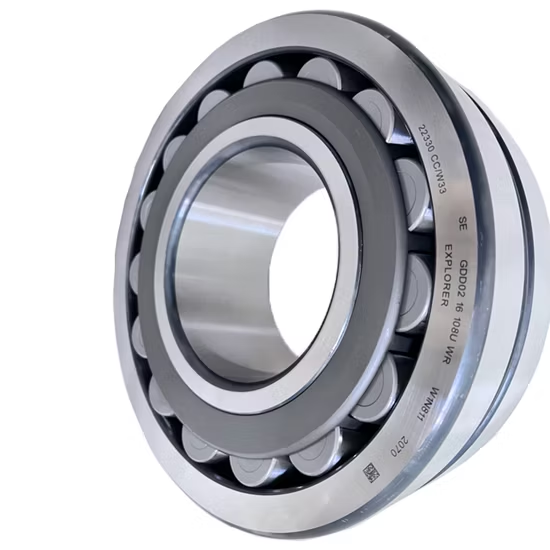

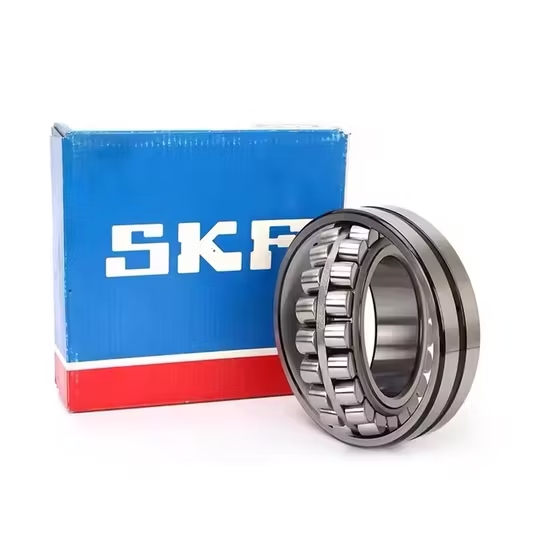


Spherical Roller Bearing for Heavy-Duty Mining and Steel Equipment — engineered with high-carbon bearing steel to withstand extreme shock loads, severe misalignment, and continuous operation in crushers and vibrating screens.
Every shipment includes a comprehensive documentation package with material test reports and dimensional inspection records for full batch traceability.
Verified Origin via App — Every batch includes scannable QR codes linking directly to the manufacturer's official authentication portal for instant verification.
| Parameter | Value |
|---|---|
| Product Type | Spherical Roller Bearing |
| Origin Options | Germany, Japan, Sweden, Malaysia, China |
| Manufacturing Service | OEM and Custom Branding |
| Material Options | High-carbon chromium bearing steel, case-hardening steel, corrosion-resistant alloys |
| Cage Options | Machined brass, pressed steel, polyamide |
| Internal Clearance | CN, C3, C4, C5 (selected per thermal profile) |
| HS Code | 8482500090 |
| Industry | Typical Applications |
|---|---|
| Mining and Crushing | Vibrating screen exciter mechanisms, jaw crusher toggle plates, cone crusher main shafts |
| Steel and Metallurgy | Continuous caster guide rolls, rolling mill roll necks, ladle turret slewing joints |
| Cement Production | Rotary kiln support rollers, clinker cooler drag chains, heavy-duty mill trunnions |
| Material Handling | Bucket elevator head pulleys, stacker reclaimer slewing bearings, apron feeder drives |
Matching the base designation is never enough when thermal expansion and shock loads dictate survival.
Procurement teams often source replacements by matching the core numeric sequence, only to discover that the internal geometry or clearance class is entirely wrong for the actual operating environment. I have inspected countless seized units in mining sites where a standard clearance was installed in a high-heat vibrating screen, leading to catastrophic thermal binding within days . A reliable spherical roller bearing supplier must look beyond the catalog number to evaluate the specific cage design and internal profile required to withstand severe misalignment and heavy shock loads.
Selecting the correct component for heavy machinery requires evaluating the exact interaction between the rolling elements and the raceway under dynamic stress. As an experienced spherical roller bearing supplier, we review the specific misalignment tolerances and radial load vectors of your equipment to recommend the optimal internal geometry. This application-based selection ensures the rolling elements maintain proper contact stress distribution, preventing localized fatigue and premature spalling in demanding metallurgical and mining operations.
The operating environment inside a jaw crusher or a rotary kiln exposes components to severe radial shock loads combined with significant axial displacement. Elevated ambient temperatures drastically reduce the effectiveness of standard lubricants and alter the internal operating clearance, making the selection of C3 or C4 clearance classes critical to prevent the inner ring from expanding and locking the cage. Furthermore, abrasive dust and moisture ingress require robust sealing solutions or specialized external housing designs to protect the rolling surfaces . Proper relubrication intervals and the correct grease viscosity are equally vital to flush out particulate matter and maintain a stable hydrodynamic film.
The choice of cage material fundamentally dictates how the component handles vibration and sudden load spikes. Machined brass cages are typically preferred for vibrating screens and crushers due to their superior resistance to high-frequency vibrations and their ability to operate with marginal lubrication, whereas pressed steel cages offer a cost-effective alternative for steady-state, moderate-load gearboxes. Regarding material options, standard high-carbon chromium bearing steel serves most general purposes, but case-hardening steels are available for applications involving heavy shock loads to prevent subsurface cracking. For environments with high moisture or chemical exposure, corrosion-resistant alloy variants can be specified to prevent raceway degradation and pitting.
Installing a component with the wrong internal clearance or inadequate cage strength inevitably leads to unplanned downtime and severe secondary damage to the housing and shaft. When thermal binding occurs, the resulting friction can weld the inner ring to the shaft, requiring destructive removal methods that compromise the entire machine assembly. According to the failure analysis frameworks outlined in ISO 15243, a significant share of premature failures stems directly from application mismatches rather than material defects . These catastrophic events void equipment warranties and result in massive production losses that far exceed the initial procurement savings.
Our multi-origin supply chain allows us to source from Germany, Japan, Sweden, Malaysia, or China, aligning perfectly with your project budget and brand preferences without compromising quality. We provide comprehensive OEM services, enabling custom trademarks and specialized packaging tailored to your exact distribution or maintenance requirements. Every cross-reference we perform strictly aligns the internal clearance, cage material, and precision class, ensuring the replacement matches the original equipment manufacturer's exact engineering intent. Furthermore, our technical team conducts application-based selection reviews to verify that the chosen configuration can handle the specific radial loads, misalignment angles, and thermal conditions of your mining or steel mill equipment.
To ensure the selected configuration perfectly matches your machinery, please provide the specific equipment model, installation space constraints, and the detailed operating parameters including radial and axial loads, rotational speed, and ambient temperature. If the application involves extreme environments, specifying the presence of corrosive agents, excessive dust, or high thermal radiation allows our engineering team to determine the most appropriate material and sealing arrangement. Supplying the original OEM equipment number or the existing part designation enables us to perform a precise cross-reference and technical validation.
Q: How do I determine the exact spherical roller bearing designation for my vibrating screen?
A: Determining the correct designation requires analyzing the specific dynamic loads, vibration frequency, and operating temperatures of the screen. Provide the equipment model and operating parameters, and our engineering team will calculate the required internal clearance and cage type to ensure optimal performance and prevent premature fatigue in high-vibration environments.
Q: What are the common failure modes in crushers and how can they be prevented?
A: Crushers typically suffer from cage fracture and raceway spalling due to severe shock loads and abrasive contamination. Prevention involves selecting heavy-duty machined brass cages, ensuring adequate sealing to block dust ingress, and maintaining strict relubrication schedules to flush out particulate matter and sustain a protective lubricant film.
Q: How should I select the right material and cage for high-temperature environments?
A: High-temperature applications require evaluating the thermal expansion rates to select the appropriate internal clearance class, such as C3 or C4. Cage selection depends on the vibration levels; machined brass is generally preferred for its thermal stability and vibration resistance, while specialized heat-treated steel variants may be specified for extreme thermal conditions.
Q: How do you handle cross-referencing when replacing an OEM part with an alternative brand?
A: We do not merely match the base numeric designation. Our cross-referencing process strictly verifies the internal geometry, cage material, clearance class, and precision tolerances. This ensures the alternative brand perfectly replicates the load-carrying capacity and thermal expansion characteristics required by your specific equipment.
Q: What are the recommended maintenance and relubrication intervals for heavy-duty applications?
A: Relubrication intervals depend heavily on the operating speed, ambient temperature, and contamination levels. We provide customized maintenance schedules based on your specific工况, recommending the correct grease viscosity and replenishment quantities to effectively purge contaminants and maintain optimal hydrodynamic lubrication within the housing.
Our 5-step process ensures every order is engineered, validated, and supported for optimal performance.
Technical needs assessment
Custom specifications
Free samples for $50k+
Pre-shipment inspection
On-site & predictive
Our certified engineers respond within 24 hours with detailed technical specifications, pricing, and lead time information.


