01
Consultation
Technical needs assessment



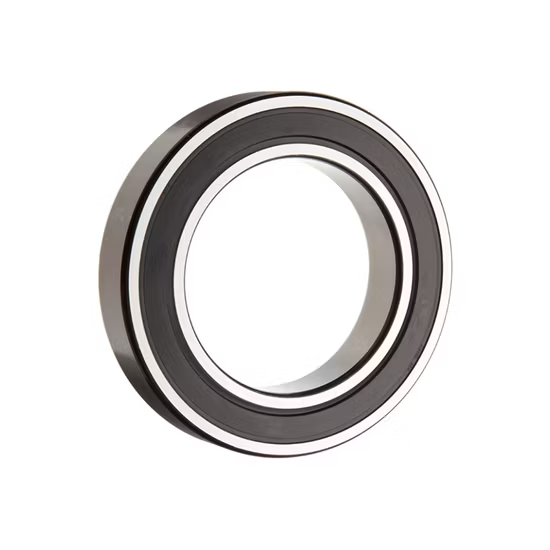
6302 Llu Deep Groove Ball Bearing — designed for electric motors and industrial gearboxes to ensure smooth continuous rotation.
Unified Multi-Brand Procurement — Source your NTN deep groove ball bearings alongside SKF and FAG equivalents in a single consolidated shipment with full batch traceability.
| Parameter | Value |
|---|---|
| Designation | 6302 Llu |
| Bearing Type | Deep Groove Ball Bearing |
| Bore Diameter (d) | 15 mm |
| Outside Diameter (D) | 42 mm |
| Width (B) | 13 mm |
| Seal or Shield Type | Double-sided Contact Rubber Seals |
| Noise and Vibration Class | Z1V1, Z2V2, Z3V3, Z4V4 |
| Dynamic Load Rating (C) | 11.4 kN |
| Static Load Rating (C₀) | 5.45 kN |
| Limiting Speed (Grease) | 12000 r/min |
| Limiting Speed (Oil) | 15000 r/min |
Note: The specific suffix formatting in the designation requires manufacturer catalog confirmation for exact seal compound specifications.
| Industry | Typical Applications |
|---|---|
| Electric Motors | Rotor shaft support in fractional horsepower AC and DC motors |
| Industrial Gearboxes | High-speed input shafts requiring low-friction sealing |
| Pumps and Compressors | Impeller shaft bearings exposed to minor moisture ingress |
| Conveyors | Idler roller endpoints operating in dusty material handling environments |
| Household Appliances | Washing machine drum drives and HVAC blower motor assemblies |
Passing a standard visual check does not guarantee the internal integrity of a NTN 6302 Llu deep groove ball bearing. Counterfeit components frequently feature soft inner rings and cloned QR codes that easily deceive casual quality control processes, leading to sudden equipment lockups under thermal stress. Relying solely on exterior markings without verifying batch metallurgy and exact suffix alignment leaves maintenance teams vulnerable to catastrophic field failures.
Selecting the correct sealing configuration is critical for motor longevity. The contact rubber seal design inherent to this NTN 6302 Llu deep groove ball bearing provides essential protection against fine particulate ingress in conveyor and pump applications. Our technical team reviews your specific contamination risks to ensure the seal friction and material compatibility match the operational environment, preventing the premature lubricant degradation that plagues mismatched components.
Electric motors and gearboxes generate significant internal heat during continuous operation. When ambient temperatures rise, the thermal expansion of the shaft and housing alters the internal clearance of the bearing. If a standard clearance is installed where an expanded clearance was required, the rolling elements experience excessive preload, leading to thermal binding. Furthermore, contact seals generate slightly more friction than non-contact shields, making the selection of the appropriate grease fill and viscosity paramount to avoid overheating in high-speed rotor applications.
The availability of Z1V1 through Z4V4 noise and vibration classifications allows buyers to match the bearing's running accuracy to the strict acoustic requirements of precision appliances or high-end electric motors. Higher vibration grades indicate tighter manufacturing tolerances and superior surface finishes on the raceways. However, matching the base number is insufficient; the internal geometry and seal type must perfectly align with the OEM specification. A mismatch in the seal suffix can introduce unexpected drag or allow contaminants to bypass the shielding, fundamentally altering the expected fatigue life.
Substituting a base designation without verifying the exact seal and clearance suffixes often results in unplanned downtime and severe secondary damage to the motor housing. When a non-contact shield is mistakenly replaced with a high-friction contact seal in a high-speed application, the resulting heat buildup rapidly degrades the lubricant. This cascading failure not only voids equipment warranties but also forces expensive emergency maintenance and production halts across the facility.
We eliminate the risk of counterfeit parts by providing authorized distribution across all major brands, allowing you to fulfill mixed-brand MRO requirements in a single order. Every shipment includes batch traceability to the manufacturer, verified through official brand applications to expose cloned QR codes. Our cross-reference process strictly aligns clearance, cage material, and seal suffixes rather than just the base number. We conduct application-based selection reviews covering load, speed, and temperature to prevent the thermal binding issues caused by粗放 matching, ensuring reliable operation in critical motor spindles.
To ensure optimal performance, please provide the radial and axial load profiles, operating speeds, and ambient temperature ranges of your specific electric motor or gearbox application. Sharing the exact OEM equipment number allows our engineering team to perform a comprehensive cross-reference check, verifying that the seal friction and internal clearance perfectly match your operational requirements.
Q: How do I verify the authenticity of the batch using the manufacturer's app?
A: Scan the unique QR code on the packaging using the official brand application. This instantly retrieves the manufacturing date, production facility, and original specification data, exposing cloned codes commonly found on counterfeit products with soft inner rings.
Q: Why does substituting a shielded equivalent cause motor failures?
A: Shielded variants offer less friction but poorer contamination exclusion. Replacing a contact seal with a shield in a dusty environment allows particulate ingress, which acts as an abrasive lapping compound, rapidly destroying the raceway surface finish and causing premature noise and vibration.
Q: How do I select the correct vibration grade for my appliance?
A: Standard Z1V1 grades suffice for general industrial gearboxes, while precision Z3V3 or Z4V4 grades are mandatory for household appliances and high-end electric motors where acoustic noise and rotational smoothness are critical performance metrics.
Q: What is the operational boundary between rubber seals and iron shields?
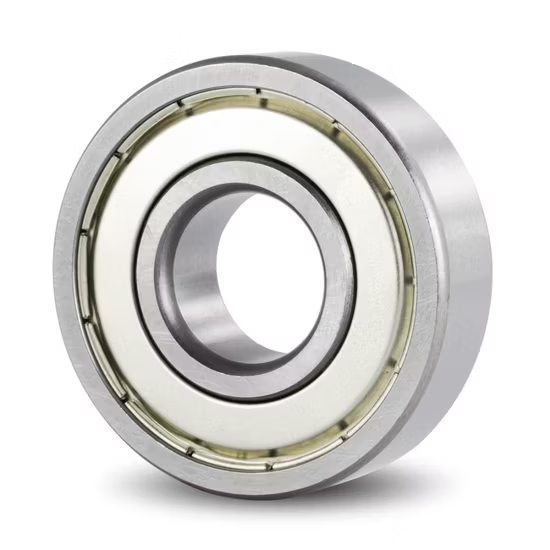
A: Rubber contact seals excel in environments with moisture and fine dust but generate higher friction, limiting top speeds. Iron shields handle higher RPMs with minimal friction but cannot prevent liquid ingress or block microscopic particulate contamination effectively.
Q: How do I confirm the internal clearance matches the thermal requirements?
A: Provide your operating temperature delta and shaft material to our technical team. We calculate the thermal expansion to determine if a standard clearance will result in thermal binding, recommending an expanded clearance class to maintain the optimal internal geometry under heat.
Our 5-step process ensures every order is engineered, validated, and supported for optimal performance.
Technical needs assessment
Custom specifications
Free samples for $50k+
Pre-shipment inspection
On-site & predictive
Our certified engineers respond within 24 hours with detailed technical specifications, pricing, and lead time information.