01
Consultation
Technical needs assessment



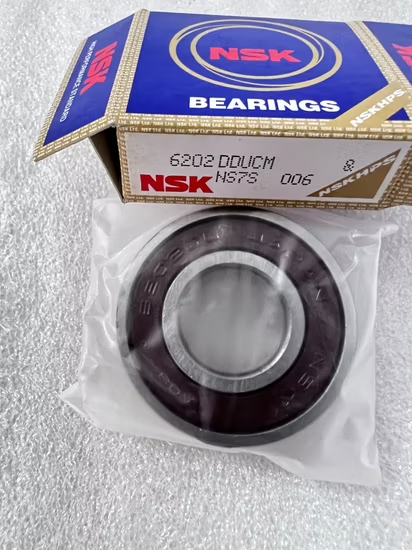


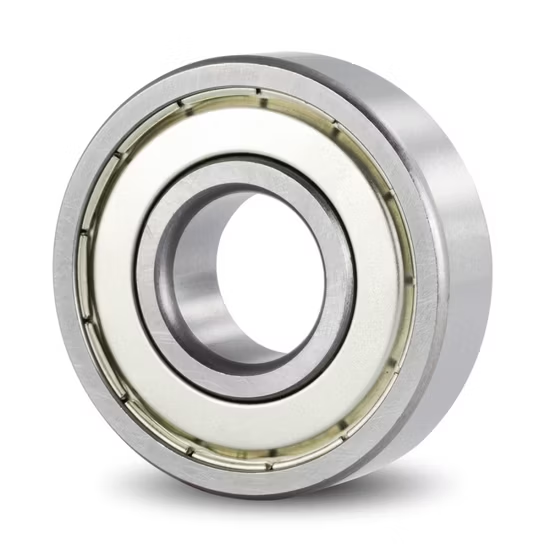
NSK 6310 Zz 2RS Deep Groove Ball Bearing delivers versatile sealing solutions for demanding industrial applications. The Zz iron shields offer reliable dust protection for medium-speed operations, while the 2RS rubber seals ensure maintenance-free performance against moisture and contamination.
Cross-reference alignment — matching clearance, cage material, and seal suffixes precisely rather than just the base number.
| Parameter | Value |
|---|---|
| Designation | NSK 6310 Zz 2RS |
| Bearing Type | Deep Groove Ball Bearing |
| Seal or Shield Type | Open, Rubber Seals, Iron Seals |
| Quality Level | Z1V1, Z2V2, Z3V3, Z4V4 |
| Origin | Germany, Japan, Sweden, Malaysia, China |
Note: Suffix combinations and quality grades are subject to specific batch availability and manufacturer production facilities.
| Industry | Typical Applications |
|---|---|
| Electric Motors | Stator and rotor shaft support, cooling fan drives |
| Industrial Gearboxes | High-speed input shaft positioning, intermediate gear support |
| Material Handling | Conveyor drive roller journals, pulley shaft bearings |
Exact suffix matching prevents catastrophic field failures.
Procurement teams frequently source replacements by matching the base 6310 designation while overlooking critical suffix variations. We have seen countless instances where substituting an iron shield for a rubber seal in dusty environments leads to rapid particulate ingress and raceway scoring. A standard NSK 6310 deep groove ball bearing might fit the housing, but ignoring the specific seal type, internal clearance, or cage material guarantees premature failure under thermal expansion or heavy vibration .
Selecting the correct variant of the NSK 6310 deep groove ball bearing requires balancing friction against contamination protection. Iron shields provide excellent high-speed capability with minimal friction, making them ideal for clean, high-RPM electric motor applications. Conversely, rubber seals offer superior protection against moisture and fine particulates, which is essential for material handling conveyors operating in harsh environments. We evaluate your specific operational parameters to ensure the selected sealing arrangement matches the actual field conditions.
Industrial gearboxes subject bearings to combined radial and axial loads alongside significant heat generation. When internal temperatures rise, standard clearance bearings can experience thermal binding as the inner ring expands faster than the outer ring. Selecting an appropriate internal clearance class accommodates this thermal growth, preventing the rolling elements from skidding and destroying the cage. Proper lubrication retention, dictated by the seal type, further ensures the grease does not degrade prematurely under sustained operational heat .
Understanding the specific configuration of this deep groove ball bearing is vital for reliable performance. The iron shields minimize friction for high-speed electric motor shafts, while the rubber seals provide contact sealing for contaminated material handling environments. Quality levels ranging from Z1V1 to Z4V4 dictate the strictness of vibration and acoustic emissions, allowing buyers to select standard industrial grades or ultra-quiet variants for precision appliances. Sourcing from diverse global origins ensures supply chain resilience without compromising the fundamental metallurgical integrity required for sustained radial load support.
Relying solely on dimensional cross-references while ignoring internal design nuances leads to severe operational disruptions. Installing a standard clearance bearing in an application requiring extra clearance results in thermal binding, causing unplanned downtime and catastrophic damage to adjacent gearbox components. Furthermore, utilizing counterfeit replacements with soft inner rings leads to rapid raceway deformation and warranty voidance on the primary equipment. Adhering strictly to established failure analysis frameworks highlights that a significant share of premature failures stems directly from these subtle specification mismatches .
Our procurement process eliminates the risk of receiving cloned components with compromised metallurgy. We verify every cross-reference to ensure the internal clearance and cage material perfectly match the original equipment requirements, not just the outer dimensions. Every shipment includes batch traceability directly linked to the manufacturer's production facilities, eliminating the guesswork associated with unauthorized grey market stock. Furthermore, our technical team reviews application parameters to confirm that the selected seal type will actually survive the specific environmental challenges of your machinery.
To ensure optimal performance, provide our technical team with your specific radial and axial loads, operating speeds, and ambient temperatures. This data allows us to verify the internal clearance selection and confirm the appropriate seal type for your environment. If you are replacing an existing component, share the original equipment manufacturer part number so we can execute a precise cross-reference check, guaranteeing the replacement perfectly matches the initial engineering intent.
Q: How do I verify the authenticity of the received bearings?
A: Every unit features a unique QR code on the packaging that can be scanned using the official manufacturer application. This digital verification confirms the product's origin, batch number, and authenticity, protecting your facility from the severe risks associated with counterfeit bearings featuring soft inner rings and cloned markings.
Q: Why is cross-referencing more than just the base number important?
A: Matching only the 6310 base number ignores critical internal differences. If the replacement lacks the correct internal clearance or features an incompatible cage material, the bearing will suffer from thermal binding or cage failure under load, leading to rapid equipment breakdown despite the outer dimensions fitting perfectly.
Q: What is the difference between iron shields and rubber seals?
A: Iron shields provide non-contact protection ideal for high-speed, clean environments like electric motors, minimizing friction and heat. Rubber seals offer contact sealing that actively blocks moisture and fine dust, making them essential for harsh material handling applications where contamination is a primary cause of premature failure.
Q: How do the Z1V1 to Z4V4 quality levels affect performance?
A: These designations indicate the strictness of vibration and acoustic emission controls during manufacturing. While Z1V1 is suitable for general industrial machinery, higher grades like Z4V4 are engineered for precision applications where minimal noise and ultra-smooth rotation are critical to the overall performance of the driven equipment.
Our 5-step process ensures every order is engineered, validated, and supported for optimal performance.
Technical needs assessment
Custom specifications
Free samples for $50k+
Pre-shipment inspection
On-site & predictive
Our certified engineers respond within 24 hours with detailed technical specifications, pricing, and lead time information.