01
Consultation
Technical needs assessment



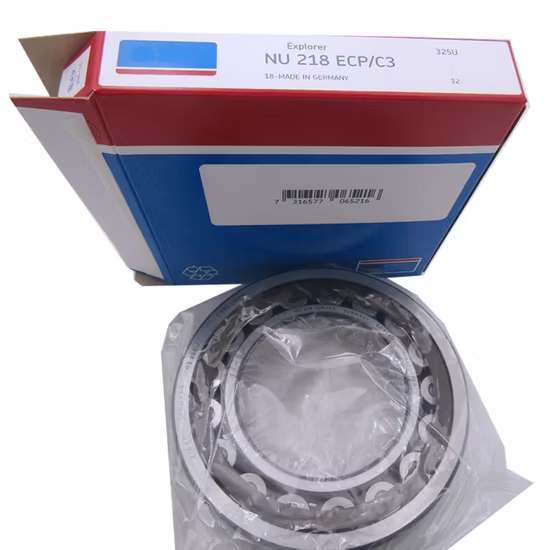
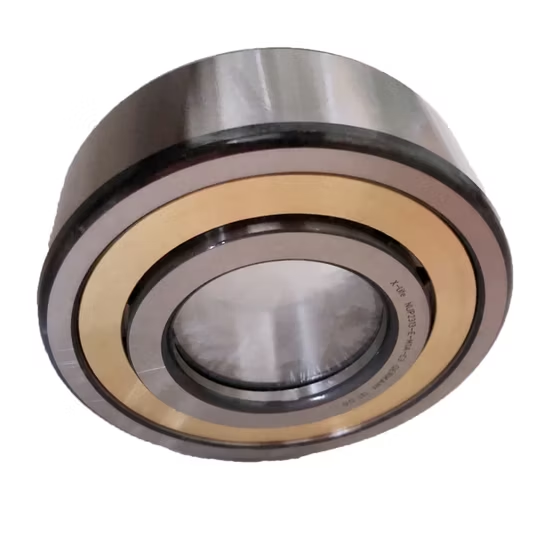


N202/N203/N204/N206/N208/N209/N210 E Cylindrical Roller Bearings — E suffix denotes optimized internal geometry with enhanced load-carrying capacity for sustained radial loads. Separable inner and outer rings simplify mounting and maintenance in industrial gearboxes, electric motors, and machine tool spindles. Verify batch authenticity through the brand's official QR scanning app before installation.
Multi-brand authorized sourcing — Procure genuine N202/N203/N204/N206/N208/N209/N210 E cylindrical roller bearings from SKF, FAG, or NSK in a single consolidated order without juggling multiple vendors.
| Parameter | Value |
|---|---|
| Designation | N202/N203/N204/N206/N208/N209/N210 E |
| Bearing Type | Cylindrical Roller Bearing |
| Separable Design | Separable inner and outer rings |
| Cage Material | Available in brass or pressed steel variants |
| Origin | Germany / Japan / Sweden / Malaysia / China |
| HS Code | 8482500090 |
| Industry | Typical Applications |
|---|---|
| Electric Motors | Rotor shaft support requiring high radial load capacity |
| Industrial Gearboxes | High-speed intermediate shafts in heavy-duty transmission units |
| Machine Tool Spindles | Radial support in precision milling and turning centers |
| Material Handling | Conveyor drive pulleys and hoist drum shafts |
Base number matches are never enough when internal geometry dictates survival.
Sourcing teams frequently approve purchase orders based solely on the N-series prefix and bore size, completely overlooking the "E" enhanced capacity suffix. I once inspected a failed high-temperature exhaust fan where the maintenance crew installed a standard cage design instead of the required E-type optimized internal geometry. The mismatched roller crowning and cage pocket clearance caused severe thermal binding under load, tearing the cage apart in weeks . When procurement treats the "E" as a mere suggestion rather than a critical engineering parameter, the resulting unplanned downtime far outweighs any initial unit cost savings.
Matching the correct N202/N203/N204/N206/N208/N209/N210 E cylindrical roller bearing to your equipment requires looking past the catalog cover. Our engineering review process verifies that the optimized internal design aligns with your specific radial load profiles and operational speeds. We cross-reference the exact cage material and clearance class required for your housing tolerances, ensuring the enhanced capacity design actually performs as intended in the field rather than failing due to a suffix oversight.
High-speed gearbox shafts generate substantial internal friction, making thermal expansion a primary enemy of bearing longevity. If the operational temperature rises significantly, a standard radial internal clearance will close up, leading to excessive preload and rapid degradation. Selecting the appropriate clearance class, such as C3, compensates for this thermal growth and maintains the necessary oil film thickness. Furthermore, the choice between oil bath and grease lubrication dictates the required cage design; high-speed oil environments demand robust brass cages to withstand fluid churning forces and prevent pocket wear .
The "E" suffix signifies an optimized internal design featuring maximized roller dimensions and refined raceway curvatures. This geometry distributes radial loads over a larger contact area, noticeably extending the L10 fatigue life under heavy continuous operation. To support this enhanced load capacity, the bearings are available with robust brass cages or standard pressed steel variants. The brass construction provides superior heat dissipation, high-speed stability, and resistance to vibration-induced wear, which is critical for machine tool spindles. Additionally, the fully separable design allows the inner ring to be mounted independently onto the shaft, simplifying interference fit installations and routine maintenance inspections.
Substituting an "E" design bearing with a standard non-E variant might seem harmless during an emergency breakdown, but it fundamentally alters the equipment's load-carrying baseline. The reduced dynamic load rating accelerates subsurface fatigue, leading to premature spalling and catastrophic shaft damage. According to failure analysis frameworks, operating a bearing beyond its intended geometric limits voids warranty coverage and triggers secondary failures in adjacent seals and gears . These cascading failures transform a simple component swap into a multi-day production halt.
We do not just ship boxes; we validate the exact suffix combinations that prevent field failures. For the N-series, confusing an E-type with a standard design or mismatching the cage material is a frequent error we intercept during the quotation phase. Our cross-brand interchange expertise ensures that when we substitute an SKF part for an FAG or NSK equivalent, the internal geometry, clearance, and cage specifications align perfectly. Every batch is backed by原厂批次追溯, giving you absolute certainty that the optimized design you specified is exactly what arrives at your dock.
To ensure precise selection and L10 life calculation, please share your operational parameters including radial loads, shaft speeds, and housing temperatures. If you are replacing an existing unit, provide the exact OEM equipment number or the full designation printed on the current bearing flank, including all clearance and cage suffixes. Our engineering team will use this data to confirm the optimal cross-reference and verify the required internal geometry for your specific application.
Q: What does the "E" suffix mean in N-series cylindrical roller bearings compared to standard designs?
A: The "E" suffix indicates an optimized internal design with maximized roller dimensions and refined raceway curvatures. This enhanced geometry increases the dynamic load rating and extends fatigue life under heavy radial loads. Always verify this suffix during cross-referencing, as substituting a standard design will compromise the equipment's load-carrying capacity.
Q: How to ensure cross-reference accuracy when matching clearance and cage material suffixes?
A: Base number matching is insufficient. You must verify that the replacement bearing shares the exact radial internal clearance class and cage material designation. Our technical team reviews these suffix combinations against your operational parameters to prevent thermal binding or cage failure caused by incorrect interchange assumptions.
Q: Brass vs. steel cages: Which is better for high-speed gearbox applications?
A: Brass cages offer superior durability, heat dissipation, and high-speed stability, making them ideal for demanding gearbox environments with high vibration. Pressed steel cages are suitable for standard applications. The choice depends on your specific speed and load profiles, which we evaluate during the technical selection process.
Q: What documentation is provided to verify the country of origin and batch traceability?
A: We provide a Certificate of Conformity, country-of-origin documentation, and batch traceability records linking to the manufacturer. You can also verify authenticity directly on the shop floor by scanning the QR codes through the respective brand's official mobile application.
Our 5-step process ensures every order is engineered, validated, and supported for optimal performance.
Technical needs assessment
Custom specifications
Free samples for $50k+
Pre-shipment inspection
On-site & predictive
Our certified engineers respond within 24 hours with detailed technical specifications, pricing, and lead time information.


