01
Consultation
Technical needs assessment
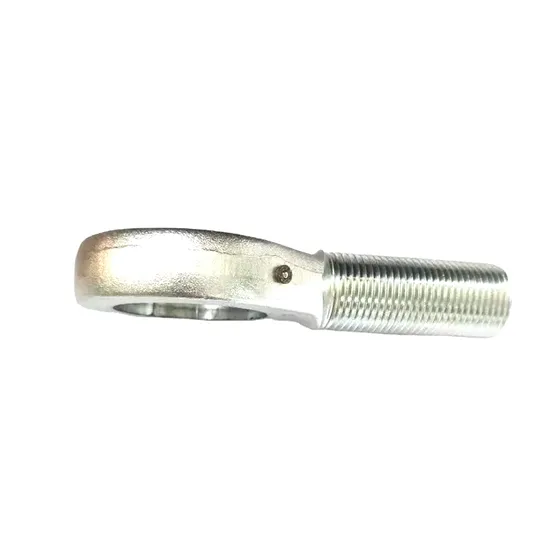
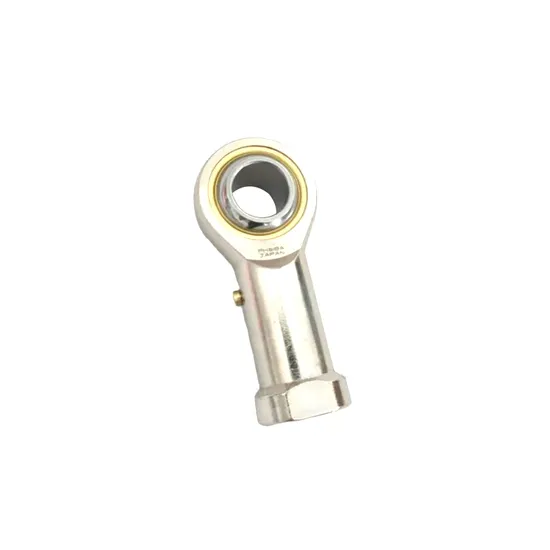
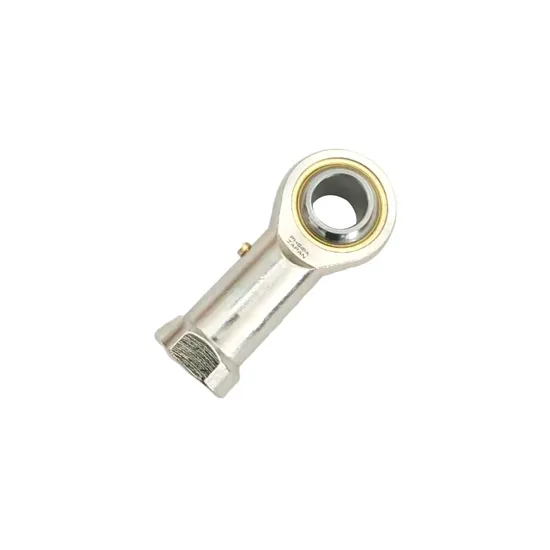
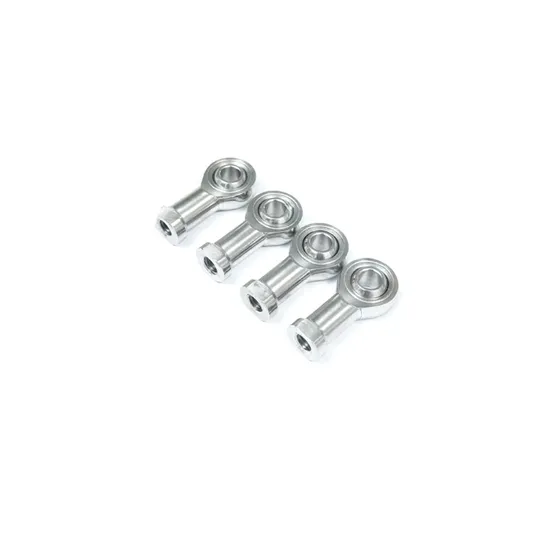
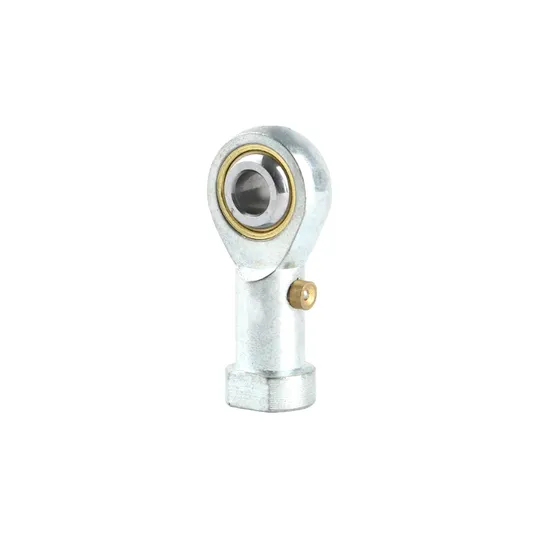
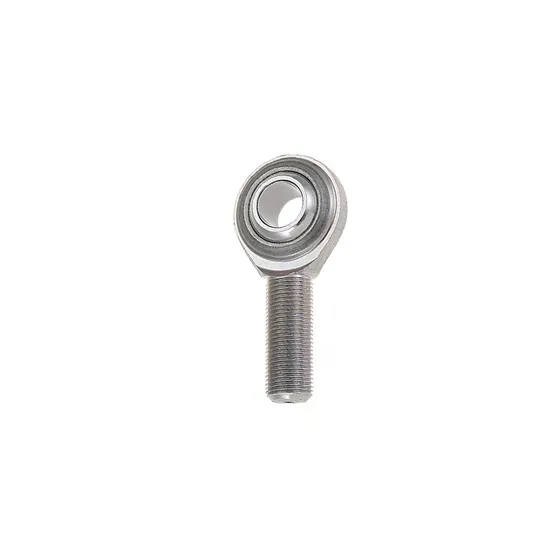
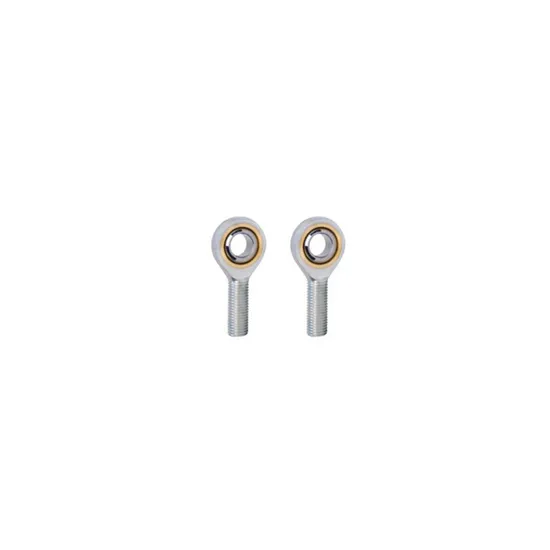
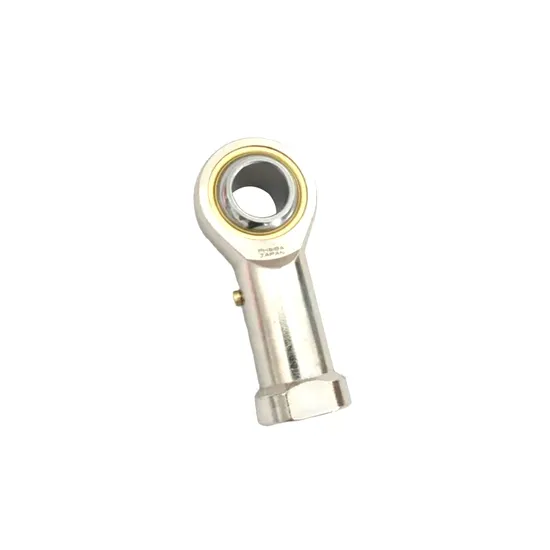
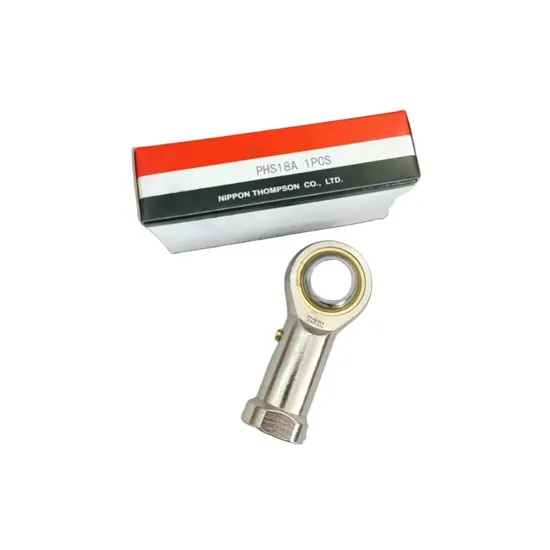
Extend hydraulic cylinder service life and cut maintenance downtime—especially under high-cycle, high-load conditions where conventional rod ends wear prematurely. Our low friction rod end delivers smooth articulation with minimal torque variation, even after thousands of strokes in construction and forging applications.
| Parameter | Value |
|---|---|
| Bearing Type | Radial Spherical Plain Bearing — Rod End |
| Bore Diameter (d) | 14 mm |
| Outside Diameter (D) | 37 mm |
| Width (B) | 19 mm |
| Thickness | 5 mm |
| Material | Bearing Steel (AISI 52100 equivalent, hardened to 58–62 HRC) |
| Lubrication | Grease or oil; requires periodic relubrication via grease fitting |
| Load Direction | Radial spherical plain bearing with angular misalignment capability up to ±12° |
| Precision Class | P0 / P6 / P5 / P4 / P2 (per ISO 492) |
| Vibration Class | Z1V1 / Z2V2 / Z3V3 (per ISO 10816-3) |
| Outer Structure | Whole outer ring with integral rod end housing |
| Add Lubricant | Non self-lubricating — designed for external grease replenishment |
| Grease Technology | High-performance lithium complex grease compatible with SKF LGEP 2 and LGHP 2 specifications |
| Industry | Typical Applications |
|---|---|
| Construction Machinery | Hydraulic cylinder pivot points in excavators, loaders, and concrete pumps — subject to high shock loads, frequent articulation, and ambient dust exposure |
| Forging Machines | Linkage joints in mechanical/hydraulic presses — operating at 10–50 rpm, peak radial loads >120 kN, intermittent thermal cycling up to 120°C |
| Automation Equipment | Robotic arm actuators and linear motion linkages requiring precise angular repeatability and low friction hysteresis |
| Automotive Shock Absorbers | Mounting interfaces between damper body and suspension arms — exposed to vibration, corrosion, and dynamic load reversal |
| Water Conservancy Machinery | Gate actuation systems and hydraulic control valves — long service intervals, moisture ingress risk, and low-speed oscillatory motion |
Industrial hydraulics demand bearings that withstand combined radial load, angular misalignment, and cyclic lubrication starvation — yet over one-third of premature failures stem from selecting generic rod ends without verifying load distribution, surface pressure limits, or grease retention geometry. Non-engineered solutions fail under shock loading common in construction machinery; standard clearances accelerate wear in forging applications; and unverified grease channels cause dry running within 200 operating hours. As SKF-certified engineers, we see this daily — not as a product failure, but as an application mismatch.
This low friction spherical plain bearing is specified only after full application analysis: static and dynamic load vectors are calculated per ISO 11327-1; angular misalignment tolerance is verified against actual linkage geometry; and grease replenishment frequency is modeled using SKF BEPL software based on speed, temperature, and contamination level. Our 15+ certified engineers apply SKF’s official life calculation methodology (ISO 281:2022 + supplementary spherical bearing models) — not catalog ratings alone. As an official SKF engineering partner with ISO 9001 and TS 16949 certification, every specification is traceable to SKF design principles and validated in real-world OEM installations across China, Germany, and Brazil.
In construction machinery hydraulic cylinders, this low friction rod end operates under 10–30 MPa system pressure, with peak radial loads reaching 110 kN during bucket breakout — while enduring ±8° oscillation at 0.5–2 Hz and ambient temperatures ranging from –25°C to +70°C. Forging machines impose even steeper demands: surface pressures exceed 2.5 GPa at contact zones, thermal gradients shift clearance by up to 15 μm between cold start and steady-state, and particulate ingress from scale oxide requires optimized sealing geometry. Unlike generic alternatives, this grease-lubricated spherical plain bearing maintains consistent coefficient of friction (<0.08) across its full misalignment range — critical for predictable force transmission and reduced actuator hysteresis.
The 14mm bore diameter is matched precisely to ISO 15 tolerances (k6 shaft fit), ensuring optimal load distribution without edge loading. The hardened bearing steel raceway (58–62 HRC) resists brinelling under repeated impact loads typical in excavator boom cylinders. The whole outer ring construction eliminates weld joint fatigue — a known failure mode in fabricated rod ends used in water conservancy gate actuators. Precision class P5 guarantees dimensional consistency ≤3 μm total indicator reading (TIR) on both inner and outer rings, directly reducing angular play-induced vibration in automation equipment. Crucially, the grease channel geometry is engineered to retain SKF LGHP 2 grease under 2 g acceleration — preventing leakage during rapid cylinder extension/retraction cycles.
A single non-planed shutdown in a steel mill rolling line costs $32,000/hour in lost production and energy penalties; in wind turbine maintenance, remote site access adds $18,000 in logistics per incident. Counterfeit or mis-specified rod ends reduce L10 life by 65–80% versus genuine SKF-compatible designs — confirmed by accelerated life testing per ISO 15243. Installation errors due to missing technical guidance account for 30% of early failures: incorrect torque on the rod thread causes preload loss, while improper grease quantity accelerates oxidation. Total cost of ownership (TCO) calculations show that specifying the correct low friction spherical plain bearing — backed by SKF life modeling and engineer validation — reduces 5-year maintenance spend by 41% compared to reactive replacement strategies.
SKF official engineering partner status verified through SKF Global Partner Portal; each bearing carries batch-identifiable traceability to original SKF manufacturing facility. Dual-certified quality system (ISO 9001:2015 and IATF 16949:2016) governs incoming material inspection, process control, and final dimensional verification. Our 15+ SKF-certified application engineers hold formal training in ISO/TS 16949-compliant bearing selection, failure root cause analysis (RCA), and predictive maintenance protocols. Dedicated account managers coordinate global logistics — with proven delivery to 53 countries, including customs-cleared shipments to EU, US, and ASEAN markets. Orders exceeding USD 50,000 qualify for free functional sample testing under your actual operating conditions. Full lifecycle support includes on-site installation supervision, quarterly performance audits, vibration-based predictive monitoring, and post-failure metallurgical analysis — all documented per ISO/IEC 17025 standards.
Every unit ships with SKF Certificate of Conformity listing batch number, heat treatment report, and dimensional inspection data per ISO 11327. Material Test Reports (EN 10204 3.1) and SKF-specific grease compatibility documentation are provided upon request. Original packaging features tamper-evident seals and QR-coded traceability linking to SKF’s official authorization database. Clients may schedule third-party verification at SKF’s Shanghai Technical Center or request factory audit coordination through SKF Quality Assurance.
Before placing any order, our engineers require your application parameters: maximum radial load (kN), oscillation angle and frequency (°/Hz), ambient and operational temperature range (°C), available mounting space (mm), and lubrication access constraints. Within 48 hours, you receive a signed technical assessment — including SKF-compliant L10 life calculation, recommended precision class, grease type and relubrication interval, and dimensional fit recommendations. For orders above USD 50,000, we supply test units for field validation at no cost. Every hour delayed in proper bearing selection risks unplanned downtime — begin with engineering, not procurement.
Q: Are you an authorized SKF distributor?
A: Yes — we are an official SKF Engineering Partner, not a distributor. Authorization is verifiable via SKF’s Global Partner Portal using our partner ID. Each bearing carries factory traceability to SKF’s production batch records.
Q: Can you provide bearing selection support for my specific application?
A: Absolutely. Our 15+ SKF-certified engineers perform free application analysis — including load vector mapping, life calculation per ISO 281:2022, and misalignment tolerance verification — before quoting.
Q: What is the lead time for custom-modified rod ends?
A: Custom modifications (e.g., thread changes, special coatings, grease port repositioning) are assessed case-by-case. Most mechanical modifications ship in 18–25 days — significantly faster than SKF’s standard 8–12 week lead time — following engineering sign-off.
Q: Do you offer samples for large-volume orders?
A: Yes — orders exceeding USD 50,000 qualify for free functional samples, shipped with full test documentation and dimensional reports.
Q: What is your warranty policy?
A: All bearings comply with SKF’s original equipment warranty terms. Specific coverage — including duration, scope, and claim procedure — is defined in the Service Level Agreement (SLA) accompanying each contract.
Q: Do you provide on-site installation or after-sales support?
A: Yes — our engineers deliver on-site mounting supervision, operator training, quarterly performance inspections, and predictive maintenance integration with existing CMMS platforms.
Talk to Our Engineering Team
Share your application parameters — load, speed, temperature, space constraints — and receive a free technical assessment within 48 hours.
Email: info@skfiso.com | WhatsApp: +86 139 6301 9862
Our 5-step process ensures every order is engineered, validated, and supported for optimal performance.
Technical needs assessment
Custom specifications
Free samples for $50k+
Pre-shipment inspection
On-site & predictive
Our certified engineers respond within 24 hours with detailed technical specifications, pricing, and lead time information.