01
Consultation
Technical needs assessment

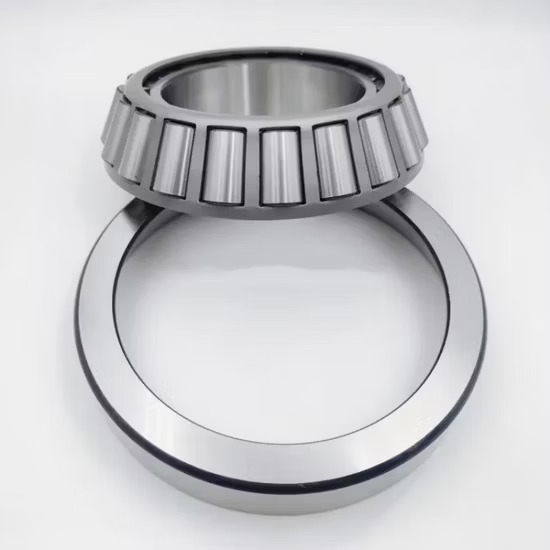


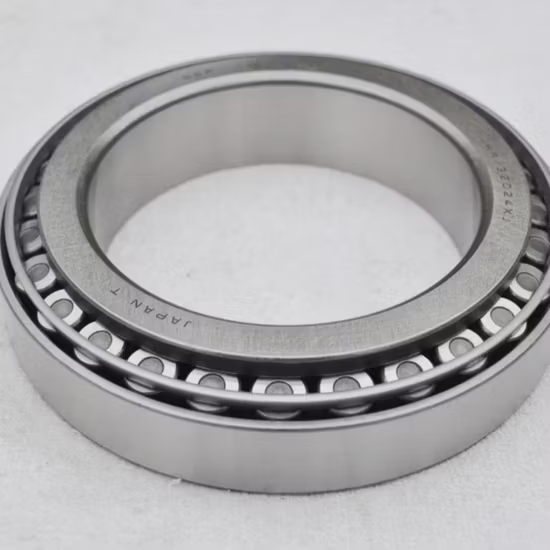
Koyo Lm67048/Lm67010 Tapered Roller Bearing P4 — engineered with GCr15 steel for exceptional fatigue resistance under heavy combined loads.
Batch-Level Traceability — Every Koyo Lm67048/Lm67010 tapered roller bearing we dispatch includes verifiable lot documentation tied directly to the manufacturer's production facilities.
| Parameter | Value |
|---|---|
| Designation | Lm67048/Lm67010 |
| Bearing Type | Tapered Roller Bearing |
| Number of Rows | Single Row |
| Precision Class | P4 |
| Material | GCr15 High Carbon Chromium Bearing Steel |
| Cage Material Options | Nylon, Brass, or Iron |
| Origin | Shanghai |
| Industry | Typical Applications |
|---|---|
| Automotive and Heavy Vehicle Repair | Heavy-duty truck drive axles and wheel hub assemblies |
| Industrial Power Transmission | Reduction gearboxes and marine propulsion drives |
| Heavy Machinery Maintenance | Conveyor drive shafts in building material processing plants |
Standard clearance assumptions cause catastrophic binding when heavy vehicles operate under extreme heat.
When sourcing replacement parts for commercial fleets, buyers often focus strictly on the base designation while overlooking internal clearance specifications. In heavy-duty truck axles, friction and ambient heat cause the inner ring to expand against the shaft. If a standard clearance bearing is installed where a C3 or C4 equivalent is required, the thermal expansion eliminates the internal operating gap. The result is not gradual wear, but sudden, catastrophic seizure that damages the axle journal and destroys the housing . Ensuring the Koyo Lm67048/Lm67010 tapered roller bearing matches the exact thermal and load profile of the application prevents these costly field breakdowns.
Selecting the correct internal configuration requires looking past the basic part number. Our engineering review ensures that the specific Koyo Lm67048/Lm67010 tapered roller bearing supplied aligns with the axle's operational reality. We verify that the rolling element geometry and raceway angles are optimized for the combined radial and axial loads typical in heavy truck hubs, preventing premature edge loading and spalling.
Heavy vehicle axles and industrial gearboxes endure brutal operating environments. The primary challenge is managing the intense heat generated by continuous heavy loads, which degrades standard lubricants and alters internal clearances. Furthermore, off-road and construction applications expose wheel hubs to abrasive dust and moisture. Selecting the appropriate cage material—whether nylon for reduced friction, brass for high-vibration resilience, or iron for extreme load stability—is critical to maintaining lubrication film integrity and preventing contamination-induced wear .
The P4 precision class specified for this component dictates significantly tighter tolerances on bore diameter, outside diameter, and running accuracy compared to standard commercial grades. This strict dimensional control ensures uniform load distribution across all tapered rollers, which is vital for minimizing vibration and heat generation in high-speed gearboxes. The GCr15 high-carbon chromium bearing steel provides the necessary core toughness and raceway hardness to resist surface fatigue under heavy shock loads. Buyers can specify nylon, brass, or iron cage materials based on the specific rotational speed and operating temperature boundaries of their equipment.
Substituting a dimensionally identical bearing with the wrong internal design or cage material leads to rapid, unpredictable failures. According to failure analysis frameworks like ISO 15243, a significant share of premature bearing seizures stems from incorrect clearance selection rather than material defects . When a replacement part fails prematurely, the resulting unplanned downtime, secondary damage to expensive axle shafts, and warranty voidance far exceed the initial cost of the component.
We eliminate the guesswork in mixed-brand MRO purchasing by providing authorized coverage across all major manufacturers in a single order. For this specific designation, the most common sourcing error is receiving standard clearance when the OEM requires thermal expansion compensation; our cross-reference protocol strictly aligns clearance, cage material, and precision suffixes. We back every shipment with batch traceability and official QR verification, ensuring absolute authenticity. Furthermore, our technical team reviews application parameters before dispatch to confirm the selection handles the actual load and speed conditions.
To ensure optimal service life, we recommend sharing your specific application parameters with our technical team prior to ordering. Providing details such as radial and axial load profiles, operating speeds, and ambient temperature ranges allows us to verify the L10 life calculation and confirm the correct internal clearance. If you are replacing an OEM component, supply the original equipment part number so we can execute a precise cross-reference check, ensuring the internal geometry perfectly matches your drivetrain requirements.
Q: How do you verify the authenticity of the Koyo Lm67048/Lm67010 tapered roller bearing?
A: We provide original manufacturer batch traceability with every shipment. Procurement teams can scan the packaging using the official brand application to instantly verify the QR code. This confirms the bearing's origin, production date, and authenticity, completely eliminating the risk of installing counterfeit components with soft inner rings that cause sudden field failures.
Q: Why is cross-referencing more than just matching the base number for this part?
A: Matching only the base designation often overlooks critical internal variations. A dimensionally identical bearing might feature a standard clearance instead of the required C3, or utilize a pressed steel cage instead of a machined brass one. Our technical review ensures the clearance, cage material, and precision class perfectly align with your specific thermal and load requirements to prevent operational binding.
Q: What is the practical difference between P4 and standard P0 precision for this application?
A: P4 precision enforces significantly tighter dimensional and running accuracy tolerances. In high-speed industrial gearboxes or heavily loaded truck hubs, this strict control ensures uniform load distribution across the tapered rollers. This reduces localized stress, minimizes vibration, and prevents premature edge loading, ultimately extending the operational lifespan of the assembly.
Q: How do I choose between nylon, brass, and iron cage materials for my equipment?
A: The choice depends on your specific operating environment. Nylon cages offer low friction and quiet operation for moderate temperatures. Brass cages provide superior resilience in high-vibration or high-temperature applications. Iron cages are selected for extreme heavy-load conditions. Share your operating parameters with our engineering team to determine the optimal material for your machinery.
Our 5-step process ensures every order is engineered, validated, and supported for optimal performance.
Technical needs assessment
Custom specifications
Free samples for $50k+
Pre-shipment inspection
On-site & predictive
Our certified engineers respond within 24 hours with detailed technical specifications, pricing, and lead time information.