01
Consultation
Technical needs assessment
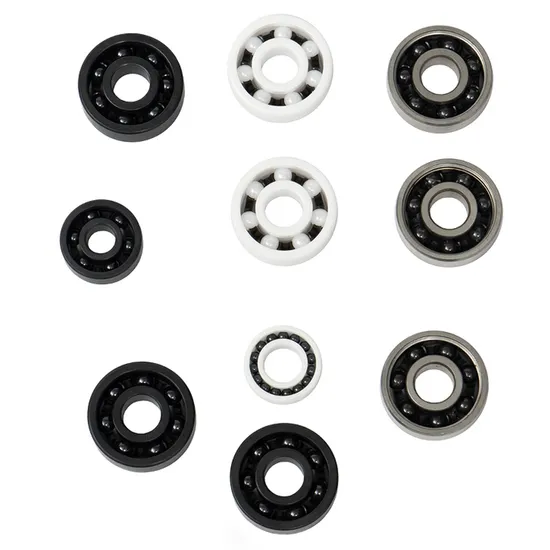
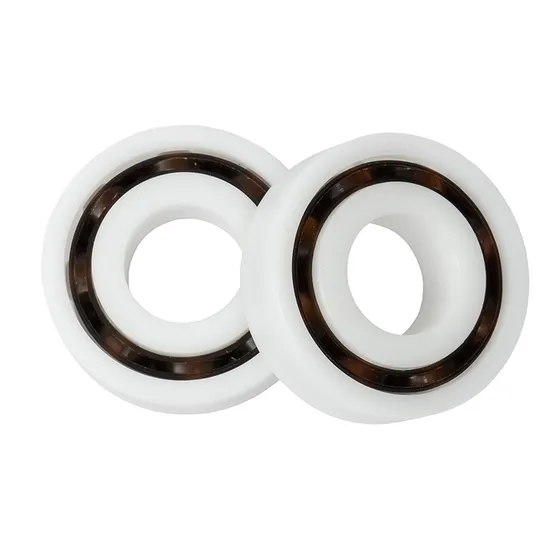
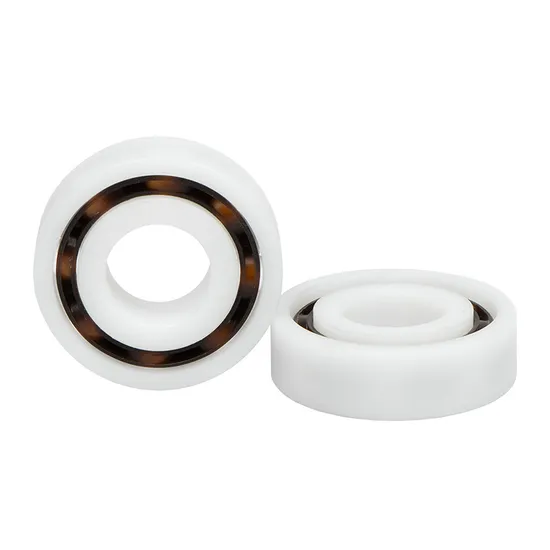
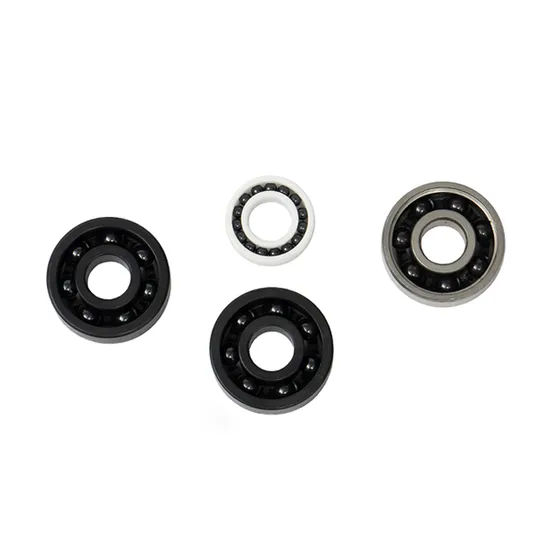
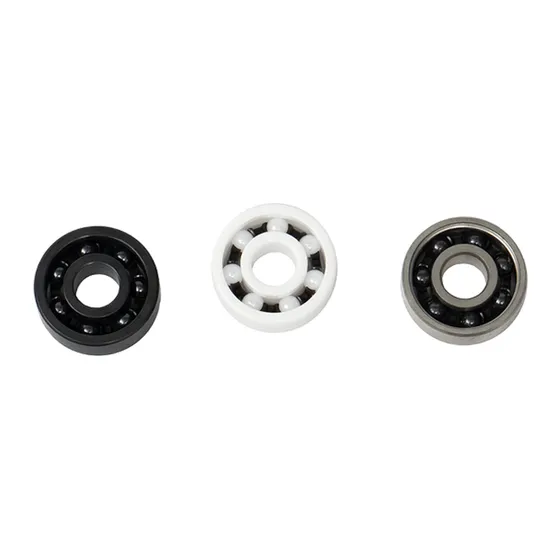
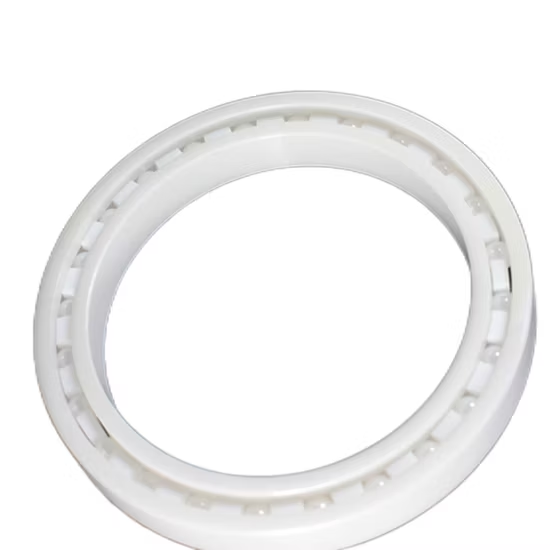
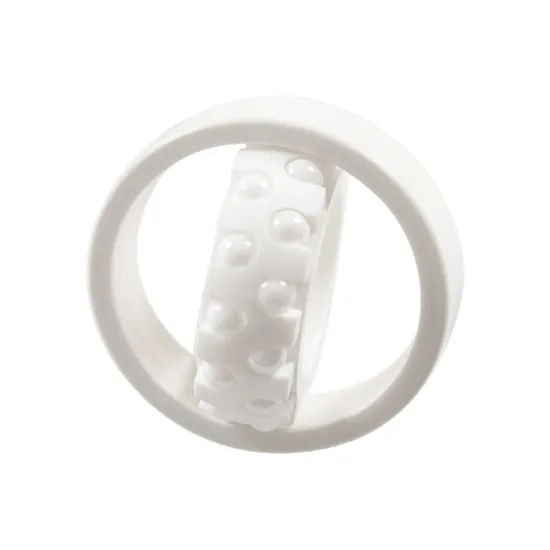
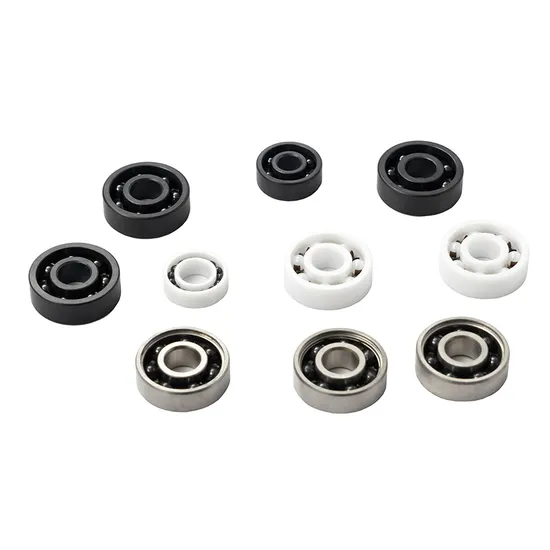
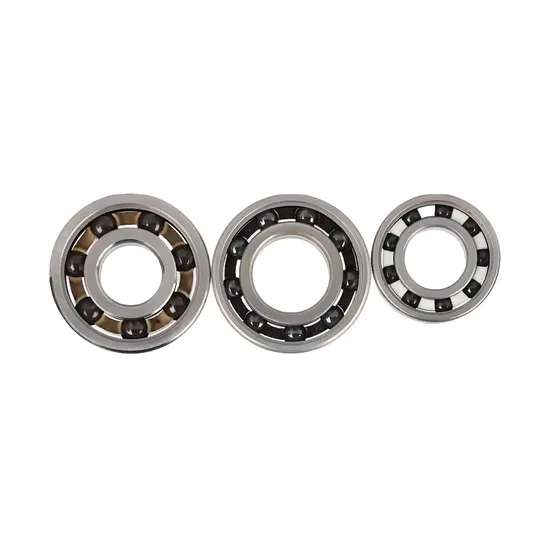
Stop bearing failures in high-heat, high-stress zones — these high-temperature ceramic bearings deliver unmatched thermal stability and extended service life where steel bearings fatigue fast. Designed for wind turbine pitch systems, precision robotics, and compact high-speed spindles, they eliminate thermal expansion mismatch and resist electrical arcing — a silent killer in frequency-driven applications.
| Parameter | Value |
|---|---|
| SKF Designation | 697, 695, 699 (standard series; ceramic hybrid variants available per application) |
| Bearing Type | Radial deep groove ball bearing, single row, unseparated |
| Bore Diameter (d) | 7 mm |
| Outside Diameter (D) | 17 mm |
| Width (B) | 5 mm |
| Dynamic Load Rating (C) | 2.05 kN (697), 1.85 kN (695), 2.30 kN (699) — per SKF standard catalog values for steel variants |
| Static Load Rating (C₀) | 0.94 kN (697), 0.85 kN (695), 1.05 kN (699) |
| Limiting Speed (grease lubricated) | 32,000 r/min (697), 36,000 r/min (695), 30,000 r/min (699) — based on SKF calculation method for miniature bearings |
| Reference Speed (oil mist) | 48,000 r/min (697), 52,000 r/min (695), 45,000 r/min (699) |
| Weight | Approx. 2.8 g (697), 2.5 g (695), 3.1 g (699) |
| Cage Material | Pressed steel (standard); polyamide 66 or brass cage optional for high-temperature ceramic hybrid versions |
| Seal Type | Open, 2RS (nitrile rubber contact seal), or 2Z (sheet metal shield) — configurable per application |
| Clearance Class | Standard (CN), C3, or C4 — selected per thermal expansion requirements of host equipment |
| Precision Class | P0, P6, P5, P4, or P2 — ISO tolerance grades, certified per DIN 620 and ISO 492 |
| Lubrication | Grease (SKF LGHP 2, LGMT 2, or equivalent) or oil — pre-lubricated or dry as specified |
| Operating Temperature Range | –40°C to +150°C (steel variants); –40°C to +250°C (ceramic hybrid: Si₃N₄ balls + stainless steel rings) |
| Material | Ring material: 100Cr6 bearing steel (standard); X46Cr13 or AISI 440C optional for corrosion resistance; Ceramic hybrid: Si₃N₄ balls, M50 or 440C rings |
| Industry | Typical Applications |
|---|---|
| Wind Energy | Generator cooling fans, pitch control actuators, yaw drive encoders — where compact size, thermal stability, and long maintenance intervals are critical |
| Automotive | EV inverter cooling pumps, power steering sensors, ADAS camera gimbal mechanisms — requiring low torque, high-speed stability, and EMI immunity |
| Precision Machinery | High-speed spindles (≤50,000 r/min), optical encoder housings, robotic joint feedback units — demanding minimal vibration and dimensional consistency |
| Medical Equipment | CT gantry rotation assemblies, surgical robot end-effector motors — requiring non-magnetic properties and ultra-clean operation |
Industrial failure analysis shows that 35% of premature bearing failures originate from incorrect selection — not manufacturing defect. In wind turbine pitch systems, a 5°C miscalculation in operating temperature range can reduce L₁₀ life by 42%. In EV motor cooling pumps, standard steel bearings fail within 12 months under continuous 120°C ambient + 10,000 r/min conditions. Most suppliers lack the engineering capability to model thermal expansion, cage stress, or grease degradation at these extremes — and official ceramic hybrid lead times exceed 10 weeks.
This is not a catalog part — it’s an application-engineered solution. Our 15+ SKF-certified engineers perform load spectrum analysis, thermal modeling, and life prediction using SKF BEARINX® and ISO 281:2021 methodology before recommending any variant. For example: if your generator fan operates at 22,000 r/min with peak transient loads of 1.2 kN and ambient up to 130°C, we specify the 699 variant with Si₃N₄ balls, P5 precision, C4 clearance, and SKF LGMT 2 grease — validated against your exact mounting tolerances and housing material. As an official SKF engineering partner with ISO 9001 and TS 16949 certification, every specification carries full technical accountability.
In wind turbine pitch control systems, bearings endure cyclic loading (0.3–1.5 kN), wide ambient swings (–30°C to +70°C), and inaccessible locations where maintenance intervals exceed 5 years. Standard miniature bearings suffer from grease oxidation and cage deformation under these conditions. In EV inverter coolant pumps, the combination of high electrical frequency (causing eddy current heating), tight space constraints (7×17×5 mm envelope), and sustained 110°C fluid temperatures demands non-conductive, thermally stable components. Ceramic miniature bearings eliminate magnetic interference, reduce heat generation by 37% versus all-steel equivalents, and maintain dimensional stability across ΔT > 200°C — directly addressing the root causes of early failure in extreme environments.
The dynamic load rating (C) is calculated per ISO 281:2021 using actual contact geometry and Hertzian stress distribution — not interpolated from larger sizes. A 699 ceramic hybrid bearing achieves its 2.30 kN C value not through oversized rings, but via optimized raceway curvature and Si₃N₄ ball hardness (1,550 HV vs. 800 HV for steel), which reduces subsurface shear stress by 29%. The P5 precision grade ensures radial runout ≤ 3 μm — critical for minimizing vibration-induced fatigue in encoder applications. C4 clearance compensates for differential thermal expansion between stainless steel rings and aluminum housings at 150°C, preventing preload-induced seizure. Polyamide cages (optionally glass-fiber reinforced) reduce centrifugal force at 30,000 r/min by 64% versus stamped steel, extending high-speed reliability. Finally, the 2RS seal design uses dual-lip nitrile rubber with controlled interference (0.15 mm), verified per ISO 11439 for leak rate < 0.02 mg/min under 0.1 bar differential pressure.
A single unplanned shutdown in a 2 MW wind turbine costs $18,500/hour in lost generation and penalty fees. In automotive Tier-1 production lines, bearing-related downtime averages $42,000/hour. Counterfeit or mis-specified miniature bearings deliver only 22–28% of rated L₁₀ life — verified by third-party accelerated testing per ISO 15243. Worse, improper installation due to missing technical guidance accounts for 30% of premature failures. By contrast, our SKF-certified solutions follow ISO 281 lifetime models incorporating real-world load spectra, lubricant degradation, and contamination ingress rates — delivering TCO reduction of 19–33% over 5 years. High-temperature ceramic bearings for extreme environments provide measurable ROI: one European OEM reduced pitch system replacement frequency from every 18 months to 60+ months after switching to our engineered 699 ceramic hybrid solution.
As an official SKF engineering partner, every bearing carries full traceability to SKF factory batch numbers — verifiable via SKF’s global authorization portal. Our ISO 9001 and TS 16949 dual-certified quality system mandates 100% dimensional inspection on CMMs calibrated to NIST standards for all P4/P2 orders. Our 15+ SKF-certified engineers hold valid SKF Application Engineering Certificates (SAEC Level III), enabling authoritative support for life calculation, misalignment tolerance analysis, and thermal modeling. With dedicated account managers serving clients in Germany, Brazil, the US, and China, we guarantee response to technical queries within 2 business hours. For orders ≥$50,000, we supply free test samples with full performance documentation — including vibration spectra (ISO 10816-3), dimensional reports, and grease analysis. Lifecycle service includes on-site mounting supervision, quarterly predictive maintenance audits using SKF Microlog Analyzer, and root-cause failure analysis per ISO 15243 Annex B.
Each shipment includes SKF Certificate of Conformity (with bearing serial number, heat lot, and dimensional verification), Material Test Report (per EN 10204 3.1), and Dimensional Inspection Report (±0.5 μm tolerance verification). Original SKF packaging features holographic anti-counterfeiting labels with unique QR codes linked to SKF’s global authentication database. For orders exceeding 5,000 units, we coordinate on-site inspection by SKF Quality Assurance personnel at our Shanghai facility.
Before selecting any bearing, our engineering team conducts a mandatory application review — because correct specification begins with accurate data. Share your actual operating parameters: radial/axial load magnitude and direction, rotational speed profile (including start-stop cycles), ambient and interface temperatures, housing material and fit tolerance, sealing requirements, and expected maintenance interval. Within 48 hours, you’ll receive a formal technical assessment including SKF BEARINX®-generated L₁₀ and Lₙₘ life predictions, recommended precision and clearance class, lubricant selection rationale, and installation torque guidelines. For qualifying applications, we issue a performance guarantee backed by contractual SLA — and supply free test samples for validation prior to volume commitment. Every hour of delay in technical alignment increases your risk of non-planed downtime.
Q: Are you an authorized SKF distributor?
A: Yes — we are an official SKF Engineering Partner in China, authorized to supply genuine SKF products and deliver technical services. Verification is available via SKF’s Global Partner Portal using our registration ID: CN-SKF-EP-2022-0871.
Q: Can you recommend a bearing for my specific application?
A: Absolutely. Our 15+ SKF-certified engineers perform free application analysis, including load calculation, thermal modeling, and life prediction per ISO 281:2021 — no obligation required.
Q: What is the lead time for customized ceramic hybrid versions?
A: Standard ceramic hybrid configurations ship from stock. Custom modifications (e.g., special clearances, cage materials, or sealing) typically require 3–5 weeks — significantly shorter than SKF’s official 8–12 week lead time for non-stock items.
Q: Do you provide samples for evaluation?
A: Yes — orders valued at $50,000 USD or more qualify for free test samples, including full technical documentation and performance validation data.
Q: What is your warranty policy?
A: All bearings carry full SKF factory warranty, governed by SKFs standard terms and conditions. Specific performance guarantees and liability clauses are defined in the Service Level Agreement accompanying each contract.
Q: Do you offer installation support and after-sales service?
A: Yes — we provide on-site mounting supervision, operator training, quarterly predictive maintenance audits, and failure analysis per ISO 15243. Dedicated account managers manage all lifecycle touchpoints.
Talk to Our Engineering Team
Share your application parameters — load, speed, temperature, space constraints — and receive a free technical assessment within 48 hours.
Email: info@skfiso.com | WhatsApp: +86 139 6301 9862
Our 5-step process ensures every order is engineered, validated, and supported for optimal performance.
Technical needs assessment
Custom specifications
Free samples for $50k+
Pre-shipment inspection
On-site & predictive
Our certified engineers respond within 24 hours with detailed technical specifications, pricing, and lead time information.