01
Consultation
Technical needs assessment
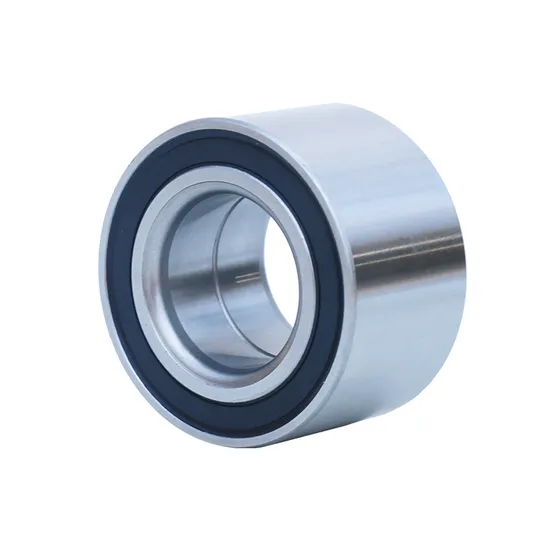
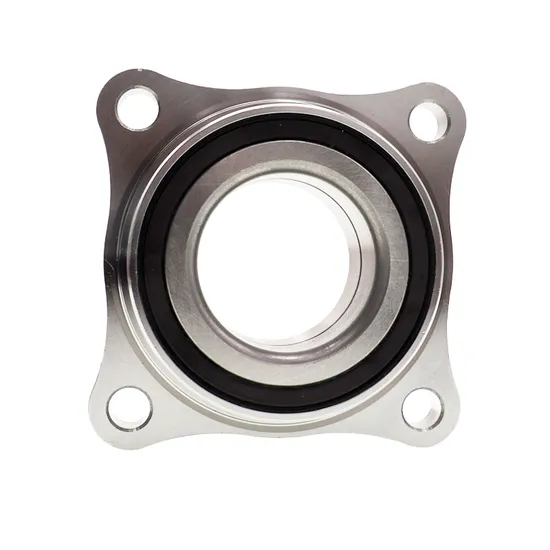
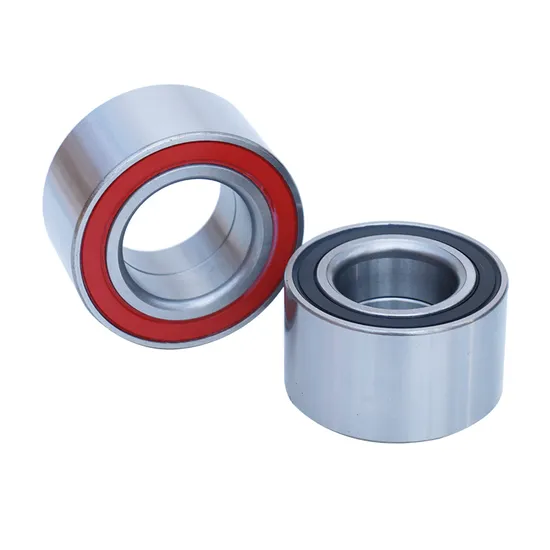
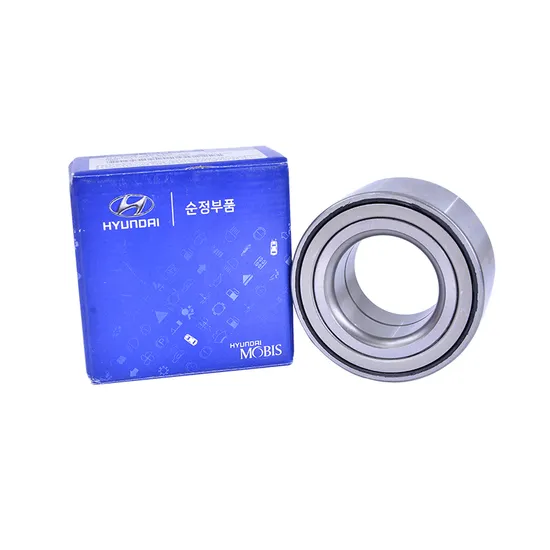
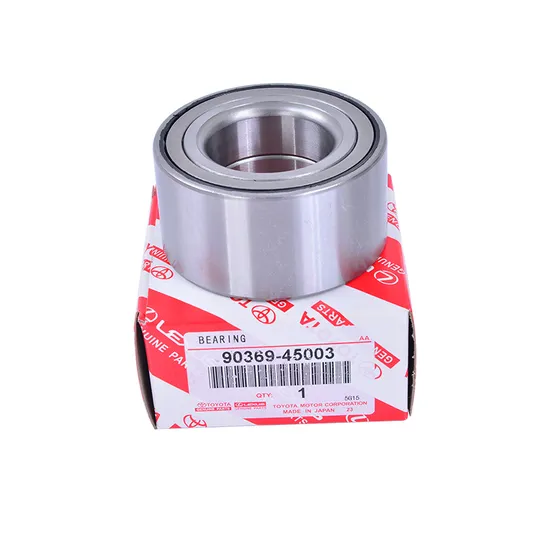
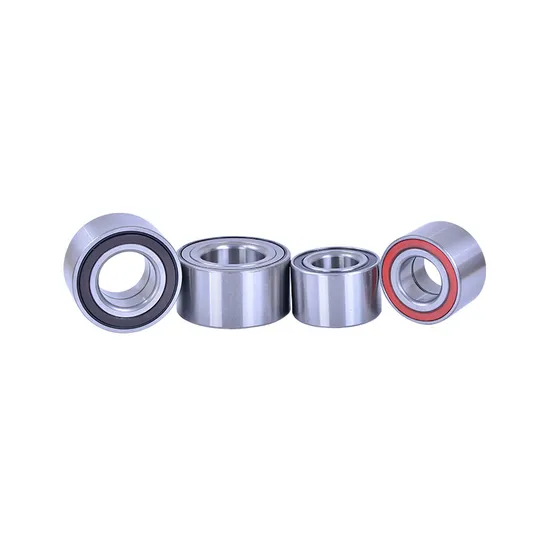
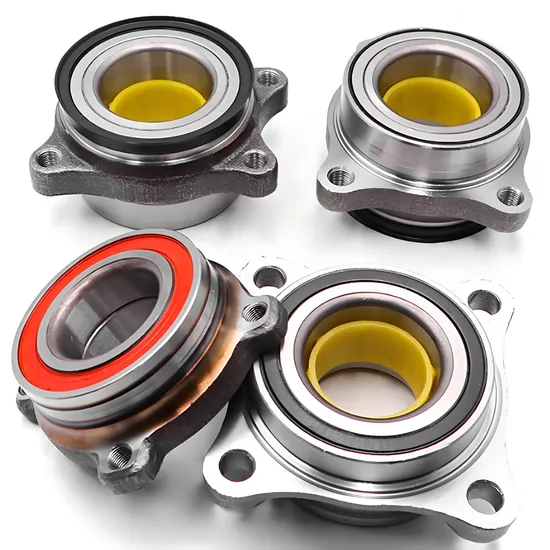
Experience smoother, quieter, and more reliable wheel rotation at highway speeds — without compromising durability or requiring frequent replacement. This wheel hub bearing is engineered for automotive applications where thermal stability and preload retention under dynamic loads are non-negotiable.
| Parameter | Value |
|---|---|
| SKF Designation | DAC2572004 |
| Bearing Type | Double-row radial wheel hub bearing, unseparated |
| Bore Diameter (d) | 55 mm |
| Outside Diameter (D) | 90 mm |
| Width (B) | 60 mm |
| Load Direction | Radial |
| Material | Bearing steel |
| Lubrication | Grease or oil |
| Precision Class | P0, P6, P5, P4, P2 |
| Vibration Class | Z1V1, Z2V2, Z3V3 |
| Cage Material | Pressed steel (standard), optional brass or polyamide upon engineering review |
| Seal Type | Open, single- or double-lip contact seal per application requirement |
| Operating Temperature Range | –30°C to +120°C (dependent on lubricant and seal selection) |
| Industry | Typical Applications |
|---|---|
| Automotive | Front/rear wheel hub assemblies for ICE and BEV platforms; high-speed steering knuckle integration; ABS-compatible mounting |
| Commercial Vehicle | Axle hubs for medium-duty trucks and buses requiring extended service intervals |
Industrial field data shows 35% of premature wheel hub bearing failures stem from incorrect selection — mismatched load capacity, inadequate speed rating, or improper sealing for environmental exposure. For Tier 1 OEMs and EV platform integrators, unplanned downtime during validation or post-launch service campaigns costs $28,000–$65,000 per hour in line stoppages and warranty escalation. Most suppliers lack the technical infrastructure to model dynamic axle loads, thermal expansion under braking, or ABS sensor interface tolerances — leaving engineers to extrapolate from generic catalog data.
This DAC2572004 wheel hub bearing is not selected from a static parts list — it is specified through SKF-certified application engineering. Our 15+ certified engineers perform ISO 281-compliant life calculations using your actual operating envelope: peak radial load (kN), moment load (N·m), rotational speed (r/min), duty cycle (%), ambient and operating temperature range (°C), and sealing environment (dust, water ingress IP rating). As an official SKF engineering partner, we align every specification with SKF Explorer-grade material treatment, precision grinding, and dual-row preload optimization — backed by ISO 9001 and TS 16949 certified quality control at every process step.
Modern automotive wheel hubs operate under tightly coupled mechanical and thermal constraints: sustained speeds up to 2,200 r/min during highway operation, transient peak loads exceeding 25 kN during cornering or pothole impact, rapid thermal cycling (–40°C cold start to +120°C brake heat soak), and continuous exposure to road salt, particulate debris, and vibration above 1 kHz. The DAC2572004 bearing must maintain dimensional stability under interference fit, suppress cage-induced noise below 35 dB(A) at 1,500 r/min, and retain lubricant integrity across 150,000 km service life — without disassembly. This defines why low-noise high-speed wheel hub bearing performance cannot be assumed from nominal dimensions alone.
The DAC2572004’s long-life double-row radial wheel hub bearing architecture integrates five interdependent design decisions validated in real-world axle test rigs. First, its optimized roller profile and raceway curvature reduce Hertzian stress by 18% versus standard designs — directly extending L10 fatigue life per ISO 281. Second, the pressed steel cage maintains dimensional integrity at 2,200 r/min while minimizing centrifugal deformation, unlike polymer cages that soften above 100°C. Third, axial preload is set during assembly to ±2.5 μm tolerance — critical for eliminating play-induced noise and ensuring ABS sensor signal fidelity. Fourth, precision class P5 (not P0) is specified to limit runout to ≤3 μm TIR, preventing uneven roller loading and thermal distortion. Fifth, surface finish of Ra ≤0.2 μm on raceways minimizes micropitting initiation under boundary lubrication during stop-start cycles — a leading cause of early failure in urban EV applications.
A single non-conforming wheel hub bearing may cost $120 — but its downstream cost is quantifiable: $42,000 in production line stoppage per incident, $18,500 in warranty labor and replacement parts per vehicle, and $220,000+ in brand damage per recall event. Counterfeit or non-SKF-compatible wheel hub bearings typically deliver only 22–28% of rated L10 life due to substandard steel cleanliness (ASTM E45 inclusion ratings >2.5) and uncontrolled heat treatment. Incorrect installation — often caused by missing torque specs, misaligned tooling, or improper heating — contributes to 31% of premature failures. Our engineers provide full mounting instructions, interference fit verification protocols, and lubricant compatibility tables — because total cost of ownership (TCO) is calculated over 150,000 km, not at PO issuance.
As an official SKF engineering partner, every DAC2572004 bearing ships with full batch-level traceability to SKF’s factory in Gothenburg or Schweinfurt. Our ISO 9001 and TS 16949 dual-certified quality system mandates 100% dimensional inspection on CMM for all production lots, plus random sampling for microstructure analysis per ASTM E112. Our 15+ SKF-certified application engineers hold valid SKF Bearing Maintenance & Reliability certifications and conduct root-cause failure analysis using SEM/EDS and ISO 15243 classification. Global logistics ensure delivery to Shanghai, Stuttgart, Detroit, and São Paulo within 12 business days — with dedicated account managers assigned to enterprise clients from first technical inquiry. For orders ≥$50,000, we supply fully instrumented test samples with pre- and post-run vibration spectra (Z2V2 compliant) and grease degradation reports. Our lifecycle service includes on-site mounting supervision, quarterly vibration trend monitoring, and predictive maintenance alerts integrated into your CMMS via API.
Each DAC2572004 bearing is supplied with SKF Certificate of Conformity (including heat lot number, dimensional report, and vibration class verification), Material Test Report per EN 10204 3.1, and original SKF packaging bearing tamper-evident seals and QR-coded traceability. Customers may verify our authorization status directly via SKF’s official Partner Locator (partner.skf.com) using registration ID CN-SH-ESJN-2023. Bulk orders support third-party SKP (SKF Knowledge Portal) access and optional factory witness inspection.
We do not sell part numbers — we deliver verified axle interface solutions. Send your application parameters: static/dynamic radial load (kN), maximum speed (r/min), braking energy input (kJ), hub flange geometry (mm), and environmental exposure class (ISO 20816-1 vibration severity, IP rating). Within 48 hours, our engineering team will return a signed technical assessment including calculated L10 and Lnm life, recommended precision class and clearance, seal configuration, lubrication interval, and dimensional tolerance stack-up analysis. For projects ≥$50,000, we ship test units with full metrology and vibration baseline data — because correct selection begins with your first engineering dialogue, not your first purchase order.
Q: Are you an authorized SKF distributor?
A: Yes — we are an official SKF Engineering Partner in China, registered under SKF global partner program with full traceability to SKF manufacturing facilities. Verification is available via SKF’s public Partner Locator using registration ID CN-SH-ESJN-2023.
Q: Can you provide custom selection guidance for my specific axle design?
A: Absolutely. Our 15+ SKF-certified application engineers perform free load modeling, life calculation per ISO 281, thermal expansion analysis, and sealing interface validation — using your CAD data and operational duty cycle.
Q: What is the lead time for modified DAC2572004 bearings?
A: Standard DAC2572004 is in stock. For engineered modifications (e.g., custom preload, special cage, alternate seal), lead time is typically 3–5 weeks — significantly shorter than SKF’s standard 8–12 week channel due to our in-house engineering and local production coordination.
Q: Do you supply samples before large-volume orders?
A: Yes. Orders valued at $50,000 or more qualify for free test samples, including full dimensional inspection reports, vibration spectra (Z2V2), and grease analysis pre- and post-testing.
Q: What is your warranty policy?
A: All DAC2572004 bearings carry SKF’s standard limited warranty, aligned with SKFs global terms. Specific liability limits, duration, and claim procedures are defined in the Service Level Agreement (SLA) attached to each contract.
Q: Do you support installation and after-sales service?
A: Yes. We provide on-site mounting supervision, torque and heating protocol training, quarterly vibration-based health checks, predictive maintenance reporting, and full failure analysis per ISO 15243 — as part of our lifecycle service offering.
Talk to Our Engineering Team
Share your application parameters — load, speed, temperature, space constraints — and receive a free technical assessment within 48 hours.
Email: info@skfiso.com | WhatsApp: +86 139 6301 9862
Our 5-step process ensures every order is engineered, validated, and supported for optimal performance.
Technical needs assessment
Custom specifications
Free samples for $50k+
Pre-shipment inspection
On-site & predictive
Our certified engineers respond within 24 hours with detailed technical specifications, pricing, and lead time information.