01
Consultation
Technical needs assessment

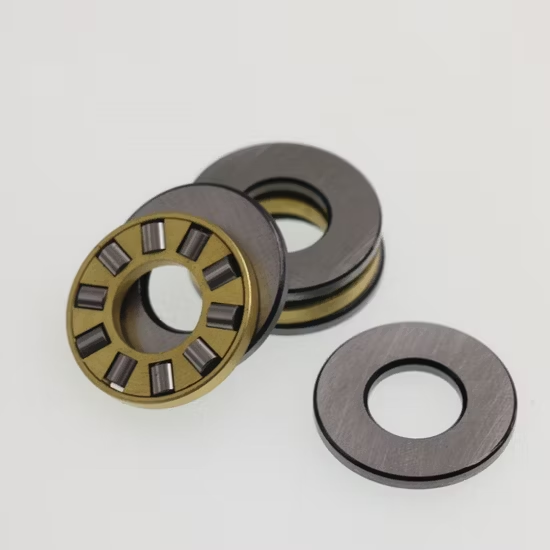
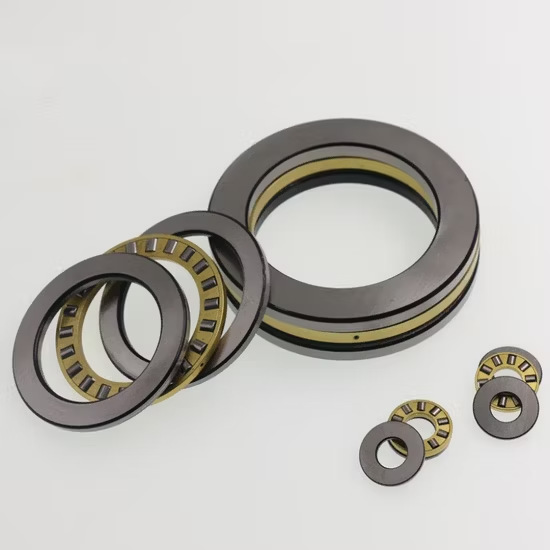
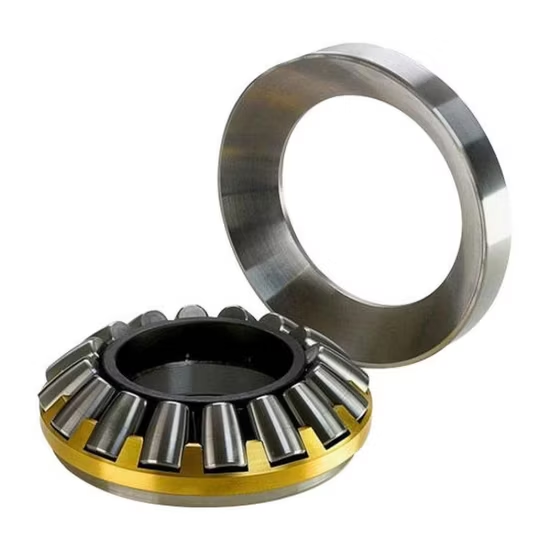

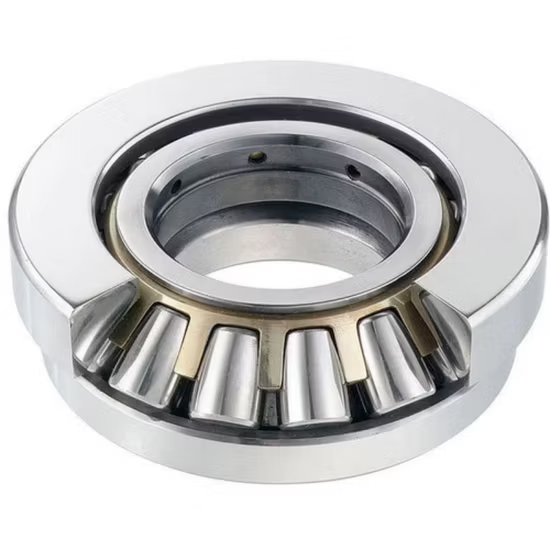
Thrust Roller Bearing for Heavy-Duty Axial Applications — featuring brass cages and separated designs for 120-190mm sizes.
Unified Multi-Brand Sourcing — Consolidate your axial load requirements across NSK, Timken, and Koyo into a single authorized shipment, eliminating multi-vendor coordination delays.
| Parameter | Value |
|---|---|
| Product Type | Thrust Roller Bearing |
| Cage Material | Brass (steel and polyamide variants available) |
| Number of Rows | Single |
| Alignment | Non-Aligning |
| Load Direction | Thrust (Axial) |
| Separability | Separated |
| Size Range | Medium and Large diameters |
| Certification | ISO 9001 compliant manufacturing facilities |
| Origin | Manufacturer's production facilities |
| Industry | Typical Applications |
|---|---|
| Industrial Gearboxes | Main shaft axial positioning and heavy thrust load support |
| Machine Tool Spindles | Precision axial clamping and rotary table vertical load bearing |
| Mining and Crushing | Vertical crusher shaft support and vibrating screen axial stabilization |
| Steel and Metallurgy | Continuous caster roll axial guidance and ladle turret thrust support |
| Heavy-duty Material Handling | Port crane slewing mechanism axial load and conveyor drive shaft thrust |
Matching the cage material and separability to the specific axial load profile prevents premature cage disintegration under extreme thrust forces.
I have seen entire industrial gearboxes torn apart because a mismatched thrust component failed under heavy axial loads, sending brass fragments through the gear train. Sourcing from an unreliable thrust roller bearing supplier often results in components with soft inner rings that deform under pressure, causing severe misalignment . When the axial support collapses, the resulting radial displacement destroys adjacent deep groove and tapered roller bearings, turning a minor scheduled maintenance task into a multi-week unplanned shutdown.
Handling pure axial loads in heavy machinery requires components that maintain rigidity without binding. As a dedicated thrust roller bearing supplier, we ensure every brass-caged, separated unit we dispatch is verified for exact dimensional tolerances. This precision prevents the axial play that typically leads to shaft wandering and subsequent seal failure in demanding industrial gearboxes and metallurgy equipment.
Vertical shafts in mining crushers and steel mill ladle turrets endure immense static and dynamic thrust loads combined with severe shock vibrations. The non-aligning configuration demands perfect housing perpendicularity; any misalignment concentrates stress on a few rolling elements, accelerating surface fatigue . Furthermore, elevated operating temperatures degrade standard lubricants rapidly, necessitating high-temperature grease formulations and strict relubrication intervals to prevent cage wear and roller skidding.
The separated design of these components allows for independent installation of the shaft washer, housing washer, and roller-cage assembly, which significantly simplifies mounting in confined gearbox housings. While brass cages are standard for their superior heat dissipation and durability under heavy axial loads, polyamide or pressed steel cage variants are available for applications requiring lower inertia or cost optimization. Selecting the appropriate cage material and verifying the non-aligning configuration against the housing rigidity ensures the assembly can withstand the specific thrust forces without structural deformation.
Installing unverified axial components with incorrect internal clearances or substandard cage materials inevitably leads to catastrophic thermal binding or cage fragmentation. According to failure analysis frameworks like ISO 15243, material fatigue and abrasive wear in thrust applications rapidly escalate into secondary damage across the entire drivetrain . This results in voided equipment warranties, massive collateral damage to gears and shafts, and prolonged operational downtime that far exceeds the initial cost savings of cheaper alternatives.
We eliminate the risk of receiving counterfeit parts with cloned QR codes by sourcing exclusively through authorized multi-brand distribution channels. Our cross-reference verification goes beyond matching the base designation; we validate the cage material, separability, and dimensional tolerances to ensure exact application fit. Every shipment includes full manufacturer batch traceability, allowing your maintenance team to verify authenticity directly via official brand mobile apps. This rigorous technical review prevents the devastating field failures caused by soft inner rings and incorrect internal geometries.
To ensure optimal performance and longevity, please provide your specific equipment model, available installation space, and detailed operating parameters including maximum thrust loads, rotational speeds, and ambient temperatures. If the application involves corrosive environments or extreme thermal cycling, detailing these conditions allows our engineering team to recommend the most suitable cage material and clearance configuration. Supplying the original OEM equipment number also enables us to perform a precise cross-reference verification.
Q: How do I determine the exact thrust bearing designation from OEM equipment parameters?
A: Provide the equipment model, shaft diameter, housing bore, and maximum axial load. Our engineering team cross-references these parameters against OEM specifications to identify the exact designation, ensuring the selected cage material and separability match the original design requirements for your specific industrial gearbox or machine tool spindle.
Q: What are the common failure modes of thrust bearings in heavy-duty gearboxes?
A: Heavy-duty gearboxes often experience cage fragmentation, roller skidding, and washer spalling due to extreme axial loads and shock vibrations. Misalignment in the non-aligning housing or insufficient lubrication at elevated temperatures accelerates these failure modes, leading to catastrophic drivetrain damage if the components are not correctly specified and maintained.
Q: When should I specify brass cages versus steel or polyamide for thrust applications?
A: Brass cages are preferred for heavy axial loads, high speeds, and elevated temperatures due to their superior heat dissipation and structural rigidity. Polyamide variants are suitable for lower-load applications requiring quiet operation and lower inertia, while pressed steel cages offer a cost-effective solution for moderate load and speed conditions.
Q: How can I verify bearing authenticity and batch traceability upon delivery?
A: Every component we supply includes a Certificate of Conformity and manufacturer batch traceability documentation. You can verify authenticity instantly by scanning the QR codes on the packaging using the official brand mobile apps, ensuring the internal geometry and materials meet genuine factory specifications.
Q: What are the maintenance and relubrication intervals for separated thrust bearings?
A: Relubrication intervals depend on the operating temperature, axial load, and rotational speed. For separated designs in heavy machinery, regular grease replenishment is critical to prevent roller skidding and cage wear. We recommend establishing a condition-based monitoring schedule using vibration analysis to optimize lubrication cycles and prevent unplanned downtime.
Our 5-step process ensures every order is engineered, validated, and supported for optimal performance.
Technical needs assessment
Custom specifications
Free samples for $50k+
Pre-shipment inspection
On-site & predictive
Our certified engineers respond within 24 hours with detailed technical specifications, pricing, and lead time information.


