01
Consultation
Technical needs assessment


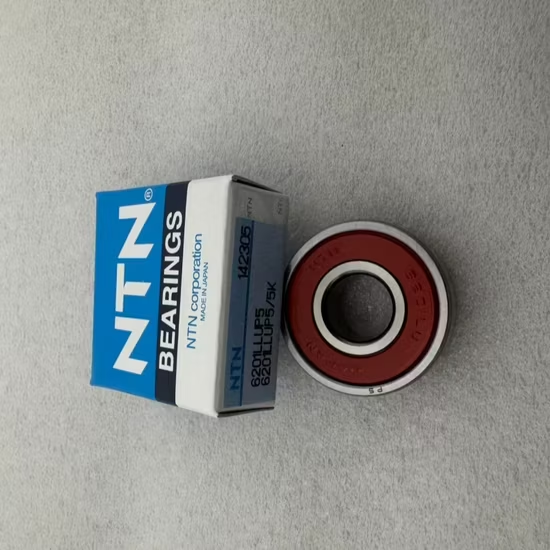


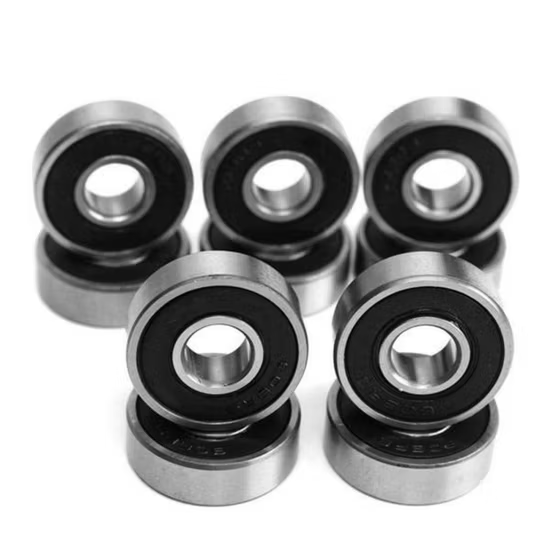

6209 Deep Groove Ball Bearing — available in open, rubber-sealed, or iron-shielded variants with Z1V1 to Z4V4 precision classes for diverse motor and gearbox applications.
Multi-brand authorized coverage — Procure your 6209 deep groove ball bearing from SKF, NSK, or NTN in a single consolidated shipment, eliminating the friction of coordinating across fragmented vendors.
| Parameter | Value |
|---|---|
| Designation | 6209 |
| Bearing Type | Deep Groove Ball Bearing |
| Seal or Shield Type | Open, Rubber Seals, Iron Seals |
| Precision Class | Z1V1, Z2V2, Z3V3, Z4V4 |
| Origin | Germany, Japan, Sweden, Malaysia, China |
| HS Code | 848210 |
| Industry | Typical Applications |
|---|---|
| Electric Motors | Rotor shaft support in industrial AC/DC motors |
| Industrial Gearboxes | High-speed input shaft bearing positions |
| Material Handling | Drive pulley shafts on belt conveyor systems |
| Pumps | Centrifugal pump impeller shaft support |
Matching the base number is never enough; ignoring seal and precision suffixes guarantees field failure.
In the Pearl River Delta manufacturing hub, I have witnessed too many 6209 deep groove ball bearing installations fail catastrophically because procurement teams focused solely on the base designation. A common trap involves installing an open or incorrectly sealed variant in a dusty conveyor environment, leading to rapid grease contamination. Even worse, substituting a standard precision grade where a Z3V3 or Z4V4 low-noise specification was required causes excessive vibration in high-speed motor rotors, eventually destroying the adjacent seals . These oversights turn a standard replacement into an unplanned downtime event.
Selecting the correct seal or shield configuration for a 6209 deep groove ball bearing dictates its survival in specific industrial settings. Rubber seals provide superior exclusion of fine particulate matter and moisture, making them ideal for agricultural or outdoor material handling equipment, though they introduce slight rotational friction. Iron shields offer non-contact protection that preserves high-speed capability for electric motor applications while keeping large debris out. We cross-reference your exact OEM equipment requirements to ensure the seal type matches the operational environment, preventing premature lubricant degradation.
Electric motors and industrial gearboxes subject deep groove ball bearings to continuous radial loads and high rotational velocities. In these high-speed applications, the internal operating temperature rises significantly, which can alter the internal clearance if the initial selection is incorrect. I once saw a motor lock up completely because a standard clearance bearing was used in a high-temperature winding application where thermal expansion eliminated the internal operating gap. Proper lubrication selection and understanding the thermal limits of the chosen seal material are critical to preventing thermal binding and ensuring stable kinematic performance under continuous duty cycles .
The Z1V1 through Z4V4 precision and noise classifications define the running accuracy and vibration limits of the bearing. While Z1V1 is perfectly adequate for general household appliances or low-speed conveyors, Z3V3 and Z4V4 grades are mandatory for precision electric motors and quiet-running gearboxes. These higher grades feature tighter geometric tolerances and superior surface finishes on the raceways, which directly suppress high-frequency vibration and acoustic noise. Specifying the correct Z/V class ensures the 6209 deep groove ball bearing operates smoothly without transferring destructive harmonic vibrations to the motor housing.
Failing to verify the exact precision class and seal configuration leads to severe operational consequences. Installing a lower precision grade in a high-speed spindle causes excessive vibration, accelerating fatigue spalling on the raceways as classified under ISO 15243. Furthermore, using an open bearing in a contaminated environment voids equipment warranties and forces frequent maintenance interventions. These specification mismatches result in catastrophic damage to the surrounding shaft and housing, transforming a minor component replacement into a major mechanical overhaul .
Our authorization across major global brands means we supply genuine 6209 bearings with verifiable documentation, eliminating the risk of counterfeit products with soft inner rings. When executing cross-brand interchanges, we strictly align the seal type and Z/V precision suffixes, rather than just matching the base 6209 number. We provide application-based selection reviews to confirm that the chosen seal and precision grade can withstand your specific motor or gearbox speeds and temperatures. Every batch we ship includes full traceability, ensuring you receive the exact specification your engineering team requires.
To ensure optimal performance, please share your specific operating parameters, including radial and axial loads, continuous operating speeds, and ambient temperature ranges. This data allows our engineering team to perform a thorough L10 life calculation and verify that the selected seal type and precision grade match your application. If you are replacing an existing component, providing the OEM equipment number enables us to execute a precise cross-reference check, ensuring all critical suffixes are perfectly aligned with your machinery's original design intent.
Q: How can I verify the authenticity of the 6209 bearing upon delivery?
A: Every bearing we supply features a unique batch code and QR identifier. You can scan this code using the respective brand's official mobile application to instantly verify its authenticity, production date, and origin. This direct digital link to the manufacturer eliminates the risk of receiving counterfeit products with compromised metallurgy or cloned packaging.
Q: Why is it dangerous to ignore the Z/V precision suffix during cross-referencing?
A: Matching only the base 6209 number while ignoring the Z/V suffix can lead to severe vibration issues in high-speed motors. A Z1V1 bearing lacks the tight geometric tolerances and surface finish of a Z3V3 or Z4V4 variant. Installing a lower grade in a precision application generates excessive acoustic noise and harmonic vibration, drastically shortening the lifespan of the motor and adjacent components.
Q: What are the operational boundaries between rubber seals and iron shields?
A: Rubber seals provide excellent exclusion of fine dust and moisture, making them ideal for harsh environments, but they generate slight friction that limits maximum speed. Iron shields offer non-contact protection that preserves high-speed capabilities for electric motors while blocking larger debris. Selecting the wrong type either causes thermal buildup from friction or allows contaminant ingress, leading to premature grease failure.
Q: How do the Z1V1 to Z4V4 grades correspond to international standards?
A: The Z/V classifications specifically measure vibration velocity and acoustic noise levels, which complement the dimensional tolerances defined by ISO 492. While standard P0 or P6 classes define the physical dimensions, the Z/V grades ensure the dynamic running quality meets the strict requirements of quiet-running electric motors and precision gearboxes, ensuring smooth operation without destructive harmonics.
Our 5-step process ensures every order is engineered, validated, and supported for optimal performance.
Technical needs assessment
Custom specifications
Free samples for $50k+
Pre-shipment inspection
On-site & predictive
Our certified engineers respond within 24 hours with detailed technical specifications, pricing, and lead time information.