01
Consultation
Technical needs assessment


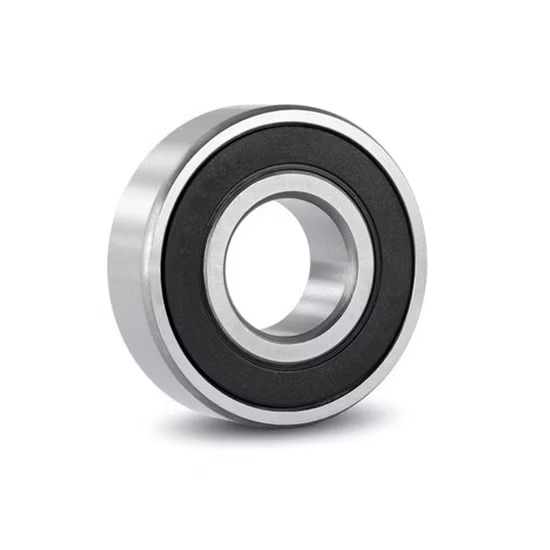
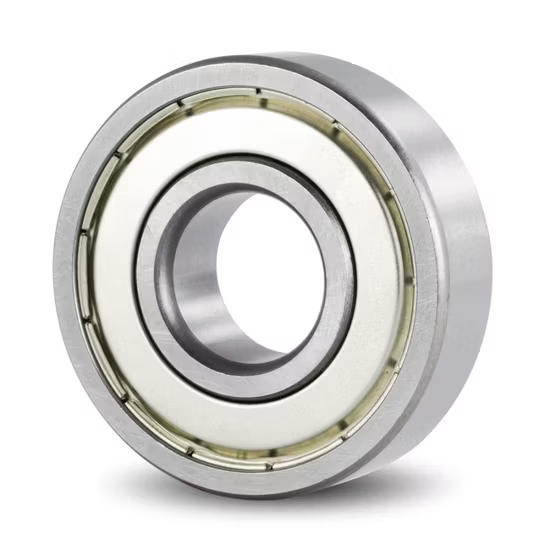

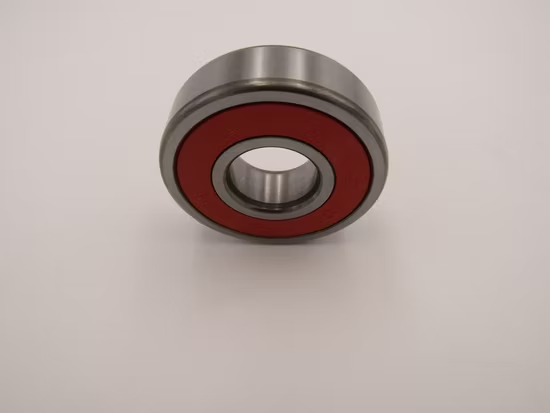
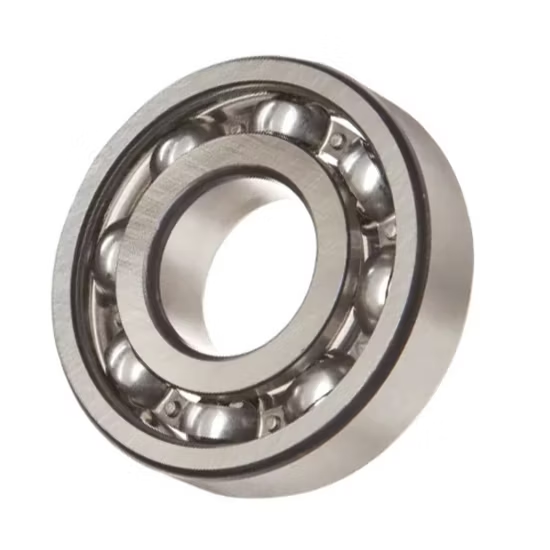
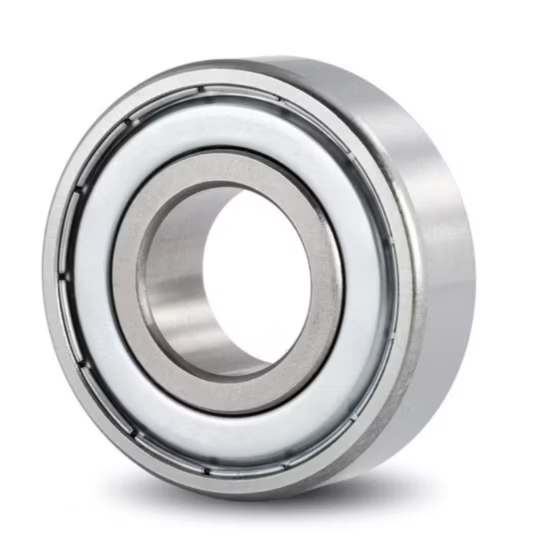
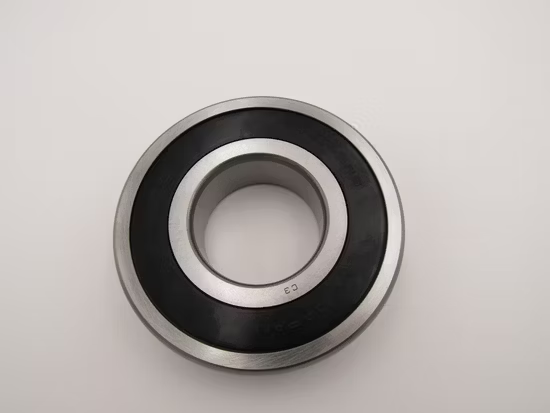
Koyo 608 Deep Groove Ball Bearing 8×22×7 mm — open type baseline design requires external lubrication and custom sealing arrangements for miniature mechanisms.
Multi-Brand Authorized Coverage — Source genuine Koyo miniature bearings alongside other major international brands in a single consolidated shipment, eliminating complex multi-vendor coordination for your mixed assembly lines.
| Parameter | Value |
|---|---|
| Designation | Koyo 608 |
| Bearing Type | Deep Groove Ball Bearing |
| Bore Diameter (d) | 8 mm |
| Outside Diameter (D) | 22 mm |
| Width (B) | 7 mm |
| Seal or Shield Type | Open, Rubber Seals, Iron Seals |
| Noise and Vibration Level | Z1V1, Z2V2, Z3V3, Z4V4 |
| Available Origins | Japan, Germany, Sweden, Malaysia, China |
| Industry | Typical Applications |
|---|---|
| Electric Motors | Miniature motor rotors, precision spindle drives |
| Household Appliances | High-speed blender shafts, cooling fan assemblies |
| Power Tools | Handheld drill spindles, rotary tool mechanisms |
| Skateboards & Inline Skates | Wheel hub assemblies requiring low friction |
Premature bearing seizure in compact drives often stems from unverified internal clearances and counterfeit inner rings rather than electrical faults.
Sourcing a reliable Koyo 608 deep groove ball bearing requires looking past the base designation. In the trading hubs of Dongguan, I have investigated countless miniature motor failures where the root cause was a mismatched clearance class or a soft inner ring from a cloned batch. When a standard clearance is mistakenly installed in an application demanding thermal expansion allowances, the bearing binds and seizes as temperatures rise . Furthermore, counterfeiters now replicate packaging QR codes, making casual visual inspection insufficient to guarantee the metallurgical integrity of the 8 mm bore component.
Selecting the correct seal type for your Koyo 608 deep groove ball bearing dictates the balance between contamination exclusion and rotational friction. Open variants dissipate heat efficiently in clean, oil-lubricated spindle assemblies, while rubber seals provide maximum protection against dust ingress in household appliances. Iron shields offer a non-contact barrier that preserves high-speed capabilities in power tools without the drag penalty of contact seals.
Miniature mechanisms operating at elevated rotational speeds generate significant internal friction heat. If the internal geometry does not accommodate thermal expansion, the rolling elements experience excessive preload, leading to rapid cage degradation. Concurrently, high-speed operation amplifies any microscopic geometric deviations, making the selection of an appropriate noise and vibration classification critical to prevent resonant frequencies from damaging the surrounding equipment housing .
The Z1V1 through Z4V4 classifications define the strict acoustic and vibrational boundaries of the bearing. A Z1V1 grade suffices for general conveyors or skateboard wheels where minor acoustic emissions are tolerable. Conversely, Z3V3 and Z4V4 grades undergo stringent sorting to ensure ultra-smooth raceway geometries, which is mandatory for precision machine tool spindles and high-end cooling fans where operational silence and minimal vibration transfer are non-negotiable.
Installing unverified miniature bearings introduces severe operational risks. A soft inner ring will deform under radial loads, causing misalignment and catastrophic damage to the motor shaft. Furthermore, utilizing a base-number match that ignores internal design variations voids equipment warranties and triggers unplanned downtime. The financial impact of replacing a seized bearing often pales in comparison to the cost of scrapping the entire assembled miniature mechanism .
Our procurement process prevents cross-reference errors that plague the miniature bearing market. We verify that the seal type and vibration grade of your requested Koyo 608 align perfectly with your equipment's operational profile. Every batch is traced back to the manufacturer's production facilities, ensuring you receive components with verified metallurgical properties rather than visually identical clones. We provide comprehensive cross-brand interchange support, matching not just the 8x22x7 mm dimensions, but the exact internal geometry and acoustic requirements.
To ensure optimal performance, please share your specific radial and axial load profiles, operational speeds, and ambient temperature ranges. Providing the original equipment manufacturer part numbers allows our engineering team to conduct a precise cross-reference verification. This data enables us to recommend the exact seal configuration and vibration grade required for your specific application, preventing premature field failures.
Q: How can I verify the authenticity of the Koyo 608 deep groove ball bearing upon delivery?
A: Authenticity is verified by scanning the packaging QR code using the official manufacturer application, which cross-references the batch number with factory records. We also supply a Certificate of Conformity and material test reports, ensuring the inner ring hardness and dimensional tolerances meet original specifications, effectively eliminating the risk of installing cloned components.
Q: What is the operational difference between rubber seals and iron shields in miniature motors?
A: Rubber seals provide contact-based sealing that excels at excluding fine dust and moisture, making them ideal for harsh environments, though they introduce slight friction. Iron shields maintain a non-contact gap, offering basic contamination protection while minimizing rotational drag, which is critical for high-speed power tools and applications where heat generation must be strictly controlled.
Q: How do the Z1V1 to Z4V4 noise grades affect the final assembly?
A: Lower grades like Z1V1 are suitable for general applications where minor noise is acceptable. Higher grades, such as Z4V4, feature meticulously sorted raceway geometries that drastically reduce acoustic emissions and vibration transfer. This ultra-smooth operation is mandatory for precision spindles and high-end household appliances to prevent resonant noise and ensure a premium user experience.
Q: What should I check when cross-referencing this bearing with other brands?
A: When substituting brands, it is crucial to verify that the replacement matches not only the 8x22x7 mm physical dimensions but also the specific internal clearance, cage material, and seal type. A base-number match that overlooks these internal design differences can lead to thermal binding or premature cage failure under your specific operational loads and speeds.
Q: Do sealed miniature bearings require relubrication during their service life?
A: Bearings equipped with rubber seals or iron shields are pre-lubricated at the factory with high-grade grease designed to last the entire operational lifespan of the component. Attempting to relubricate these sealed variants often damages the seal lips, introducing contaminants that accelerate wear. Open variants, however, require a continuous external lubrication system tailored to the application's speed and temperature.
Our 5-step process ensures every order is engineered, validated, and supported for optimal performance.
Technical needs assessment
Custom specifications
Free samples for $50k+
Pre-shipment inspection
On-site & predictive
Our certified engineers respond within 24 hours with detailed technical specifications, pricing, and lead time information.