01
Consultation
Technical needs assessment


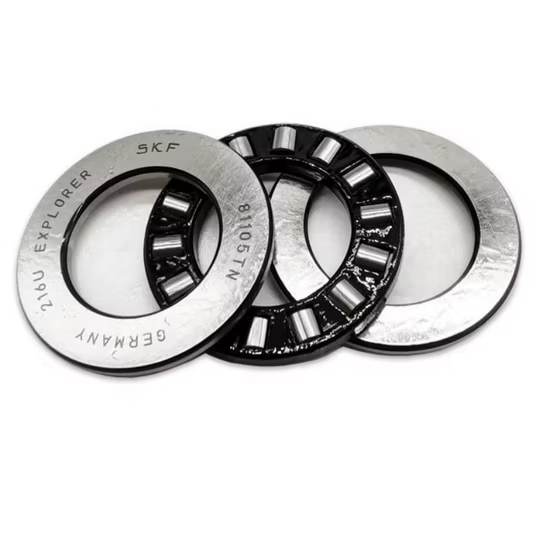
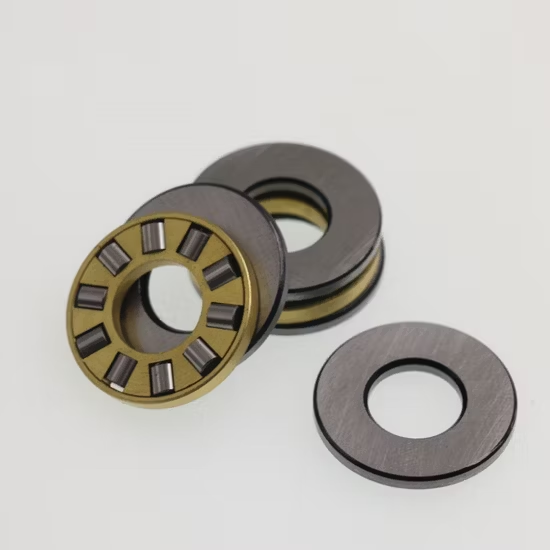
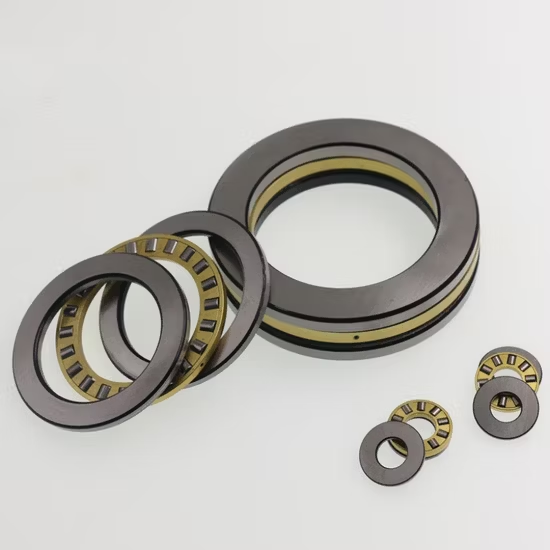
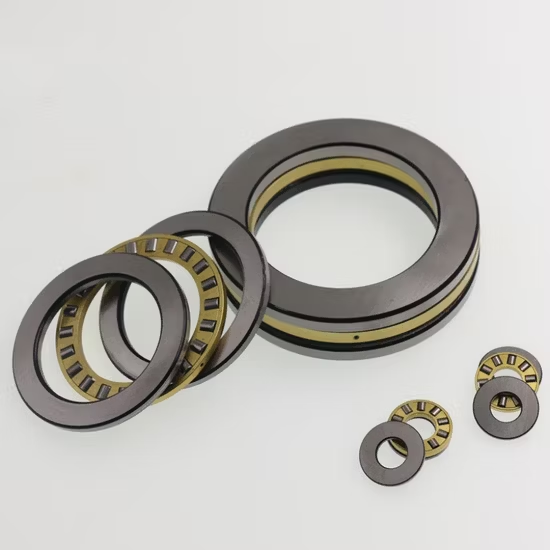
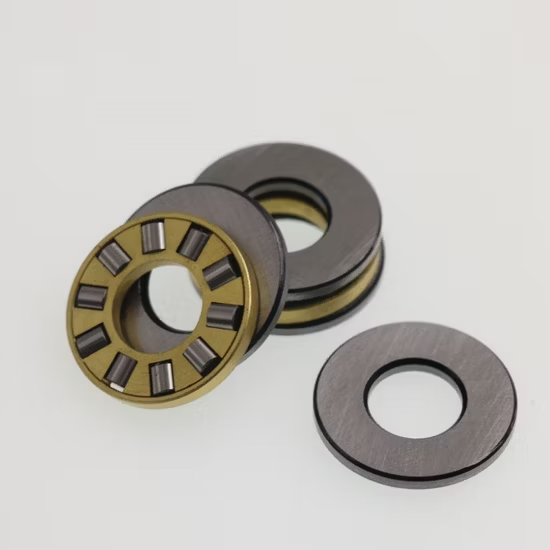
81112m Thrust Cylindrical Roller Bearing — engineered for sustained heavy axial loads in industrial gearboxes, machine tool spindles, and steel metallurgy equipment. Thrust cylindrical roller configurations deliver rigid single-direction axial support under continuous high-load operation.
Scannable authenticity verification — Every 81112m shipment includes batch-specific QR codes linking directly to the manufacturer's official mobile application for instant validation.
| Parameter | Value |
|---|---|
| Designation | 81112m |
| Bearing Type | Thrust Cylindrical Roller Bearing |
| Vibration Grade | Z1V1, Z2V2, Z3V3 options |
| Origin | Germany, Japan, Sweden, Malaysia, China |
| HS Code | 8482500090 |
Note: The lowercase 'm' suffix is unverified in standard manufacturer catalogs; it is typically treated as equivalent to the uppercase 'M' denoting a machined brass cage.
| Industry | Typical Applications |
|---|---|
| Heavy-duty industrial gearboxes | Main shaft axial positioning and high-thrust support |
| Machine tool spindles | Vertical spindle axial load management and rigidity |
| Steel and metallurgy equipment | Continuous casting machine roll axial guidance |
Ignoring minor suffix discrepancies transforms a simple axial support component into a critical downtime liability.
When sourcing replacement parts for heavy machinery, procurement teams often focus solely on the base numerical designation, assuming internal components are universally standardized. This oversight frequently leads to the installation of incorrect cage materials that cannot withstand the specific thermal expansion and friction profiles of the application. I witnessed this exact scenario in Dubai, where a batch of thrust bearings failed prematurely because a subtle suffix variation was overlooked, resulting in a machined brass cage being replaced by a stamped steel alternative that shattered under high-temperature axial loads . Partnering with a knowledgeable 81112m thrust cylindrical roller bearing supplier ensures that every internal design nuance is verified against the original equipment requirements before the parts ever leave the warehouse.
Selecting the correct internal configuration requires looking far beyond the basic dimensional envelope. A reliable 81112m thrust cylindrical roller bearing supplier evaluates the specific axial load magnitude, shock potential, and operating speed to confirm that the roller profile and cage design are perfectly aligned. By cross-referencing the exact machinery parameters against manufacturer engineering data, we ensure the bearing delivers optimal load distribution and prevents localized stress concentrations that lead to premature raceway spalling.
Thrust cylindrical roller bearings operate in environments where axial forces are immense and thermal gradients are steep. Without the correct internal clearance and cage material, the heat generated by friction causes the rolling elements to expand and bind against the raceways, rapidly degrading the lubricant film. Proper selection must account for these thermal dynamics, ensuring that the chosen vibration grade and internal geometry can sustain adequate hydrodynamic lubrication even under peak operational temperatures .
The base designation 81112 defines the fundamental boundary dimensions and the thrust cylindrical roller architecture, which is inherently designed to handle massive unidirectional axial loads with high rigidity. The suffix component, particularly the machined brass cage designation, is critical because brass provides superior guidance and heat dissipation compared to pressed steel or polyamide alternatives in heavy-load, low-to-moderate speed applications. Furthermore, selecting the appropriate vibration grade from the Z1V1 to Z3V3 spectrum ensures the bearing meets the specific noise and dynamic stability requirements of precision machine tool spindles or heavy industrial gearboxes.
Relying on superficial cross-references that ignore cage materials or precision suffixes inevitably leads to catastrophic field failures. When a bearing seizes due to thermal binding or cage fragmentation, the resulting unplanned downtime and collateral damage to adjacent shaft components far exceed the initial procurement savings. Adhering to strict failure mode analysis frameworks reveals that a significant share of premature bearing failures stem directly from these specification mismatches rather than inherent manufacturing defects .
Our approach eliminates the guesswork that plagues standard distribution channels by enforcing strict cross-brand interchange protocols. We do not merely match the base number; we verify the cage material, internal clearance, and precision class to guarantee functional equivalence. Every 81112m unit we supply features full batch traceability, allowing your maintenance team to verify the exact production lot via official brand applications. This rigorous technical selection review prevents the installation of counterfeit components with soft inner rings and ensures your heavy-duty gearboxes receive the exact axial support they require.
To ensure absolute compatibility, please provide the specific axial load magnitude, operating speed, and thermal environment of your machinery. Supplying the original equipment manufacturer part numbers allows our engineering team to perform a comprehensive cross-reference check, verifying that the cage material and internal geometry perfectly match your application's demands. This technical review guarantees that the selected bearing will deliver reliable service life without risking thermal binding or premature cage wear.
Q: How can I verify the authenticity of the 81112m bearings before installation?
A: Every batch we supply includes traceable documentation and specific QR codes. You can scan these codes using the manufacturer's official mobile application to instantly verify the production lot, material specifications, and origin. This direct digital link eliminates the risk of installing counterfeit bearings with compromised metallurgy or cloned visual markings that often pass casual inspections.
Q: Why is the exact cage material suffix critical for this thrust bearing?
A: The cage material dictates how the rolling elements are guided and how heat is dissipated under heavy axial loads. Substituting a machined brass cage with a stamped steel or polyamide alternative in high-temperature applications can lead to rapid cage fragmentation and thermal binding. Verifying the exact suffix ensures the bearing can withstand the specific friction and thermal expansion profiles of your machinery.
Q: What are the most common cross-reference errors when sourcing these bearings?
A: Buyers frequently match the base numerical designation while overlooking critical suffix variations, such as vibration grades or internal clearance classes. Installing a standard clearance bearing in an application requiring C3 or C4 clearance for thermal expansion will cause the bearing to seize as operating temperatures rise. Our technical review process specifically targets these hidden discrepancies to prevent field failures.
Q: How should I select the correct vibration grade for my equipment?
A: The Z1V1, Z2V2, and Z3V3 classifications define the strictness of the bearing's vibration and noise emission limits. While heavy industrial gearboxes may operate adequately with standard Z1V1 grades, precision machine tool spindles require the tighter tolerances of Z2V2 or Z3V3 to maintain surface finish quality and prevent chatter during high-speed machining operations.
Our 5-step process ensures every order is engineered, validated, and supported for optimal performance.
Technical needs assessment
Custom specifications
Free samples for $50k+
Pre-shipment inspection
On-site & predictive
Our certified engineers respond within 24 hours with detailed technical specifications, pricing, and lead time information.