01
Consultation
Technical needs assessment


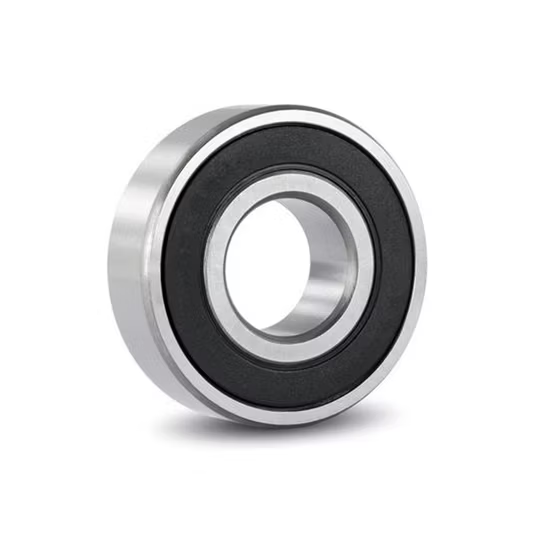
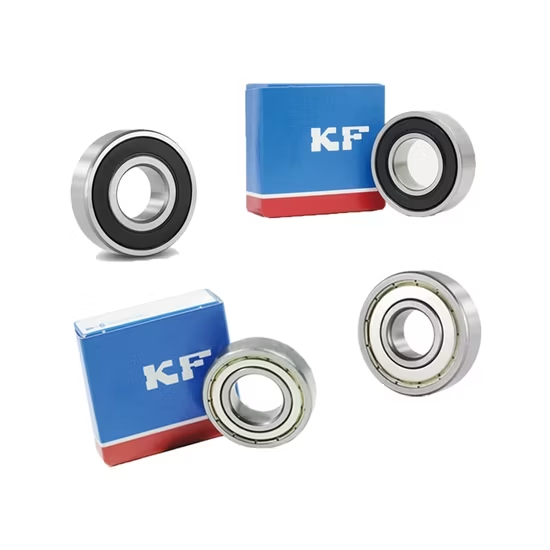
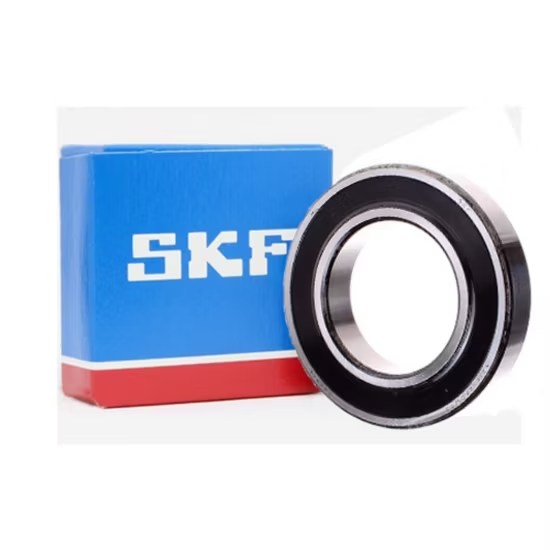


634 635 698 Zz P5 P4 Thin-Walled Deep Groove Ball Bearing — double metal shields provide reliable dust protection at moderate speeds. P5 and P4 precision classes deliver strict running accuracy for electric motors and precision equipment.
Scan-to-verify authenticity — Every batch of 634 635 698 Zz P5 P4 bearings includes a scannable QR code linking directly to the manufacturer's official verification app for immediate validation.
| Parameter | Value |
|---|---|
| Designation | 634 635 698 Zz P5 P4 |
| Product Type | Deep Groove Ball Bearing |
| Bearing Style Options | Open, Rubber Seals, Iron Seals |
| Shield Type | Double shielded (metal shields on both sides) |
| Precision Class | ISO Class 5 (P5) and ISO Class 4 (P4) |
| Quality Level Options | Z1V1, Z2V2, Z3V3, Z4V4 |
| Feature | Low Noise, High Speed, Long Service Life |
| Origin Options | Germany, Japan, Sweden, Malaysia, China |
| HS Code | 848210 |
| Customization | Available |
| Industry | Typical Applications |
|---|---|
| Electric Motors | High-speed spindle drives and precision servo motor rotors |
| Precision Equipment | Optical instrument gimbals and coordinate measuring machine axes |
| Gearboxes | Miniature planetary gear stages and low-backlash transmission shafts |
When sourcing a 634 635 698 Zz P5 P4 deep groove ball bearing, assuming standard P0 tolerances are sufficient for high-speed micro-motors is a critical error that leads to rapid thermal seizure.
I have dismantled countless thin-walled bearings in Vietnamese repair workshops where the inner rings were soft and the cages shattered after barely a hundred hours of operation. The root cause is almost always a粗糙 cross-reference that matches the base number but ignores the precision suffix. Installing a standard clearance component in a tight housing without accounting for thermal expansion causes the raceways to bind.
Selecting the correct 634 635 698 Zz P5 P4 deep groove ball bearing requires aligning the ISO precision class with the specific rotational dynamics of the equipment. Our technical team reviews the application parameters to ensure the selected tolerance band prevents the micro-vibrations that degrade sensitive electronic assemblies.
Thin-walled sections are highly susceptible to deformation from uneven thermal gradients and external particulate ingress. The non-contact metal shields must block abrasive dust without introducing the frictional heat generated by rubber seals, especially when operating at elevated speeds. Proper clearance selection is vital to accommodate the differential expansion between the shaft and the housing.
The Zz suffix indicates double metal shields, providing essential contamination protection while maintaining the low friction necessary for high-speed operation. The P5 and P4 designations guarantee strictly controlled dimensional and running accuracy, drastically reducing radial runout and acoustic noise. This precision is non-negotiable for applications where even minor deviations cause unacceptable vibration in sensitive instrumentation.
Overlooking the shield type or precision grade during procurement inevitably results in unplanned downtime and catastrophic damage to adjacent precision components. A mismatched seal type introduces excessive friction, while incorrect precision leads to premature fatigue spalling on the raceways. These failures void equipment warranties and incur massive replacement costs far exceeding the initial component savings.
We eliminate the risk of receiving counterfeit thin-walled bearings with cloned QR codes by providing direct access to the manufacturer's official verification apps. Our cross-referencing protocol strictly matches the Zz shield configuration and P5/P4 precision requirements, rather than just substituting the base designation. Every shipment includes comprehensive batch traceability, ensuring the internal design and clearance perfectly align with your OEM equipment specifications.
To ensure optimal performance, provide our engineering team with your specific radial and axial loads, operating speeds, and thermal conditions. We will perform a comprehensive L10 life calculation and verify the exact cross-reference against your OEM equipment numbers to guarantee complete suffix alignment.
Q: How do P5 and P4 precision classes compare in ISO and ABEC standards?
A: In the ISO standard, P5 and P4 represent progressively tighter tolerances for dimensional and running accuracy, roughly corresponding to ABEC 5 and ABEC 7 respectively. These higher precision classes are essential for minimizing vibration and runout in high-speed, thin-walled applications where standard P0 grades would cause premature failure.
Q: Can I substitute a 2RS rubber seal for the Zz metal shield in my design?
A: Substituting a 2RS contact seal for a Zz non-contact shield significantly increases frictional torque and operating temperatures. For high-speed thin-walled applications, this extra heat can degrade the lubricant and cause thermal binding, making the Zz configuration the correct choice for maintaining speed capabilities.
Q: What tools are recommended for installing thin-walled deep groove ball bearings?
A: Thin-walled rings are highly prone to ovality and deformation during installation. It is critical to use precision mounting sleeves that apply force evenly across the entire face of the press-fit ring, avoiding any direct impact or uneven loading that could permanently distort the raceway geometry.
Q: How can I identify counterfeit bearings with soft inner rings?
A: Counterfeits often feature cloned QR codes that fail when scanned with the brand's official app. Additionally, genuine P5/P4 bearings come with verifiable batch traceability and material test reports, whereas fakes lack this documentation and frequently exhibit hardness levels well below standard specifications upon physical testing.
Our 5-step process ensures every order is engineered, validated, and supported for optimal performance.
Technical needs assessment
Custom specifications
Free samples for $50k+
Pre-shipment inspection
On-site & predictive
Our certified engineers respond within 24 hours with detailed technical specifications, pricing, and lead time information.


